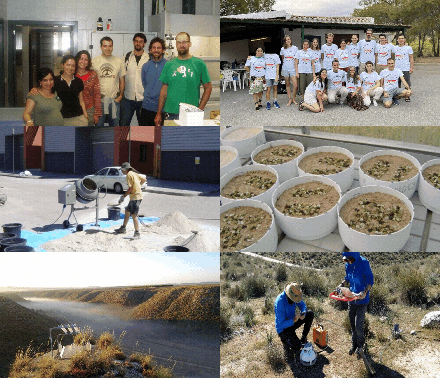
🏆Eminent Ecologist 2024: Fernando T. Maestre (part III: biocrust ecology)

The Journal of Ecology Editors are delighted to announce that Fernando Maestre is our Eminent Ecologist award winner for 2024! In recognition of his work, we asked Fernando to put together a virtual issue of some of his favourite contributions to the journal. Fernando has also written this blog series, and was interviewed by Richard Bardgett about about how he started his career in ecology,…
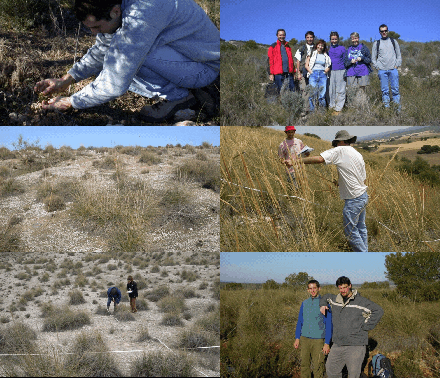
🏆Eminent Ecologist 2024: Fernando T. Maestre (part II: biotic interactions)

The Journal of Ecology Editors are delighted to announce that Fernando Maestre is our Eminent Ecologist award winner for 2024! In recognition of his work, we asked Fernando to put together a virtual issue of some of his favourite contributions to the journal. Fernando has also written this blog series, and was interviewed by Richard Bardgett about about how he started his career in ecology,…

🏆Eminent Ecologist 2024: Fernando T. Maestre (part I: introduction)

The Journal of Ecology Editors are delighted to announce that Fernando Maestre is our Eminent Ecologist award winner for 2024! In recognition of his work, we asked Fernando to put together a virtual issue of some of his favorite contributions to the journal. Fernando has also written this blog series, and was interviewed by Richard Bardgett about about how he started his career in…

Cover stories (112:10): Using machine learning to link climate, phylogeny & leaf area

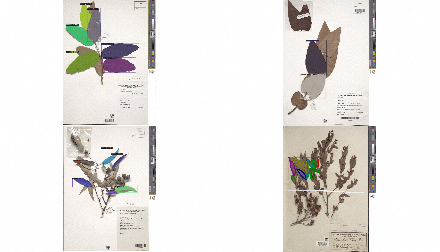
The cover image for our October issue shows the first part of an automated process to extract leaf area from herbarium images. Here the model’s predictions of leaves are on the pressed plant specimen of Corymbia gilbertensis. The image relates to the Editor’s Choice article ‘Using machine learning to link climate, phylogeny and leaf area in eucalypts through…

Editor’s Choice (112:09): How do yellow-necked mice & common oaks navigate a dynamic mutualism?

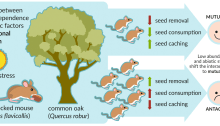
The editor’s choice for our September issue is ‘Scatterhoarder abundance and advantages of seed burial drive dynamics of a tree–rodent interaction‘, by Rafał Zwolak et al.:  This study examines how density-dependent foraging decisions and abiotic conditions jointly influence mutualistic benefits. The results show that mutualistic interactions between yellow-necked mice and common oaks are highly influenced by mouse abundance…

Editor’s Choice (112:08): Fungi & deadwood diversity: A test of the area-heterogeneity trade-off hypothesis

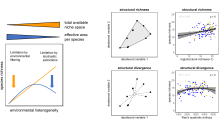
The editor’s choice for our August issue is ‘Fungi and deadwood diversity: A test of the area-heterogeneity trade-off hypothesis‘, by Max Zibold et al.:  Environmental heterogeneity is one of the most fundamental drivers of species diversity. For decades, ecologists have suggested that heterogeneity–diversity relationships are generally positive. But today, a greater variety of heterogeneity–diversity relationships is discussed. In…

Editor’s Choice (112:07): The effects of microplastic pollution on plant growth

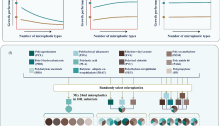
The editor’s choice for our July issue is ‘The more microplastic types pollute the soil, the stronger the growth suppression of invasive alien and native plants‘, by Yanmei Fu et al.:  The ecological consequences of microplastic pollution for plants remain largely unknown, and the few studies that have tested the effects usually focused on a single type…