Cover stories (112:10): Using machine learning to link climate, phylogeny & leaf area

The cover image for our October issue shows the first part of an automated process to extract leaf area from herbarium images. Here the model’s predictions of leaves are on the pressed plant specimen of Corymbia gilbertensis. The image relates to the Editor’s Choice article ‘Using machine learning to link climate, phylogeny and leaf area in eucalypts through…
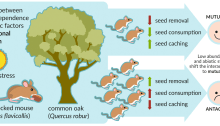
Editor’s Choice (112:09): How do yellow-necked mice & common oaks navigate a dynamic mutualism?

The editor’s choice for our September issue is ‘Scatterhoarder abundance and advantages of seed burial drive dynamics of a tree–rodent interaction‘, by Rafał Zwolak et al.:  This study examines how density-dependent foraging decisions and abiotic conditions jointly influence mutualistic benefits. The results show that mutualistic interactions between yellow-necked mice and common oaks are highly influenced by mouse abundance…

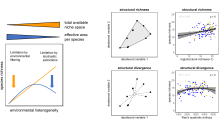
Editor’s Choice (112:08): Fungi & deadwood diversity: A test of the area-heterogeneity trade-off hypothesis

The editor’s choice for our August issue is ‘Fungi and deadwood diversity: A test of the area-heterogeneity trade-off hypothesis‘, by Max Zibold et al.:  Environmental heterogeneity is one of the most fundamental drivers of species diversity. For decades, ecologists have suggested that heterogeneity–diversity relationships are generally positive. But today, a greater variety of heterogeneity–diversity relationships is discussed. In…

Editor’s Choice (112:05): Mediterranean ecosystems at risk of crossing tipping point with warming & fire beyond Holocene levels

The editor’s choice for our May issue is ‘Simulating past and future fire impacts on Mediterranean ecosystems‘, by Christoph Schwörer et al. Here, Associate Editor Anping Chen discusses the importance of this research: Characterized by a distinct climate with hot, dry summers and mild, wet winters, the Mediterranean region is also often associated with frequent and…

Editor’s Choice (112:01): Bright Lights Big City

The editor’s choice for our January issue is ‘Environmental filtering of life-history trait diversity in urban populations of Arabidopsis thaliana‘ by Gregor Schmitz et al. Here, Associate Editor Richard Shefferson discusses the importance of this research: One of the more common motifs that Hollywood sets to the screen is the story of the country boy or girl moving to…

Editor’s Choice (111:11): Tackling unintended consequences of invasive species removal – timing may be everything

The editor’s choice for our November issue is ‘Timing of invasive species removal influences nonnative biotic resistance and trajectories of community reassembly‘ by Agostina Torres et al. Here, Associate Editor Maud Bernard-Verdier discusses the importance of this research: Invasive species control often targets single species, but as species introductions continue to increase globally (Seebens et al., 2017), multiple…

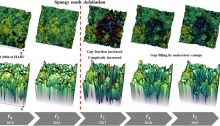
Editor’s Choice (111:09): Tracking the impacts of disturbance on the 3D structure of forests

The editor’s choice for our September issue is ‘Short-term effects of moderate severity disturbances on forest canopy structure‘ by Dennis Choi et al. Here, Associate Editor Tommaso Jucker discusses the importance of this research: The launch of the Landsat satellite program in the 1970s forever changed our view of Earth’s biosphere – its oceans, its grasslands, its deserts,…

Editor’s Choice (111:08): Seasonality drives ECM fungal community composition in neotropical dry forests

The editor’s choice for our August issue is “Seasonality regulates the structure and biogeochemical impact of ectomycorrhizal fungal communities across environmentally divergent neotropical dry forests“ by Katilyn Beidler et al. Here, Associate Editor James Dalling discusses the importance of this research: We usually think of ectomycorrhizal (ECM) tree species in the tropics as occurring on the tops of mountains…