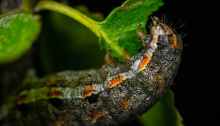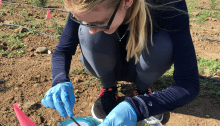
Plants Facing Double Trouble: The Impact of Simultaneous Drought and Herbivory on Chemical Variation Within a Species

Aramee Diethelm discusses her article: ‘Herbivores disrupt clinal variation in plant responses to water limitation.’ Factors Shaping Plant Traits Plants, often perceived as static, exhibit remarkable resilience in challenging environments involving rapid adjustments (plastic responses), and evolving (evolutionary responses) to cope with challenges. Research has predominantly focused on single stressors, despite the increasing occurrence of…

The December Art Gallery

Welcome to the December Art Gallery features the art of Ellie Biggs, F. Curtis Lubbe, Rebecca Buchs, Jude Wild and Vicky Bowskill. Mediums include: pen and watercolour, ceramics and pipe cleaners, ballpoint pen, AI and oils on canvas. These artworks come from Australia, The Czech Republic, Switzerland and the UK. Ellie Biggs Ellie Biggs is…

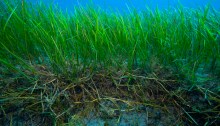
Evolutionary pressures from a harsh environment maintains similarities between closely related species of seagrasses.

Fernando Tuya Cortés, from ECOAQUA’s Biodiversity and Conservation Group, discusses his article: ‘Strong phylogenetic signal and models of trait evolution evidence phylogenetic niche conservatism for seagrasses.’ Aquatic flowering plants Seagrasses are a group of marine angiosperms (i.e., flowering plants) fully adapted to a submerged life. They are found thoughout the world’s oceans, distributed from tropical…

Neighbouring tree effects on leaf herbivory: why should we care about insect specialization?

Shihong Jia and Bastien Castagneyrol discuss their article: ‘Neighbouring tree effects on leaf herbivory: insect specialization matters more than host plant leaf traits.’ Background Insect herbivores feed on plants and play a crucial role in determining plant performance, population, and community dynamics. This role is particularly significant in forests where insect herbivores can change the…