Interested in becoming a BES Associate Editor?

The seven British Ecological Society journals are currently looking for ecologists and practitioners to join their editorial boards! See here for more information and how to apply (deadline: 28th February 2023). Read on for details about the role and insights from some of our current Associate Editors: 🔎 THE ROLE Being an Associate Editor (AE) involves…
Editor’s Choice (111:01): The ecological implications of interplant drought cuing

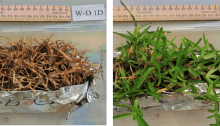
The editor’s choice for our January issue is “The ecological implications of interplant drought cuing” by Omer Falik et al. Here, Associate Editor Peter Bellingham discusses the importance of this research:  The importance of interplant communication is a rapidly growing area of research and is becoming more widely appreciated.  Interplant communication through networks of hyphae of…

Cover stories (110:12): European Hazel, Corylus avellana

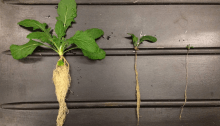
The cover image for our December issue shows germination day one of European Hazel, Corylus avellana. The yellow radicle breaks through the nut wall and elongates into the substrate over the following fortnight. This image relates to the article, Biological Flora of Britain and Ireland: Corylus avellana, by Damien Hicks. Here, Damien tells us the story behind the image: The…

Editor’s Choice (110:12): eCO2 alleviates adverse effects of drought

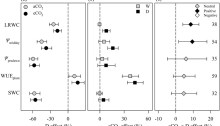
The editor’s choice for our December issue is “Elevated CO2 alleviates adverse effects of drought on plant water relations and photosynthesis: A global meta-analysis” by Zhaoguo Wang, et al. Here, Associate Editor Alessio Collalti and colleague Paulina F. Puchi discuss the importance of this research:  The rapid increase of atmospheric CO2 concentration has caused an increment in…

Editor’s Choice (110:11): Does the life of the parent affect the fitness of the child, and the grandchild?

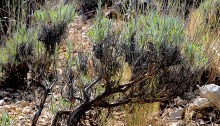
The editor’s choice for our November issue is “Ecological significance of intraplant variation: Epigenetic mosaicism in Lavandula latifolia plants predicts extant and transgenerational variability of fecundity-related traits” by Carlos M. Herrera et al. Here, Associate Editor Richard Shefferson explains the importance of this research:  Plants do some strange things. We are surrounded by plants in our day-to-day lives,…

🏆Eminent Ecologist 2022: Hans Cornelissen (part 3)

The Journal of Ecology Editors are delighted to honour Hans Cornelissen as our Eminent Ecologist award winner for 2022! In recognition of his work, we asked Hans to put together a virtual issue of some of his favourite contributions to the journal. Hans has also written this blog series related to the virtual issue, linking the main research themes throughout his career, and…

Writefull trial announced on Journal of Ecology

We are delighted to announce that we have integrated the language editing software, Writefull, into the online submission system of Journal of Ecology.   Writefull is an automatic proofing and editing AI tool trained on published articles from STEM subject areas. It screens text for correctness of grammar, spelling, vocabulary and punctuation, as well more subtle language issues…

🏆Eminent Ecologist 2022: Hans Cornelissen (part 2)

The Journal of Ecology Editors are delighted to honour Hans Cornelissen as our Eminent Ecologist award winner for 2022! In recognition of his work, we asked Hans to put together a virtual issue of some of his favourite contributions to the journal. Hans has also written this blog series related to the virtual issue, linking the main research themes throughout his career, and…