Changes in wildflowers of agricultural habitats under intensification can be tracked through herbarium specimens

Paul Kühn, University of Jena, discusses his article: Nitrogen content of herbarium specimens from arable fields and mesic meadows reflect the intensifying agricultural management during the 20th century Biodiversity in agricultural areas Agricultural habitats such as arable fields and meadows are shaped by human activity. Agricultural productivity is rising, but at the same time, many…
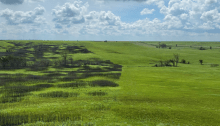
The woody plant takeover: encroaching shrubs show diverse growth strategies in a tallgrass prairie

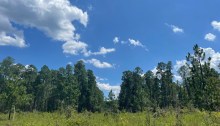
Emily Wedel, from Kansas State University’s Konza Prairie Biological Station, describes her article: Divergent resource-use strategies of encroaching shrubs: Can traits predict encroachment success in tallgrass prairie? Background: Attack of the shrubs The expansive grasslands that once dominated North America’s Central Great Plains have all but disappeared. The remaining grass-dominated regions that avoided conversion to…

Fire and Flora: Community-Level Adaptations in Mediterranean Landscapes

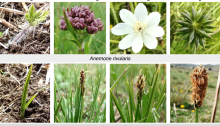
Bérangère Leys, UMR AMAP (Montpellier, France), discusses her article: Functional responses of Mediterranean flora to fire: A community-scale perspective As climate change increases the frequency and intensity of fires, especially in Mediterranean regions, understanding plant adaptations to fire has become crucial. Fires are a natural component of Mediterranean ecosystems; however, hotter, drier conditions and human activities are making fires more intense, underscoring the…

Microclimatic gradients regulate germination phenology in alpine communities

Clara Espinosa del Alba, Biodiversity Research Institute (IMIB, University of Oviedo – CSIC – Principality of Asturias), part of the Vegetation and Biodiversity Lab, discusses her article: Microclimatic variation regulates seed germination phenology in alpine plant communities, in English, Spanish, and Catalan. Background Seeds are essential for plant regeneration, but not only the quantity and…

Genetic differentiation able to develop even in “jack-of-all-trades” weeds

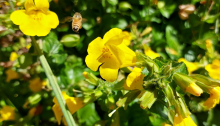
Aaron Millar, from the University of Canterbury discusses his article: Altitudinal Differentiation Occurs Alongside High Plasticity in a General-Purpose Genotype Invasive Plant In 1965, Herbert Baker imagined a super-weed, a plant that could invade anywhere and deal with anything. He called it the “general-purpose genotype”, a plant which could adapt to any environment with massive…

The rhizosphere: A hub for enhancing soil carbon storage

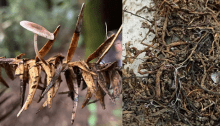
Qitong Wang and Huajun Yin, Chengdu Institute of Biology of the Chinese Academy of Sciences, discuss their article: Rhizosphere as a hotspot for microbial necromass deposition into the soil carbon pool When it comes to soil organic carbon (SOC) storage, the rhizosphere – a zone of soil around plant roots – plays a pivotal yet…

Understanding edge effects on seed production

Katherine Hulting, from Michigan State University’s W.K. Kellogg Biological Station, discusses her article: Habitat edges decrease plant reproductive output in fragmented landscapes Fragmentation and demography Habitat fragmentation is widespread globally. However, understanding how to conserve in fragmented landscapes is challenging. Breaking habitats apart leads to multiple changes, such as decreased connectivity and increased edge habitat,…

Above-ground Disturbances and Below-ground Litter Decomposition

Meijie Xi and Weile Chen from Zhejiang University, China, discuss their article: Soil moisture mediates the effect of plant below-ground carbon allocation on the decomposition of root litter in a subtropical forest Forests are critical allies in the fight against climate change because they are major carbon sinks. Yet, the carbon stored in forests is…

Reproductive phenology mediated the sexual reproduction of alpine plants under future climate change

Miaojun Ma, Lanzhou University, discusses his article: Indirect effects of warming via phenology on reproductive success of alpine plants Background More and more empirical evidence shows that climate change has altered the reproductive performance of alpine plants, including reproductive phenology and reproductive output. Altered plant phenology can expose species to novel abiotic conditions during growth…