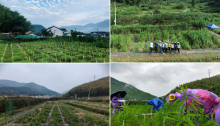
Liana diversity and density in Ghana show positive association with precipitation, precisely opposite to pantropical trends

Bismark Ofosu-Bamfo, University of Energy and Natural Resources in Sunyani, Ghana, discusses his article: Patterns and drivers of liana community structure across five forest ecosystem types in Ghana In recent years, ecologists in the tropics have dedicated a good amount of research to understand the pattern and drivers of community assemblages of woody climbing plants,…

Seedlings in a hotter, drier, CO₂-rich world: How do they cope?

María Natalia Umaña and Inés Ibañez, University of Michigan, discuss their article: How do drought and elevated temperatures influence CO2 fertilization effects on tree seedling performance? A global meta-analysis Climate change is not happening one thing at a time. In forests across the globe, seedlings are already experiencing a mix of higher atmospheric CO₂, rising…

Soil Microbial Networks Under Long-term Nitrogen Stress: Reinforcing the Core of Ecosystem Health

Xiaobo Yuan and Yaodan Zhang, from Lanzhou University in China, discuss their article: Soil microbial networks mediate long-term effects of nitrogen fertilization on ecosystem multiservices Nitrogen (N) fertilization caused by anthropogenic activities such as fertilizer application and fossil fuel combustion have significantly impacted the capacity of ecosystems to support key services such as nutrient cycling…

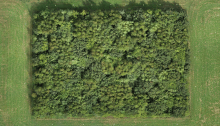
How do hundreds of tree species occupy tropical forests? Large tree fall gaps might hold the answer

Damla Cinoğlu and Caroline Farrior, University of Texas at Austin, discuss their article: Small disturbances and subsequent competition for light can maintain a diversity of demographic strategies in a neotropical forest: Results from model-data integration Tropical forests are one of the most diverse ecosystems on Earth. They are fundamental for managing the global carbon budget and…

Foliar herbivory can reshape plant pollinator networks

Luiz Rezende and Martín Pareja, Universidade Estadual de Campinas (UNICAMP) in Brazil, discuss their article: Foliar herbivory pushes plant individuals towards the periphery of a plant-floral visitor interaction network Ecological interactions have fascinated naturalists for centuries. Watching bees and butterflies visit flowers continues to mesmerise and nurture a love of nature in children and adults…

How do past dynamics of tree species inform us about their future?

Todor Minchev, Université du Québec à Rimouski, discusses his article: Early departures and delayed arrivals: Holocene dynamics of temperate tree species in the boreal temperate ecotone. Forests are the backbone of most terrestrial ecosystems and form some of the largest biomes on the planet, excluding the oceans. Such is the case of the circumboreal forest…

Can polyploids compete? Learning from coexistence theory in a duckweed experiment

Frederik Mortier, Ghent Universit, discusses his article: Polyploid—diploid coexistence in the greater duckweed Spirodela polyrhiza Polyploid establishment is not as easy as it looks Polyploidy, when organisms have extra sets of chromosomes due to whole-genome duplication, is surprisingly common, especially in plants. Polyploidy can be a dramatic mutation with a huge effect on plant traits,…

Are non-native plant species similar to natives in harsh environments? Evidence from the central Chilean Andes.

Vinka Anic and Lohengrin Cavieres, University of Concepción in Chile, discuss their article: Functional and phylogenetic similarity between native and non-native plant species along an elevational gradient in the central Chilean Andes: No evidence for the preadaptation hypothesis The establishment of non-native species is expected to be constrained in regions affected by harsh environmental conditions…

Revealing reasons for rarity of a woodland plant

Emma R. Neigel, University of Lethbridge, discusses her article, Dispersal limitation and seed predation drives rarity of a plant species at its range edge Ecological theory proposes that three ‘filters’ determine which species are present in a community: (1) the suitability of abiotic conditions (e.g., soil moisture and temperature), (2) dispersal limitation – the ability…