Evolving into weirdness

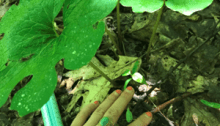
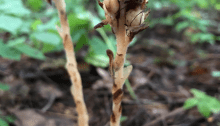
Richard P. Shefferson, University of Tokyo, discusses his article: ‘Life history costs drive the evolution of mycoheterotrophs: increased sprouting and flowering in a strongly mycoheterotrophic Pyrola species’ Background When we think of plants, we think of trees and grasses, flowers, and ferns. The single most obvious and important characteristic of plants is that they are…

Understanding the success of invasive plants through community assembly

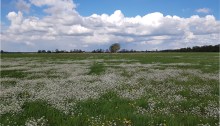
Urmi Poddar discusses her paper ‘Similar trait-based successional assembly in native and introduced plants despite species pool differences.’ Background Invasive species are one of the major threats to biodiversity. These species tend to take over natural communities, leading to the displacement of native species, loss of biodiversity, and disruption of ecosystem functions. But not all…

Biodiversity supports grassland resistance and recovery under extreme drought

Manuele Bazzichetto discusses his article: ‘Biodiversity promotes resistance but dominant species shape recovery of grasslands under extreme drought.’ Background A hot idea in ecology is that biodiversity helps ecosystems do better. For instance, high biodiversity should help ecosystems to maintain their functions (e.g., biomass production) over time. In other words, biodiversity should stabilise ecosystem functions.…

Does drying make peat mosses more vulnerable to drought?

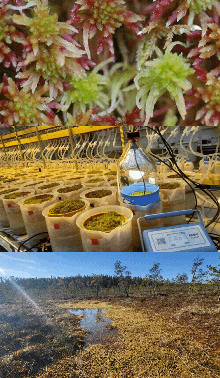
Nicola Kokkonen, Anna Laine-Petäjäkangas, and Eeva-Stiina Tuittila discuss their article: ‘A deepened water table increases the vulnerability of peat mosses to periodic drought.’ Background Around the world, we are witnessing warmer temperatures and extreme weather caused by climate change. However, these changes are not affecting all regions equally; northern regions are being hit hardest. While…

Understanding the Impact of Deer and Earthworms on Forest Understories

Annise Dobson discusses her article: ‘Individual and combined effects of invasive earthworms and native white-tailed deer on understory plant survival, growth, and reproduction.’ Background In northeastern U.S. forests, understorey plant communities are undergoing sweeping transformations. Knowing what to do to achieve our conservation goals is complicated by the fact that many of these stressors co-occur…

The Story Story: Using lake sediments from Story Lake to better understand the interacting effects of fire and climate change on oak and beech community shifts in the southern Great Lakes region

Nora Schlenker discusses her paper ‘Interacting effects of fire and hydroclimate on oak and beech community prevalence in the southern Great Lakes region.’ Background Every year pollen rains down from terrestrial plants and makes us sneeze. But as pollen lands on the surface of lakes and settles in lakebed sediments, it also provides a continuous…

The diversity of recovering forests is driven by seed dispersal from fruit eating animals.

Jorge Isla discusses his article: “Animal-mediated seed dispersal and the demo-genertic configuration across plant colonization gradients.” Background Significant changes in the landscape, such as rural abandonment or the protection of natural areas, are creating a new ecological context for the formation and regeneration of forested areas. The significance of mutualistic interactions between plants and animals…

Evolution of Setaria viridis in coastal habitats begins with the divergence of variants from local populations

Matsuo Itoh discusses his article: ‘Parapatric and sympatric adaptation of Setaria viridis populations in Japan to heterogeneous coastal habitats via trait divergence of plant form, salt spray tolerance and flowering time.’ Maritime ecotypes Maritime plants contain dwarf ecotypes that are adapted for exposure to strong winds and salt spray. The compact form of coastal plants…

Aboveground herbivory facilitates belowground mutualists in Ambrosia plants: the role of root fatty acids

Zhenlong Xing, from Jianqing Ding’s lab, Henan University, discusses his article: ‘Foliar herbivory-enhanced mycorrhization is associated with increased levels of lipids in root and root exudates.’ Background At 8:45 p.m., October 21, 2020, the master candidate, Zhongyue Zhang, ran towards me, exclaiming “It is very surprising, the [Arbuscular Mycorrhizal] AM colonization rates are nearly 100%…

Mangroves in the desert: unraveling the mystery of mangrove survival in Baja California’s unique environment

Rémi Bardou discusses his article: ‘Effects of cold water and aridity on Baja California mangrove survival and ecophysiological traits.’ Introduction Mangroves are extraordinary trees, prospering at the intersection of land and sea. These trees are pivotal in coastal ecosystems, supporting marine life and biodiversity. They also serve as natural barriers, safeguarding shorelines from erosion and…