Mismatched responses of plant and microbial biodiversity to climate warming and anthropogenic activities in the Third Pole

Biodiversity supports the foundation for ecosystem functions and services. Extensive research has shown that global changes have significantly impacted above-ground biodiversity and its associated ecosystem functions and services. However, below-ground soil microbial biodiversity has received relatively less attention, leading to significant knowledge gaps. It remains uncertain whether below-ground biodiversity responds to global changes in a…
Plants Facing Double Trouble: The Impact of Simultaneous Drought and Herbivory on Chemical Variation Within a Species

Aramee Diethelm discusses her article: ‘Herbivores disrupt clinal variation in plant responses to water limitation.’ Factors Shaping Plant Traits Plants, often perceived as static, exhibit remarkable resilience in challenging environments involving rapid adjustments (plastic responses), and evolving (evolutionary responses) to cope with challenges. Research has predominantly focused on single stressors, despite the increasing occurrence of…

Evolutionary pressures from a harsh environment maintains similarities between closely related species of seagrasses.

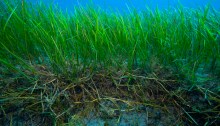
Fernando Tuya Cortés, from ECOAQUA’s Biodiversity and Conservation Group, discusses his article: ‘Strong phylogenetic signal and models of trait evolution evidence phylogenetic niche conservatism for seagrasses.’ Aquatic flowering plants Seagrasses are a group of marine angiosperms (i.e., flowering plants) fully adapted to a submerged life. They are found thoughout the world’s oceans, distributed from tropical…

Neighbouring tree effects on leaf herbivory: why should we care about insect specialization?

Shihong Jia and Bastien Castagneyrol discuss their article: ‘Neighbouring tree effects on leaf herbivory: insect specialization matters more than host plant leaf traits.’ Background Insect herbivores feed on plants and play a crucial role in determining plant performance, population, and community dynamics. This role is particularly significant in forests where insect herbivores can change the…

Succession: a key to understanding biodiversity loss and restoration

Lucy Ridding discusses the background, work and findings on her recent research for Do plant traits influence primary succession patterns for bryophytes and vascular plants? Evidence from a 33-year chronosequence on bare chalk with fellow ecologists Peter Hawes, Robin Walls, Sharon L. Pilkington, Richard F. Pywell and Oliver L. Pescott. Background We’ve been researching succession…

The (malic) acid test in the Biological Flora of Geranium pratense: a cautionary tale

While producing the recent Biological Flora account for Meadow Crane’s-bill, Geranium pratense L., its authors stumbled on an extraordinary error that had been perpetuated and elaborated in the literature for 140 years. It is a cautionary tale that should be of interest to prospective Biological Flora authors, or indeed for anyone engaged in reviewing the…

The ecology & conservation of meadow crane’s-bill (Geranium pratense)

Richard Jefferson and colleagues highlight some fascinating aspects of the ecology and conservation of meadow crane’s-bill in their recently published Biological Flora of Britain and Ireland: Geranium pratense: Introduction The striking blue-violet flowers of meadow crane’s-bill decorate road verges, hedge borders, woodland rides and riverbanks in Britain & Ireland during June, July and August. As can…

Variability is the name of the game: diverse effects of fire in a N. American subalpine forest over 4000 yrs

In this blog post, Kyra Clark-Wolf discusses the research behind her recent co-authored article: Fire-regime variability and ecosystem resilience over four millennia in a Rocky Mountain subalpine watershed. 🔥 Fire: what does it do? Fire is a longstanding process that has been part of the Earth System for millions of years. Typically, vegetation regrows following…

Plant defences as functional traits: A comparison across savannahs differing in herbivore specialization

Grime reviews are a series of Reviews honouring eminent ecologist J. Philip Grime. In this blog post, Tara Massad discusses her recent review ‘Plant defences as functional traits: A comparison across savannas differing in herbivore specialization‘, and the influence that Grime’s approaches to ecology had on her work: J.P. Grime’s development of the field of…