Meet our new Blog Editors: Tessa Ditner Amorosi & Daire Carroll

We delighted to introduce our 2 new Blog Editors! Tessa Ditner Amorosi and Daire Carroll will be helping to manage the Journal of Ecology blog and publish new and interesting content. Find out a bit about them below: Name: Tessa Ditner AmorosiLocation: Central Saint Martins, UKKeywords: Future Food, Plant & Fungi Tech, Ecological Alternative Protein, Speech…

Plant defences as functional traits: A comparison across savannahs differing in herbivore specialization

Grime reviews are a series of Reviews honouring eminent ecologist J. Philip Grime. In this blog post, Tara Massad discusses her recent review ‘Plant defences as functional traits: A comparison across savannas differing in herbivore specialization‘, and the influence that Grime’s approaches to ecology had on her work: J.P. Grime’s development of the field of…

Phil Grime’s impact on the present & future of plant ecology

In this post Reviews Editor, Jason Fridley, highlights papers from the third Grime Reviews series that honors the intellectual contributions of ecologist J. Philip (Phil) Grime and how they continue to inform our understanding of ecosystems, from trait-based adaptive evolution to food web dynamics and beyond: In Differences in trait-environment relationships: implications for community weighted…

The evolution of peer review at the BES

An introduction to peer review Peer review is the evaluation of a scientific article by other scientists who are experts in the field. The feedback is generally used to improve the article, and to help the editors of a journal decide whether it merits publication. The integrity of the scientific literature rests on a peer…

Shaping tropical montane orchid communities

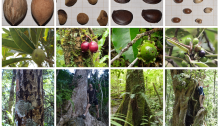
Edicson Parra-Sanchez discusses his recent article, ‘Neutral-based processes overrule niche-based processes in shaping tropical montane orchid communities across spatial scales‘: Orchid species are among the richest and most popular horticultural plants on the planet. They have been featured in films, used as symbols of biodiversity in governmental institutions, and utilized in traditional medicine for centuries.…

🌳Neighbours matter & the weak succumb

David Cracknell, George Peterken and John Healey discuss their recent article, ‘Neighbours matter and the weak succumb: ash dieback infection is more severe in ash trees with fewer conspecific neighbours and lower prior growth rate‘: Lady Park is an ancient, mixed deciduous woodland on the flanks of the Wye Gorge between Symonds Yat and Monmouth…

Why unmanaged forests are crucial for understanding long-term forest dynamics

Yannek Käber discusses his recent article: Sheltered or suppressed? Tree regeneration in unmanaged European forests. Find out how the intricate relationships between tree species, competition, and stress responses are vital for devising effective conservation and management strategies in the face of climate change: Forest regeneration is a complex process influenced by a multitude of factors, making it challenging…