Grime Reviews, Series 4: How do species distribution models (SDMs) reflect and inform ecological processes?

In this post our Reviews Editor, Jason Fridley, highlights papers from the 4th Grime Reviews series, “How do species distribution models (SDMs) reflect and inform ecological processes?”. The six papers include an array of methodological and conceptual issues at the vanguard of predicting range shifts in a changing environment. Sanczuk et al. (2024) describe a…

The humble broom

Peter Thomas, Keele University, UK and Marion Giertych, University of Zielona Góra and Institute of Dendrology PAS, Poland, discuss their article: Biological Flora of Britain and Ireland: Cytisus scoparius, in English and Polish Broom (Cytisus scoparius), a non-spiny relative of gorse (Ulex species), is a delightful shrub native across Europe in open areas. What makes…

How Do Dry Conditions Affect Carbon Movement in Bamboo Forests?

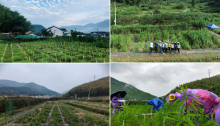
Xiaogai Ge, from the Research Institute of Subtropical Forestry of the Chinese Academy of Forestry, and Mai-He Li, from the Swiss Federal Institute for Forest, Snow, and Landscape Research in Switzerland, discuss their article: Drought Decreases Carbon Flux but Not Transport Speed of Newly Fixed Carbon from Leaves to Sinks in a Giant Bamboo Forest…

Climate and mycorrhizal type shape global plant nitrogen dynamics

Qiong Chen and Zuoqiang Yuan, Northwestern Polytechnical University in China, discuss their article: Global mycorrhizal status drives leaf δ15N patterns Nitrogen: A Vital Nutrient for Plants Nitrogen is a crucial nutrient for plants. It plays a vital role in their growth, development, and overall productivity. The availability of nitrogen is a key factor in understanding…

Can Resilient Species Keep Up? Climate Change Threatens Even Tough Seaweeds

Fernando Lima, CIBIO/BIOPOLIS, University of Porto, Portugal, discusses his article: Simulated intertidal heat stress on the brown seaweed Ascophyllum nodosum demonstrates differential population sensitivity to future climate Climate change is often thought to threaten only vulnerable species, but what about the tough ones? New research on a resilient seaweed suggests that even the hardiest species…

Local native species with global naturalization success can be strong competitors for alien species

Guan-Wen Wei and Mark van Kleunen, from the Ecology Lab at the University of Konstanz in Germany, discuss their article: Responses of naturalized alien plants to soil heterogeneity and competition vary with the global naturalization success of the native competitors Biological invasions are happening With the development of transportation and globalization, species have been introduced…

Shaded habitats drive higher rates of fern diversification

Guilin Wu, Hainan Jianfengling Forest Ecosystem National Field Science Observation and Research Station, Research Institute of Tropical Forestry, Chinese Academy of Forestry, discusses his article: Shaded habitats drive higher rates of fern diversification Ferns represent one of the three major lineages of vascular plants, having originated approximately 411–385 million years ago. In prehistoric times, they…