Shifting plant investment strategies along climatic gradients drive ecosystem carbon cycling in alpine grasslands

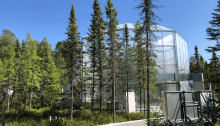
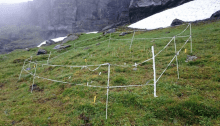
Inge Althuizen, Norwegian Research Center AS (NORCE), discusses her article: Climate-induced shifts in plant investment strategies regulate ecosystem carbon cycling across alpine grasslands Alpine ecosystems provide a diversity of ecosystem services, including carbon storage. These cold ecosystems and carbon stored in them are particularly sensitive to climate change. But what are the mechanisms underlying carbon…

Climate warming doesn’t feel the same for everyone: The contrasted responses of tree saplings to global warming.

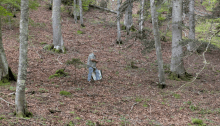
Benjamin Roux, University of Bordeaux in France, discusses his article: Tree canopy shapes the survival of oak and beech saplings during the regeneration stage along an elevation-driven temperature gradient The challenges of heatwaves for forest ecosystems As western Europe experiences yet another heatwave, most of the public discussion focuses on how human societies can adapt…

Exploring the extremes of cation availability

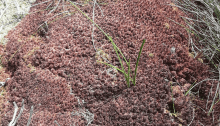
Jonathan Ritson, who worked at the University of Manchester during this research, discusses his article: Cation responses to global changes alter ecological processes in ombrotrophic systems In bogs, we often focus on the hydrology of the system; there has also been a large body of work trying to understand the global implications of acid deposition…

Above- and below-ground components do not respond equally to changing precipitation

Qingzhou Zhao, Umeå University in Sweden, discusses their article: Increasing precipitation reshapes alpine plant–microbial nutrient partitioning and enhances ecosystem carbon and nitrogen retention A rainy question in the alpine ecosystem Rainfall is changing as the climate warms. In many alpine regions, including the Tibetan Plateau, ecosystems are becoming not only warmer, but also wetter. At…

The mechanisms driving the timing and duration of alpine meadow plant leaf senescence under climate warming and precipitation changes

Miaojun Ma. Lanzhou University, discusses his article: Warming advanced leaf senescence in alpine plants through advancing leaf emergence and increasing soil drought Background Plant autumn leaf senescence, which marks the end of photosynthesis and the growing season, as well as the onset of dormancy, is particularly critical in the plant annual cycle. Early or late…

The order of flowers and leaves matters more than we thought

Xingli Xia and Jianyang Xia, East China Normal University, discuss their article: Flower-leaf sequence shapes plant phenological sensitivity to warming Every spring, we witness nature’s awakening as flowers bloom and leaves unfold. But have you ever noticed that some plants burst into bloom before their leaves appear, while others do the opposite? This seemingly simple…

Earlier snowmelt impacts carbon cycling in montane meadows

Olivia Vought, University of Michigan, discusses her article: Earlier snowmelt increases the strength of the carbon sink in montane meadows unequally across the growing season In cold, mountain regions, the climate is warming, causing snow to melt earlier. In fact, winters are changing faster than the warmer seasons in many seasonally cold places. However, how…

More Snow, Fewer Species: A 16-Year Story from a Tibetan Meadow

Juntao Zhu, Institute of Geographic Sciences and Natural Resources Research of the Chinese Academy of Sciences, discusses his article: Loss of resource-conservative species affects plant phylogenetic and functional structure under long-term snow addition The alpine meadows on the Tibetan Plateau are unique ecosystems shaped by a harsh climate and traditional yak grazing. But as the…

Striking shifts in the timing of bryophyte spore dispersal: What 35 years of airborne DNA revealed about climate change

Fia Bengtsson, Lund University and Norwegian Institute of Nature Research, discusses her article: Rapid shifts in bryophyte phenology revealed by airborne eDNA Most of us walk past mosses and liverworts without really noticing them. But these small plants, known as bryophytes, are vital to ecosystems, including in Arctic and sub-Arctic regions. They retain water, regulate…