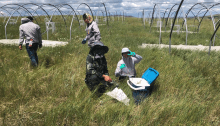
How the strategies of bilberry roots to access nutrients vary at small scales and with changes in nutrient availability

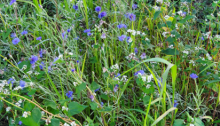
Barbara Meyers, University of Freiburg in Germany, discusses her article: Soil nutrient availability rather than spatial nutrient heterogeneity shapes the intraspecific response of root architectural, morphological and mycorrhizal traits in Vaccinium myrtillus Roots make up for a large proportion of plant biomass and play a central role in several plant functions: accessing water and nutrients…

How tree growth strategies shift with age and climate: What it means for forest management

Rongxu Shan and Zilong Ma from Sun Yat-sen University, and Han Y.H. Chen from Lakehead University discuss their article: Functional traits and individual tree growth relationship weakens with stand development but strengthens with increasing temperature. Forests are far more than just collections of trees: they are vibrant, dynamic ecosystems where each tree’s growth strategy plays…

How Leaf Traits Help Us Understand the Future of Grasslands

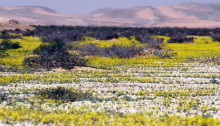
Kuo Sun and Zhenzhu Xu, Institute of Botany of the Chinese Academy of Sciences, discuss their article: Global coordination and trade-off of grassland species traits and climatic drivers Grasslands stretch across vast parts of the world — from the wide prairies of North America to Africa’s savannas and the steppes of Asia. These landscapes are…

Functional traits are important predictors of tree growth but their effects vary with age and leaf habit.

Mégane Déziel, Université du Québec à Montréal, discusses her article: Resolving the Effects of Functional Traits on Tree Growth Rates: The Influence of Temporal Dynamics and Divergent Strategies by Leaf Habit Functional ecology has long assumed that variation in tree growth reflects differences in functional traits, which serve as proxies for resource acquisition and investment…

How Plants Play the Game of Survival

Ruiling Liu and Wenyong Guo, East China Normal University, discuss their article: Grime’s CSR theory revisited: A whole-plant view of vascular plant functioning across contrasting environments You might think plants are quiet and slow, but their lives are full of strategy. Some race ahead, dominating fertile fields, while others hang on stubbornly in rocky cliffs…

Are non-native plant species similar to natives in harsh environments? Evidence from the central Chilean Andes.

Vinka Anic and Lohengrin Cavieres, University of Concepción in Chile, discuss their article: Functional and phylogenetic similarity between native and non-native plant species along an elevational gradient in the central Chilean Andes: No evidence for the preadaptation hypothesis The establishment of non-native species is expected to be constrained in regions affected by harsh environmental conditions…

Plant trait networks: Shifting of whole phenotypes with aridity and functional richness

Camila Medeiros, University of California, Los Angeles, discusses her article: Simplification of woody plant trait networks among communities along a climatic aridity gradient Motivation Plants are enormously diverse across regions, even within specific ecosystems, and zooming in on individual plants, one finds great diversity among their traits. Variation of all kinds of traits can play…

Woody plant encroachment in forest-grassland mosaics: How do woody plant functional traits change above and below-ground?

Raissa Jardim, Federal University of Paraná, Brazil, describes her article: Unveiling above- and below-ground ecological strategies that underlie woody plant encroachment in grasslands, in both English and Portuguese. Woody plant encroachment in forest-grassland mosaics Forests and grasslands aren’t always neatly separated ecosystems. In many places they coexist side by side, creating beautiful but complex mosaics…

How is polyploidy affecting the evolution and diversity of plant functional traits? the case of Dianthus broteri complex

Javier López-Jurado discusses recent article: Polyploidy promotes divergent evolution across the leaf economics spectrum and plant edaphic niche in the Dianthus broteri complex. Find out more about role of polyploidy – the state of having more than two paired sets of chromosomes – in overcoming constraints for the evolution of plant functional traits. Major functional traits in…

Why trait-based ecology is full of surprises

Noémie Pichon discusses her recent article: ‘Intraspecific trait changes have large impacts on community functional composition but do not affect ecosystem function‘. Find out more about this new research into intraspecific trait variation and its importance for understanding community functional composition. Trait variation is as large within as between species, but it doesn’t mean the…