High-altitude allies: Alpine plants and their fungal partners

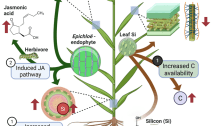
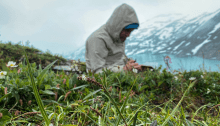
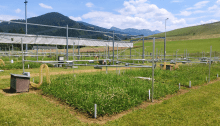
Skylar Burg, University of Jyväskylä in Finland, discusses her article: Abiotic conditions along altitude shape plant-fungal associations by influencing both fungal availability and association strength Setting out in the mountains High in the mountainous tundra of Norway, Sweden, and Finland, the perennial herb Bistorta vivipara, known as alpine bistort, thrives in conditions that challenge most…

Mariona Pajares-Murgó on how mutualistic and antagonistic phyllosphere fungi contribute to plant recruitment in natural communities

The interest on the microbial ecosystems that inhabit leaves is rapidly increasing due to their participation in basic ecosystem functions. One of the aspects of plant dynamics which leaf fungi can most clearly affect is recruitment, since the success of newly germinated plants can be seriously compromised by pathogenic activity or by the absence of…

Carine Emer on the intricate interactions between plants and their natural enemies in tropical forests

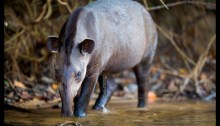
Once upon a time… large mammals flourished in the lush tropical forests of South America. Those giants evolved as key ecosystem engineers, acting as top-down regulators of ecological processes, either by predating on other smaller-sized animals, or feeding on plants, eating fruits and seeds, browsing and chewing leaves and branches, or even by trampling and…

The January Art Gallery

Welcome to the January Art Gallery. This month we are excited to feature found objects, video art, AI, linocuts, watercolours, immersive installation, collage and photography. Our artists are Jitka Klimešová, Jenny Jih, Sanji Yang, Pocoyo, Neal Haddaway, Annette Raffan, Iris Hill and Shengdi Cui. Shengdi Cui This art project focuses on exploring the small and…

Rainbow Research: Nature

To celebrate UK Pride Month, the British Ecological Society journal blogs are posting a Rainbow Research series, which aims to promote visibility of STEM researchers from the LGBTQ+ community. Each post will be connected to a theme represented by one of the colours shown in the Progress Pride flag. In this post, Justin Stewart discusses their…

Editor’s Choice: Volume 109 Issue 4

The Editor’s Choice for our April issue is “Dynamic feedbacks among tree functional traits, termite populations and deadwood turnover” by Guo, Tuo, Ci, Yan & Cornelissen. The findings of this article imply that tree functional composition, with variation in deadwood quality through decomposition time, can help to sustain termite populations and thereby forest carbon turnover. Here…