Why does heather self-organise into wave-like patterns? A mathematical investigation

Toyo Vignal, Okinawan Institute of Science and Technology in Japan, discusses her article: Surviving the winds through pattern formation: Mathematical modelling of heather stripes in Scotland. In some remote areas of the Scottish highlands, one can encounter intriguing vegetation patterns consisting of regularly arranged plants and bare soil. The first time I encountered such patterns…

Making robust projections of species distributions at fine resolution: Go spatially-nested

Antoine Guisan, University of Lausanne, Switzerland, discusses his article: Spatially-nested species distribution models (N-SDM): An effective tool to overcome niche truncation for better inference and projections Setting the scene Species distribution models (SDMs) relate species observations to mapped environmental conditions to estimate the ecological niche (i.e., the ensemble of suitable conditions) and predict the spatial distribution…

Predicting the unpredictable: Modelling the distribution of plant-associated microbes with species distribution models

Sarah Ishak, Université du Québec à Montréal, discusses their article: Modelling the distribution of plant-associated microbes with species distribution models The array of bacteria, fungi, protists, viruses, and archaea that live inside or outside of plant tissue, AKA plant-associated microbes, perform functions that vary from beneficial to parasitic to simply neutrally existing with the plant.…

Gulls can spread weeds over large distances and between habitats

Authors, Víctor Martín-Vélez and Andy J. Green, discuss their recent study which highlights the importance of non‐frugivorous waterbirds as vectors for long‐distance plant dispersal: Spatial patterns of weed dispersal by wintering gulls within and beyond an agricultural landscape. You can also read the Press Release for this article here. Weeds are plants that spontaneously grow…

Fire as a fundamental ecological process

“Fire as a fundamental ecological process: Research advances and frontiers” by McLauchlan et al. is the newest essay review to be published in Journal of Ecology. In this blog post, authors S. Yoshi Maezumi, Jessica R. Miesel, Philip E. Higuera and Leda Kobziar summarise the recent advances and frontiers in fire ecology research, within the…

In late-successional forest communities, how much does history matter?

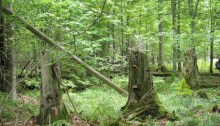
Author Kerry Woods discusses recently published Journal of Ecology article: Over 80 years without major disturbance, late‐successional Białowieża woodlands exhibit complex dynamism, with coherent compositional shifts towards true old‐growth conditions by Brzeziecki et al. Find out more about the importance of long-term data when considering old-growth forest dynamics. Thirty years ago, John Magnuson wrote of the…

Model fitting in ecology: trade-offs between complexity and generality

Journal of Ecology recently published new research article by Clark et al. Predicting species abundances in a grassland biodiversity experiment: Trade‐offs between model complexity and generality Author Adam Clark discusses the paper in more detail and explores the trade‐off between bias and variance when modelling ecological systems. It is common knowledge that increasing the number of…

How do tree fern understories impact conifer–angiosperm forest dynamics?

Brock et al. recently published their new article “The hare, tortoise and crocodile revisited: Tree fern facilitation of conifer persistence and angiosperm growth in simulated forests” in Journal of Ecology. Author James Brock discusses this research in more detail and explains how tree fern understories are important determinants of forest structure. Establishing how conifers compete…