Journal of Ecology aims to bring important ecological work to its wide international audience. It publishes not just strong primary research studies that advance our understanding of ecological principles, but also Review articles that promote discussion and offer new ideas and directions in plant ecology. Our Reviews aim to be more than just a summary or description; they offer a path forward and integrate existing studies in new and often provocative ways. Here, we are going to describe the types of Reviews we publish and highlight several well-cited examples.
We publish Reviews and Mini-Reviews. Reviews are generally limited to 8000 words, while Mini-reviews are capped at 5000 words. Authors of both types aim for more than a summary of a body of research or filling knowledge gaps. Rather, Reviews in the Journal typically promote a conceptual advance and provide a fresh look at accepted ideas. We also publish the Grime Reviews, a series of commissioned thematic of Reviews honouring the late eminent ecologist J. Philip Grime. The latest published series of Grime Reviews is entitled ‘How do species distribution models reflect and inform ecological processes?’ Potential submissions for the next theme, “Protected and restored grassy ecosystems as climate solutions”, are being requested in an open call through 1 September.
The Reviews we publish are amongst the most highly cited in the Journal, such as the Mini-Review by Verheyen and colleagues, ‘Forest canopies as nature-based solutions to mitigate global change effects on people and nature’, which was part of a recent Special Feature, ‘The plant ecology of nature-based solutions’. In this Mini-Review, the authors describe how forest management activities can be harnessed to limit the global change impacts of both physical stressors (e.g., drought) and biotic factors such as invasive species. This was just one of the quality Reviews within the Special Feature and is a key contribution to the wider body of literature.

Another review from a special feature, ‘Active remote sensing for ecology and ecosystem conservation’, is the work by Coverdale and Davies, ‘Unravelling the relationship between plant diversity and vegetation structural complexity: A review and theoretical framework’. This work is focussed on understanding mechanisms that promote vegetation structural complexity (VSC). The authors propose a theoretical framework underlying the relationship between plant diversity and VSC. Author Tyler Coverdale won the 2023 Harper Prize for this review, which is Journal of Ecology’s prize for the highest quality papers by early career researchers. This just goes to show that ecologists of all career stages can write great Reviews!

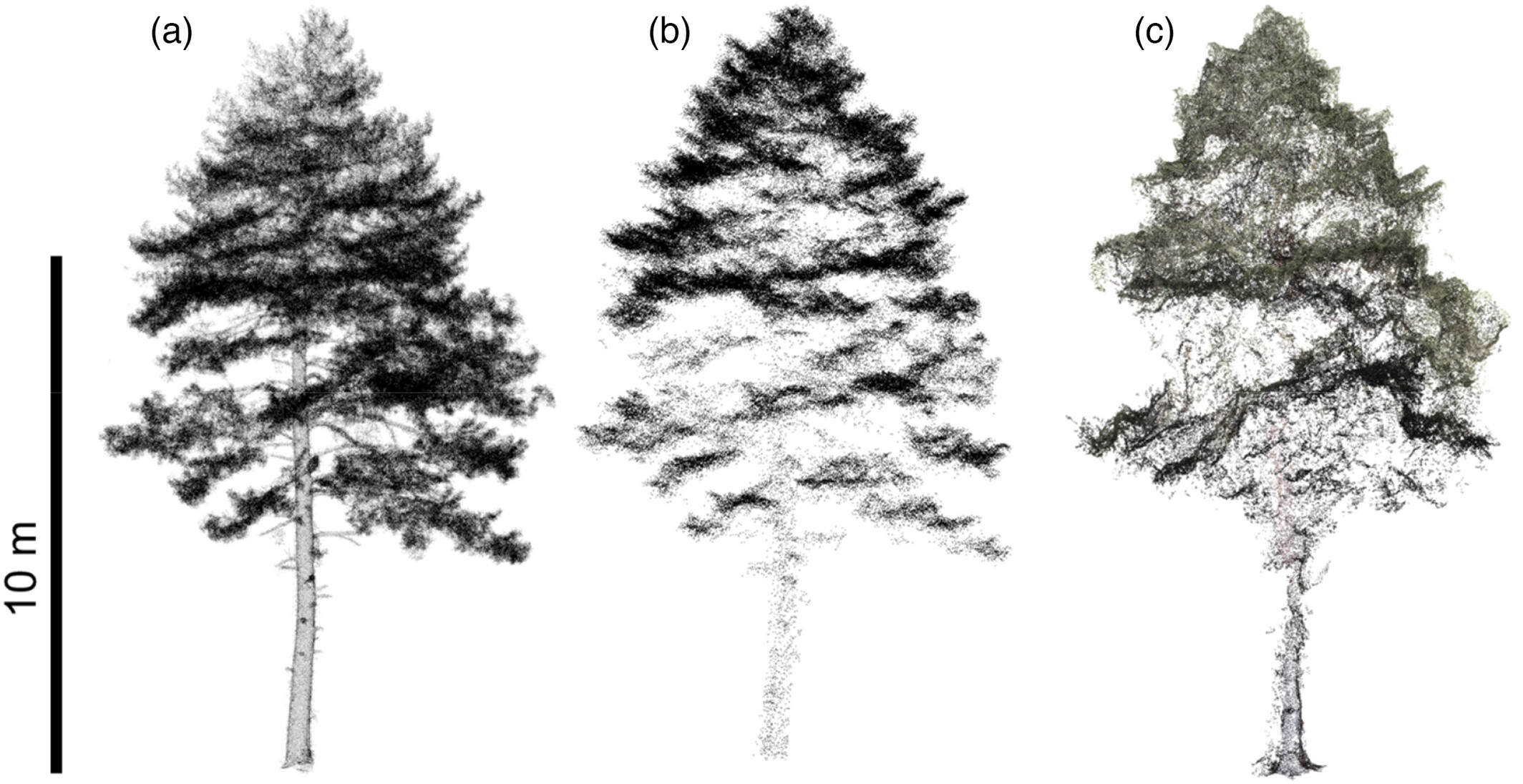
Of course, impact is more than just citations. Garland and colleagues’ ‘A closer look at the functions behind ecosystem multifunctionality: A review’ and Lines and colleagues’ ‘The shape of trees: Reimagining forest ecology in three dimensions with remote sensing’ have both been used in policy documents, in Norway, the United Nations, and Sweden. The Journal is proud that not only are our reviews respected amongst our academic peers, but that they also have real-world effects, shaping the way nations manage their environments.
We welcome unsolicited Reviews and Mini-Reviews, so if you are feeling inspired and want to push forward the boundaries of your field, read our Author Guidelines and submit here!

 jecologyblog.com