2025 HARPER PRIZE SHORTLIST: For the next two weeks, we are featuring the articles shortlisted for the 2025 Harper Prize. The Harper Prize is an annual award for the best early career research paper published in Journal of Ecology. Jianguo Ma’s ‘Ammonium preference and microbial nitrification inhibition drive the expansion of a poisonous plant in alpine -meadows‘ is one of those shortlisted for the award.
About the paper:
What is your shortlisted paper about, and what are you seeking to answer with your research?
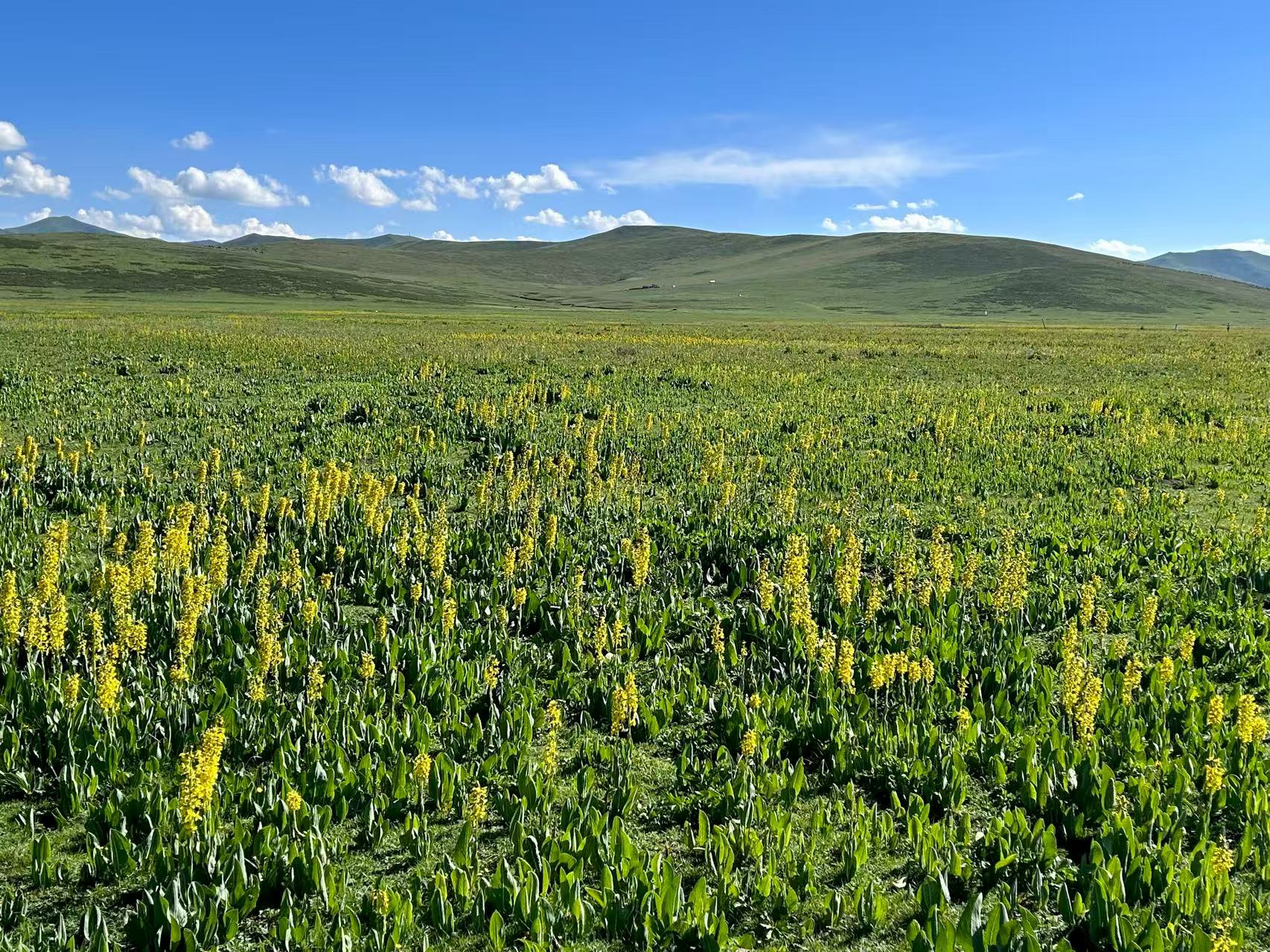
In our paper, we discovered that Ligularia virgaurea, a poisonous plant on the Qinghai-Tibetan Plateau, actively inhibits soil nitrification to increase rhizosphere ammonium levels. It then efficiently captures this nitrogen through its own physiological preference for ammonium. With this research, we sought to answer a fundamental paradox: how can this toxic species expand so rapidly in an alpine environment where available nitrogen is severely limited?
Were you surprised by anything when working on it? Did you have any challenges to overcome?
While collecting rhizosphere soil in the field, I was surprised by a distinct chemical odor from the plants that caused mild dizziness—definitely not altitude sickness! We knew this stemmed from secondary metabolites, but the specific compounds remain unidentified. To overcome this, we had to take frequent breaks and use respiratory protection during sampling. Unravelling the exact nature of these chemical exudates is a challenge I plan to address in future research.
What is the next step in this field going to be?
Building on this study, I proposed a new hypothesis: a nitrogen competition strategy based on the supply-demand matching of “rhizosphere ammonium enrichment” and “root ammonium preference.” The next step in this field will be decoding the molecular basis behind this strategy, encompassing both root physiology and rhizosphere dynamics. Ultimately, we need to understand exactly how these nitrogen strategies drive the population-level expansion of poisonous plants.
What are the broader impacts or implications of your research for policy or practice?
By decoding the molecular mechanisms of nitrogen competition, our research can identify specific biological targets for the control of poisonous plants. This offers a paradigm shift for grassland management: moving away from traditional, “end-of-pipe” eradication methods towards targeted, mechanistic interventions that disrupt the specific resource-acquisition strategies of these expanding toxic species.
About the author:
How did you get involved in ecology?
I originally trained as a landscape architect. My journey into ecology began during a trip to the Qinghai-Tibetan Plateau. I marveled at the vibrant flowers, but a professor told me they were “beautiful killers.” While I saw aesthetics, local herders saw ecological disaster, yet no one fully understood how these plants spread. That striking contrast between beauty and ecological reality deeply moved me, prompting my shift to grassland ecology.
What is your current position?
I am currently working as a Postdoctoral Researcher at Lanzhou University.
Have you continued the research your paper is about?
Absolutely, this remains my core research interest. I am currently working on uncovering the underlying molecular mechanisms that drive this coupled “rhizosphere ammonium enrichment and root ammonium preference” strategy in poisonous plants.
What one piece of advice would you give to someone in your field?
Absolutely, this remains my core research interest. I am currently working on uncovering the underlying molecular mechanisms that drive this coupled “rhizosphere ammonium enrichment and root ammonium preference” strategy in poisonous plants.



 jecologyblog.com