🌈Pride Month 2024: Jill Love

Happy Pride Month! Join the British Ecological Society in this annual, global celebration as we share stories from STEM researchers who belong to the LGBTQ+ community. In this post, Jill Love (she/her), PhD candidate at Tulane University of New Orleans, shares her perspectives as a field researcher on why Pride in National Parks is more…
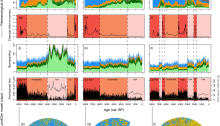

Editor’s Choice (112:05): Mediterranean ecosystems at risk of crossing tipping point with warming & fire beyond Holocene levels

The editor’s choice for our May issue is ‘Simulating past and future fire impacts on Mediterranean ecosystems‘, by Christoph SchwĂśrer et al. Here, Associate Editor Anping Chen discusses the importance of this research: Characterized by a distinct climate with hot, dry summers and mild, wet winters, the Mediterranean region is also often associated with frequent and…

Meet our new Blog Editor: F. Curtis Lubbe

We’re pleased to introduce our new Blog Editor! Curtis Lubbe joins the team to help manage the Journal of Ecology blog and publish author’s stories behind their research. Find out a bit about Curtis below: Name: F. Curtis LubbeLocation: Třeboň, Czech RepublicKeywords: belowground storage organs, drought, functional ecology, nonstructural carbohydrates, overwintering, storage Tell us a bit…

Tyler Coverdale – 2023 Harper Prize Winner!🏆

We’re delighted to announce that the winner of the 2023 Harper Prize is Tyler Coverdale! The Harper Prize is awarded annually for the best paper published in the journal by an early career researcher. Winner: Tyler Coverdale Paper: Unravelling the relationship between plant diversity and vegetation structural complexity: A review and theoretical framework “As Tyler´s succinct review points out, we…

Chenhui Chang: Reciprocal bark exchange helps to disentangle bark & wood trait effects on invertebrate diversity

2023 HARPER PRIZE SHORTLIST: Throughout March, we are featuring the articles shortlisted for the 2023 Harper Prize. The Harper Prize is an annual award for the best early career research paper published in Journal of Ecology. Chenhui Chang’s article ‘Reciprocal bark exchange helps to disentangle tree species-dependent bark and wood trait effects on invertebrate diversity‘ is one of those shortlisted…

Tara Miller: Warmer temperatures are linked to phenological mismatch among native & non-native forest plants

2023 HARPER PRIZE SHORTLIST: Throughout March, we are featuring the articles shortlisted for the 2023 Harper Prize. The Harper Prize is an annual award for the best early career research paper published in Journal of Ecology. Tara Miller’s article ‘Warmer temperatures are linked to widespread phenological mismatch among native and non-native forest plants‘ is one of those shortlisted for the…

Maria Jessen: Seedlings controlled by litter

2023 HARPER PRIZE SHORTLIST: Throughout March, we are featuring the articles shortlisted for the 2023 Harper Prize. The Harper Prize is an annual award for the best early career research paper published in Journal of Ecology. Maria Jessen’s article ‘Litter accumulation, not light limitation, drives early plant recruitment‘ is one of those shortlisted for the award: 👋 About me: from…

Jan Perret: Plants stand still but manage to hide

2023 HARPER PRIZE SHORTLIST: Throughout March, we are featuring the articles shortlisted for the 2023 Harper Prize. The Harper Prize is an annual award for the best early career research paper published in Journal of Ecology. Jan Perret’s article ‘Plants stand still but hide: Imperfect and heterogeneous detection is the rule when counting plants‘ is one of those shortlisted for…

Juliana Monteiro: Bryophyte assembly rules across scales

2023 HARPER PRIZE SHORTLIST: Throughout March, we are featuring the articles shortlisted for the 2023 Harper Prize. The Harper Prize is an annual award for the best early career research paper published in Journal of Ecology. Juliana Monteiro’s article ‘Bryophyte assembly rules across scales‘ is one of those shortlisted for the award: 👋 About me I grew up in northern…