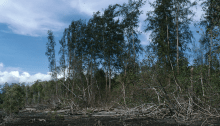
Cover stories (111:04): The shape of autumn

The cover image for our April issue shows dried, freshly senesced leaves and foliated twigs of different gymnosperm and angiosperm species, demonstrating the size and shape of leaf litter particles. This image relates to the article ‘Experimental evidence that leaf litter decomposability and flammability are decoupled across gymnosperm species‘ by Shudong Zhang et al. Here, Shudong tells us…
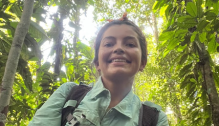
Vanessa Rubio: Functional groups, determinism & the dynamics of a tropical forest

Throughout April, we are featuring the articles shortlisted for the 2022 Harper Prize. The Harper Prize is an annual award for the best early career research paper published in Journal of Ecology. Vanessa Rubio Ramos’s article ‘Functional groups, determinism and the dynamics of a tropical forest‘ is one of those shortlisted for the award. 👋 About me I grew…

Angela Illuminati: Coordination between water uptake depth & the leaf economic spectrum

Throughout April, we are featuring the articles shortlisted for the 2022 Harper Prize. The Harper Prize is an annual award for the best early career research paper published in Journal of Ecology. Angela Illuminati’s article ‘Coordination between water uptake depth and the leaf economic spectrum in a Mediterranean shrubland‘ is one of those shortlisted for the award. 👋 About me…

Jorge Isla: Drivers of interaction networks during plant range expansion

Throughout April, we are featuring the articles shortlisted for the 2022 Harper Prize. The Harper Prize is an annual award for the best early career research paper published in Journal of Ecology. Jorge Isla’s article ‘Drivers of individual-based, antagonistic interaction networks during plant range expansion‘ is one of those shortlisted for the award. ⭐️About me I grew up in…

Miriam Gerhard: Variable environments in variable continents

Throughout April, we are featuring the articles shortlisted for the 2022 Harper Prize. The Harper Prize is an annual award for the best early career research paper published in Journal of Ecology. Miriam Gerhard’s article ‘Environmental stoichiometry mediates phytoplankton diversity effects on communities’ resource use efficiency and biomass’ is one of those shortlisted for the award. ⭐️About me: between South…

Cover stories (111:03): The mysterious process of Mistletoe germination

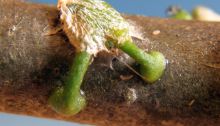
The cover image for our March issue shows twin seedlings of mistletoe (Viscum album) established on a branch of apple (Malus domestica), the parasite’s most frequent British host. This image relates to the Biological Flora of Britain and Ireland: Viscum album, by Peter Thomas et al. Here, co-author Jonathan Briggs tells us the story behind the image: The germination…

Editor’s Choice (111:03): The role of mucilage in protecting seeds from predation

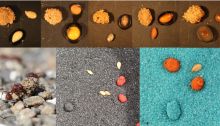
The editor’s choice for our March issue is “Sandy seeds: Armour or invisibility cloak? Mucilage-bound sand physically protects seeds from rodents and invertebrates“ by Eric LoPresti et al. Here, Associate Editor Michał Bogdziewicz discusses the importance of this research:  Seeds are the fundamental units of plant reproduction, critical to the persistence and distribution of plant populations.…

Cover stories (111:02): Yellow trout lily – a journey from ground to museum to research journal

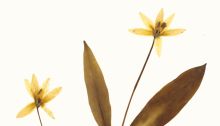
The cover image for our February issue shows a digitized herbarium specimen of flowering yellow trout lily plants (Erythronium americanum). This image relates to the article, Warmer temperatures are linked to widespread phenological mismatch among native and non-native forest plants, by Tara Miller et al., which is part of a special feature on Leveraging natural history collections to understand…

Recovery after disturbance is slow across space and time; can these patterns tell us how to actively restore ecosystems better?

Emma Ladouceur & Jonathan M. Chase discuss their recent article: The recovery of plant community composition following passive restoration across spatial scales. Find out more about what it takes for ecosystems to recover from disturbances and whether passive restoration is enough. Human disturbances can negatively impact species, biodiversity and ecosystems. Given enough time, will ecosystems…

Using biogeographic history to predict change on Mount Jaya

Liam Trethowan discusses his recent article: Plant species biogeographic origin shapes their current and future distribution on the world’s highest island mountain. Find out more about how they used herbarium specimens to investigate species presence under current and future temperatures. Tropical mountains are host to some of the highest densities of plant species on earth,…