Asymmetric adaptation drives rapid evolution as an invasive plant expands northward

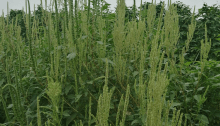
Rui Wang, Institute of Plant Protection of the Chinese Academy of Agricultural Sciences, discusses their article: Asymmetric adaptation across a core–periphery climatic gradient drives rapid phenological evolution and range expansion in an invasive plant When we think about plant invasions, we often picture species spreading quickly, competing with native plants, and causing problems for ecosystems…

Diverse city lives of Asiatic dayflowers in a Japanese megacity

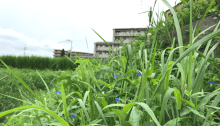
Taichi Nakata, Kyushu University in Japan, discusses their article: Adaptive trait divergence of annual plants in response to urban habitat diversity in a megacity As we walk through cities, we often notice flowers blooming in the gaps in pavement, along roadsides, or in parks. Despite the drastic alterations of their natural habitats by human activity,…

Shaded habitats drive higher rates of fern diversification

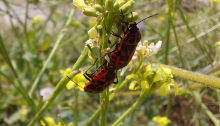
Guilin Wu, Hainan Jianfengling Forest Ecosystem National Field Science Observation and Research Station, Research Institute of Tropical Forestry, Chinese Academy of Forestry, discusses his article: Shaded habitats drive higher rates of fern diversification Ferns represent one of the three major lineages of vascular plants, having originated approximately 411–385 million years ago. In prehistoric times, they…

Rainbow Research: Nature

To celebrate UK Pride Month, the British Ecological Society journal blogs are posting a Rainbow Research series, which aims to promote visibility of STEM researchers from the LGBTQ+ community. Each post will be connected to a theme represented by one of the colours shown in the Progress Pride flag. In this post, Justin Stewart discusses their…

On the speed of plants

Author Daniel Montesinos discusses his recent Journal of Ecology article: “Fast invasives fastly become faster: Invasive plants align largely with the fast side of the plant economics spectrum.” Find out more about the plant economics spectrum and how invasive plants align largely with the fast side. This mini-review is part of our upcoming Special Feature…

Citizen Science: Follow the steps of Charles Darwin and glimpse into cowslip flowers this Spring!

We’re spotlighting the Looking for Cowslips citizen science campaign! Organiser Tsipe Aavik shares more about this citizen science project, the findings so far and how you can take part in this campaign. If you’re interested in getting involved with a cowslip survey this Spring, you can find out more here! You can also read the…

Inaugural Sprent Review: Explaining the evolutionary and biogeographical success of nodulated legumes compared with actinorhizal plants

Today our inaugural Sprent Review was published in the March issue of Journal of Ecology. The first Sprent Review is “Evolution and biogeography of actinorhizal plants and legumes: A comparison” by Julie Ardley and Janet Sprent. Here Julie and Janet discuss Janet’s illustrious career in ecology and provide details about their new review paper. You…

Sprent Reviews

We are delighted to announce the publication of our first Sprent Review in Journal of Ecology, by Julie Ardley and Janet Sprent on the “Evolution and biogeography of actinorhizal plants and legumes.” Here our Senior Editors, Richard Bardgett and David Gibson, introduce the Sprent Reviews series, discusses the career of Janet Sprent and highlights the…

Marine Plant Ecology

Earlier this week Journal of Ecology published a new Virtual Issue on Freshwater Plant Ecology, which you can read in full here. In this post Rich Shefferson shares a selection of recent marine plant articles! The featured papers fall into four key research themes: Population, Community, Ecosystem & Evolution. I suppose I am not alone…