Foliar herbivory can reshape plant pollinator networks

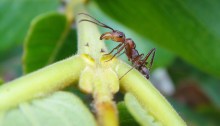
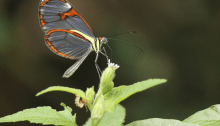
Luiz Rezende and Martín Pareja, Universidade Estadual de Campinas (UNICAMP) in Brazil, discuss their article: Foliar herbivory pushes plant individuals towards the periphery of a plant-floral visitor interaction network Ecological interactions have fascinated naturalists for centuries. Watching bees and butterflies visit flowers continues to mesmerise and nurture a love of nature in children and adults…

Big Seeds Are Smarter Than They Look

Si-Chong Chen (@SichongChen), Wuhan Botanical Garden of the Chinese Academy of Sciences, discusses her article: Large seeds as a defensive strategy against partial granivory in the Fagaceae Imagine you are an acorn. You’re packed with nutrients and a perfect meal for animals like squirrels and birds. But you’re not just food; you’re also a seed…

Editor’s Choice: Volume 109 Issue 5

The Editor’s Choice for our May issue is “Herbivore dung stoichiometry drives competition between savanna trees and grasses” by Judith Sitters & Harry Olde Venterink. This article shows that browsing and grazing herbivores potentially help maintain the tree‐grass balance in African savanna, through variation in the nitrogen (N) to phosphorus (P) ratio of their dung! Here the…

Cover stories: Volume 109 Issue 4

The cover image for our April issue shows a rodent herbivore alongside black mangrove seedlings, in a Florida salt marsh. Author and photographer, Rachel S. Smith, describes how she and her team tracked down this mystery mangrove muncher!This image relates to recently published research article: “Dead litter of resident species first facilitates and then inhibits sequential life…

Climate driven seasonal patterns in an ant–plant–herbivore interaction

How do seasonal changes in climate influence ecological interactions in an extrafloral nectary‐bearing plant community? Find out in recently published Journal of Ecology paper by Calixto et al. Author Kleber Del-Claro explains how climate can directly and indirectly impact ant–plant–herbivore interactions, and how we can better understand these changes by considering plant phenology over time.…

Optimal Defense Theory in an ant–plant mutualism

Here we take a closer look at a fascinating plant defense article by Calixto et al., which has recently been published in Journal of Ecology. Author Kleber Del-Claro explains different methods for anti-herbivore plant defenses and shares the results of this research, which is the first to show that ant recruitment via extrafloral nectar follows…

Green turtle grazing and seagrass carbon capture across Caribbean meadows

Journal of Ecology recently published an exciting new research paper by Johnson et al. “Seagrass ecosystem metabolic carbon capture in response to green turtle grazing across Caribbean meadows.” Author Robert Johnson discusses this research in more detail and presents further insights into how green turtle grazing affects carbon dynamics, within seagrass ecosystems. Green turtle abundance is…

Cover Stories: Issue 107 Volume 6

The cover image for Journal of Ecology’s latest issue was taken by Johan Martinelli. Here Johan retells the story behind capturing this incredible reindeer photograph. This photo relates to recently published research article “Experimental evidence of the long‐term effects of reindeer on Arctic vegetation greenness and species richness at a larger landscape scale” by Sundqvist et al. I…