Yihong Zhu, University of California, Berkeley, discusses her article: Legacy effects under an emerging novel disturbance regime: A memory-based framework to quantify tree growth responses
Emergent novel disturbance regime
Moderate-severity disturbances, such as drought, pathogen irruptions, and prescribed fire, may not cause widespread tree mortality, but can leave lingering impacts on surviving trees. Such disturbances are becoming more prevalent and frequent with climate change, increasing the likelihood that forests experience repeated or compound disturbances over time. As long-lived organisms, trees record past environmental and disturbance signals in their growth trajectories, offering a window into how past disturbances continue to shape future forest dynamics and resilience.
Ecological memory or disturbance legacy effect?
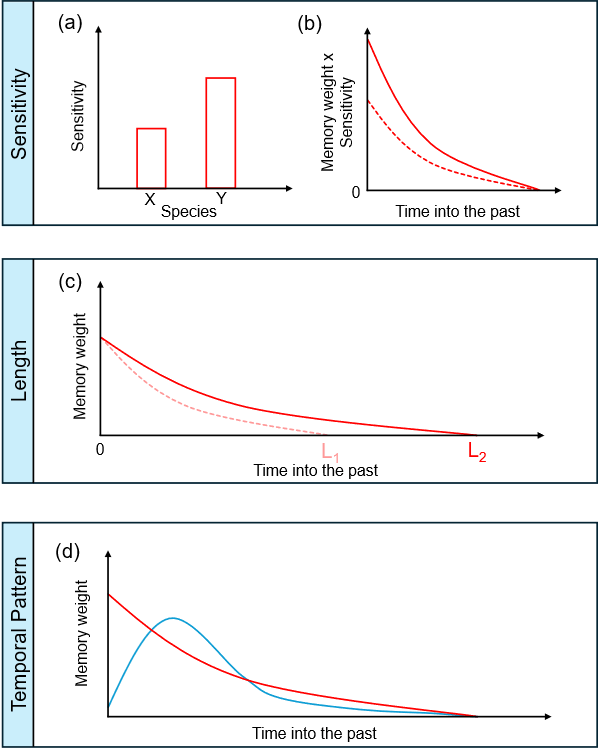
Not every change in tree growth following a disturbance should be interpreted as a disturbance legacy effect. Tree growth is inherently shaped by past environmental conditions, a phenomenon referred to as ecological memory. The term ecological memory describes the influence of antecedent conditions (e.g. climate) on current or future ecological responses (e.g. tree growth). This feature can create persistent patterns even in the absence of a disturbance event, making attribution difficult to determine. Thus, disturbance legacy effects can only be distinguished when ecological memory is explicitly considered. In this view, legacy effects emerge when a disturbance modifies how past conditions continue to influence present growth, leading to a deviation from the baseline memory-driven trajectory. Under this memory-based framework, quantifying legacy effects entails two steps: (1) measure the baseline memory; (2) measure the change of the three components of memory in the legacy window.
Application in a drought-and-fire-prone system
Forests in the western United States are experiencing more frequent drought and fire disturbances, and both could lead to legacy effects. We applied the above framework to annual tree growth data obtained from tree cores that were collected from two experimental mixed-conifer forests in California to quantify legacy effects of drought and intentional fire use. We focused on the co-existing six dominant species with contrasting life-history strategies, as determined by previously developed scales of vulnerability to either drought or fire. We then were able to test the hypothesis that the disturbance-induced memory shifts could be tracked by species-specific differences in their life-history strategies.
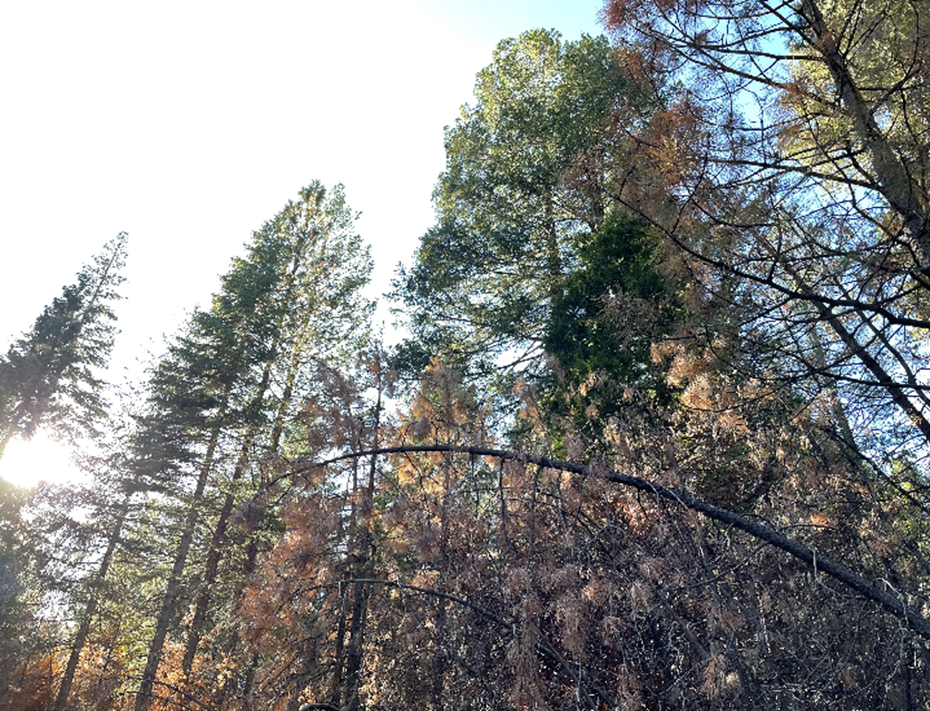
We found that legacy effects largely aligned with species-specific drought and fire vulnerability levels. Drought-intolerant species such as white fir exhibited increased climate sensitivity following drought, whereas drought-tolerant ponderosa pine did not. Fire-sensitive species showed post-fire reductions in growth, while fire-resistant species (ponderosa pine and Jeffrey pine) did not show a significant response. Among species exhibiting fire legacies, legacy length ranged from greater than 2 years (sugar pine and incense-cedar) to less than 4 years (white fir and Douglas-fir). By comparing the mean growth predictions based on models with and without the legacy effects, we found that ignoring both legacies led to a 4.2% overestimate of total growth in white fir and a 0.5% underestimate in ponderosa pine within two decades.
Our results suggest that disturbance tolerance confers weaker legacy effects, potentially enhancing competitive advantage under increasingly frequent disturbance regimes. Notably, legacy length is a critical feature: as disturbances become more frequent, recovery periods may be shortened, allowing legacy effects to accumulate over time. Such cumulative impacts may lead to long-term growth declines, shifts in competitive dynamics among species, and ultimately elevated mortality risks under future disturbance regimes.


 jecologyblog.com