Why having more herbivores doesn’t always mean more damage: Resource dilution effects in beech canopies

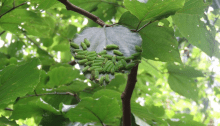
Jan Vigués Jorba, from the Swiss Federal Institute for Forest, Snow and Landscape Research WSL, discusses his article: Same damage, different story: Vertical decoupling of herbivore abundance and beech herbivory across forest layers Invertebrate herbivory is a key ecological process that shapes ecosystem functions, especially in forest habitats. Since forests have a complex three-dimensional structure,…

Seedling herbivory across elevational gradients: What drives both mean and variability in leaf damage?

Xiaoran Wang, East China Normal University, and Jian Zhang, Sun Yat-Sen University, discuss their article: Elevation and environmental factors shape variability rather than the mean of seedling herbivory across subtropical forests In mountain forests, not all seedlings experience insect herbivory in the same way. While some individuals suffer substantial leaf damage, others are barely affected.…

Insects and non-woody plants slow down tropical forest succession

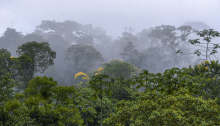
Kari Sogera Iamba, University of South Bohemia and the Institute of Entomology of the Czech Academy of Sciences, discusses his article: Insects and non-woody plants slow down tropical forest succession: A community-wide experiment in Papua New Guinea We investigated the factors driving rainforest regeneration in canopy gaps created by tree falls or selective logging. Ecological…

When trees compete: How dynamic traits help them live together

Guochun Shen and Jing Yang, East China Normal University in Shanghai, China, discuss their article: Shifts in above- and belowground trait dissimilarity under competition mediate the future impact of neighbors When we walk into a forest, it is easy to picture trees competing for light, water, and nutrients. Some seedlings race upwards and cast their…

How are plant and soil microbial diversity linked across mountain forests?

Jiayun Zou, Technical University of Munich, discusses his article: Biodiversity associations between aboveground and belowground communities in mountain forests across different climatic regions How tightly are the biological communities above and below the forest floor connected? In mountain forests, those associations remain poorly understood. While plants and soil microbes interact intimately, such as through symbioses…

Habitat quality sets the limits of neighbourhood effects in epiphyte communities

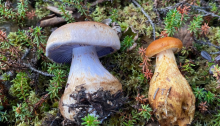
Theresa Möller, University of Hamburg in Germany, discusses her article: Effects of habitat quality and fine-scale spatial structure on epiphytic lichen and bryophyte communities Epiphytic lichens and bryophytes inhabit one of the most heterogeneous habitats in forest ecosystems: the bark of living trees. Different tree species provide distinct habitat conditions, leading to distinct epiphyte communities…

How do past disturbances shape tree growth?

Yihong Zhu, University of California, Berkeley, discusses her article: Legacy effects under an emerging novel disturbance regime: A memory-based framework to quantify tree growth responses Emergent novel disturbance regime Moderate-severity disturbances, such as drought, pathogen irruptions, and prescribed fire, may not cause widespread tree mortality, but can leave lingering impacts on surviving trees. Such disturbances…

Fast-growing and long-lived trees suffer most from their own kind

Nohemi Huanca-Nunez, Yale University, discusses her article: Integrated demographic strategies are more strongly associated with variation in conspecific density dependence than single traits in tropical tree seedlings, in both English and Spanish. A long-standing question in plant ecology is how so many tree species can coexist in tropical forests. A key part of the answer…

Fast growing trees also decompose fast

Donghao Wu, from the Zhejiang University in China, discusses their article: The intrinsic coordination of tree growth strategy and wood decomposability What happens after a tree dies? As plant ecologists, we often focus on how trees grow: how fast they capture carbon, how tall they become, and how long they live. But forests are not…