Alexandra Urza, Whitebark Institute in California, discusses her article: Seed source climate and precipitation timing determine dryland tree recruitment in hot and dry range margins
As climate change intensifies drought and reshapes precipitation patterns across western North America, many dryland forests are facing an uncertain future. Adult trees can survive harsh conditions for centuries, but seedlings are much more vulnerable to heat and water stress. Recruitment often occurs only during episodic “good years” when moisture and temperature conditions align. For species living at the hot and dry edge of their range, those opportunities may become increasingly scarce.
In our study, we asked a simple but important question: will all populations of a dryland tree species respond to these changing conditions in the same way?
To answer this, we studied singleleaf pinyon pine (Pinus monophylla), a foundational tree species of the Great Basin and surrounding drylands of the southwestern United States. Pinyon pine woodlands support wildlife and shape ecosystem processes across tens of millions of hectares. They are also culturally important for many Indigenous peoples, for whom pinyon seeds (pine nuts) are a traditional food and cultural resource.
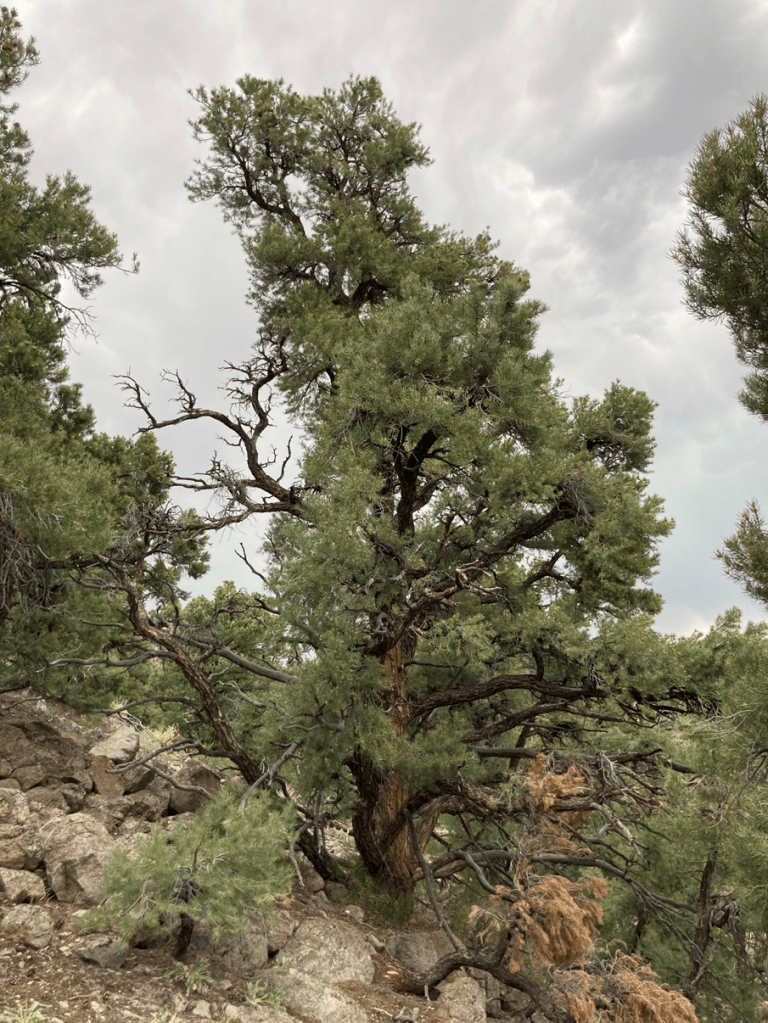
Pinyon pine woodlands are increasingly threatened by hotter conditions during droughts, larger wildfires, and invasive annual grasses. In some places, repeated fire has limited woodland recovery and reduced access to culturally significant pine nut groves. Understanding what controls pinyon pine regeneration is therefore becoming increasingly urgent for both ecological restoration and cultural stewardship.
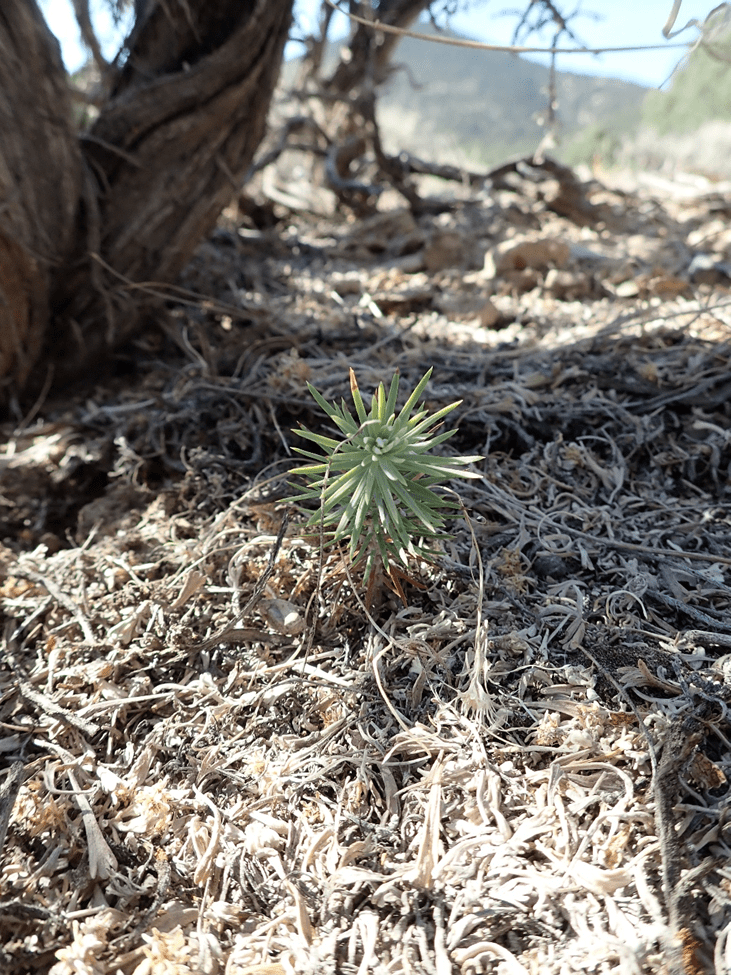
To test whether seedlings from different climates might differ in their ability to adapt to varying weather conditions, we conducted a four-year common garden experiment at the dry edge of pinyon pine’s climatic range.
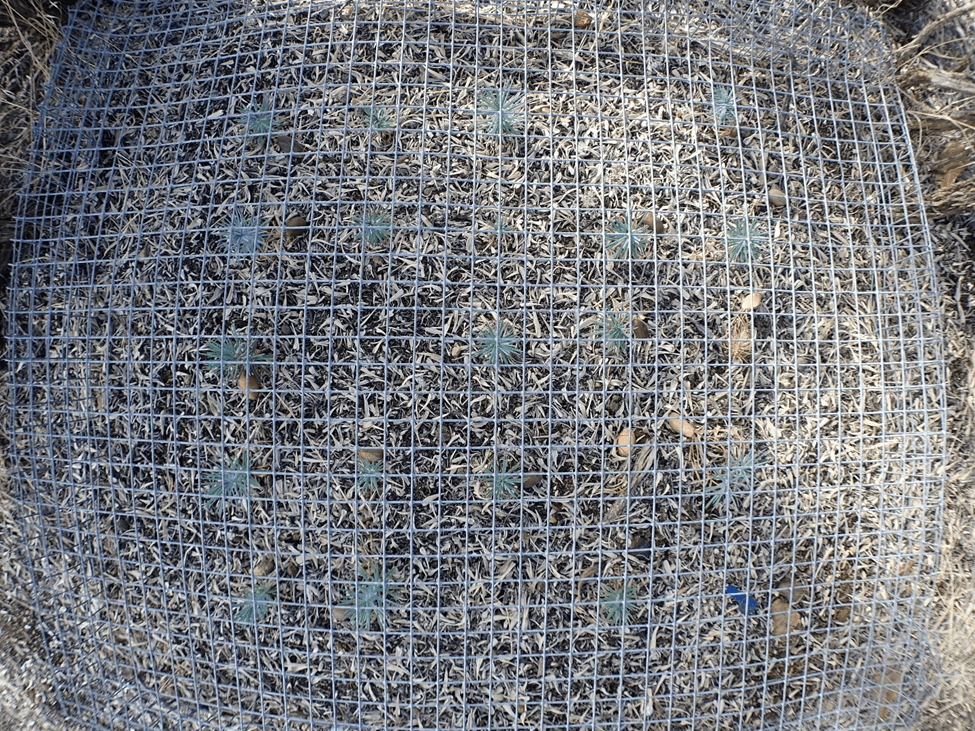
In September 2019, we collected seeds from 138 trees in 23 populations spanning the range of pinyon pine. That November, we sowed 6,624 seeds beneath sagebrush shrubs, which are known to provide protective “nurse plant” microsites for establishing seedlings. One seed from each population was planted in a grid under the nurse shrubs and caged to protect them from animals. The seeds experienced natural winter conditions, and about half emerged as seedlings in the spring of 2020. From 2020 to 2023, we monitored seedling emergence, survival, and growth during the growing seasons. Each nurse shrub was randomly assigned a watering treatment, and we experimentally manipulated precipitation timing to simulate different seasonal rainfall scenarios.
The results revealed clear differences among seed sources. Seedlings originating from hotter and drier climates consistently survived better and grew larger than seedlings from wetter regions, regardless of the watering treatment. These findings suggest that these populations possess traits that are locally adapted to arid conditions, and that this variation could shape how forests respond to future climate change.
We also found that summer precipitation mattered for seedling recruitment. Supplemental summer water increased seedling survival, highlighting the importance of monsoon-season moisture in a region where climate models project increasing variability in precipitation timing. Surprisingly, we did not see a positive effect of increased spring precipitation.
One of the strongest predictors of early survival was also fine scale: the canopy cover of sagebrush nurse shrubs. In the harsh conditions of our study site, these shrubs buffered environmental stress and improved seedling establishment, illustrating how plant-plant facilitation is likely to become increasingly important as climates become more extreme.
A second year of planting (in the fall of 2020) resulted in extremely low seedling survival, reinforcing the idea that recruitment in dryland forests is highly episodic and tightly linked to favorable climate windows.
Together, our findings suggest that the future of dryland forests may depend not only on how much precipitation falls, but also when it falls—potentially influencing which populations are able to supply the next generation of trees.


