Kechang Niu and Pingyu Liu, Nanjing University, discuss their article: Earlier flowering, later fading: Plant diversity loss restructures alpine phenology via competitive release
What is our paper about?
For centuries, the timing of flowering has captivated both the public and scientists. Much of this fascination stems from a desire to understand the rhythms of life and how living organisms respond to changing environments. Numerous studies have documented shifts in flowering time due to climate change – most notably, earlier flowering in alpine plants in response to warming.
However, in natural plant communities, life cycles are shaped not only by the physical environment but also by interactions with neighboring plants. These neighbors share and compete for light, soil resources, and pollinators, and they can also facilitate or hinder each other’s growth and reproduction. Surprisingly, we still know very little about the significance of these neighbors’ effects on the life rhythms of the plants we study.
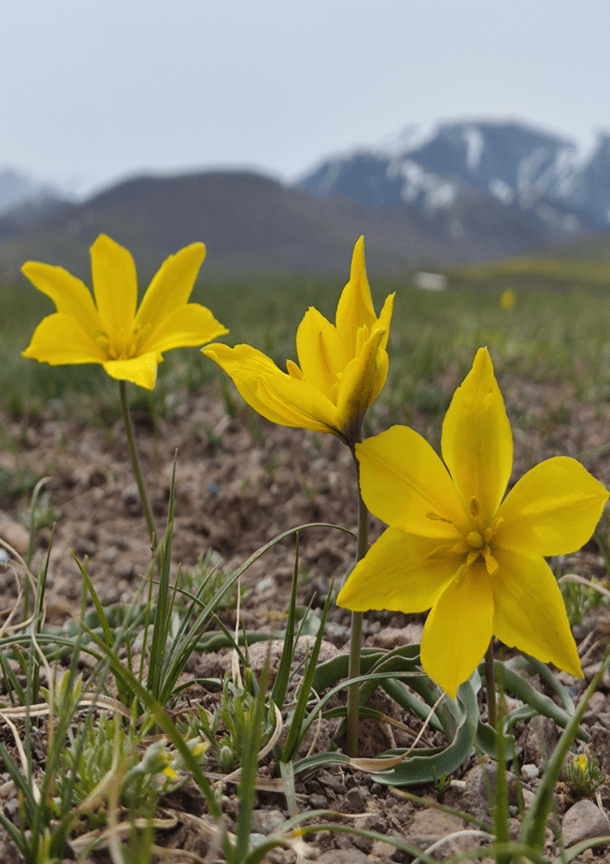
In our study, we asked whether the loss of distinct neighbors and plant diversity alters the flowering phenology of the remaining alpine plants. We hypothesized that loss of dominant or functionally distinct species could differently reduce competitive pressure and benefit reproduction, thereby shifting flowering time. In contrast, we expected that a proportional thinning of species across all functional groups would leave flowering phenology largely unchanged, since the overall competitive hierarchy would remain intact.
What did we do?
To explore how the loss of neighboring plants affects flowering time, we conducted a 12-year species removal experiment in an alpine meadow community on the eastern edge of the Tibetan Plateau. From May 2011, we removed different groups of plants: either the dominant sedge Carex capillifolia, all forbs, all grasses, or a proportional thinning of species across all functional groups.
After six years of these removals, we began monitoring the flowering phenology of the plant populations of all but rare remaining species within each plot every week during the growing season from 2017 to 2023. To gain a deeper understanding, we also tagged individual plants of the remaining species during the 2022 and 2023 growing seasons. This allowed us to track flowering responses from the individual level, the population level, and the entire community.

What did we find?
We found that remaining species generally responded to neighbor loss by advancing flowering onset and extending flowering duration across scales—from the individual to the population levels. These responses occurred regardless of whether we removed a few dominant species, many forb or grass species, or applied a proportional thinning of species across functional groups. This outcome was partly beyond our expectation.
The remaining forbs tended to show stronger advances in flowering start, while grasses often showed clearer delays in the end of flowering, resulting in comparable extension of flowering duration between functional groups and even among species.
More fascinatingly, it was difficult to attribute the shifts in flowering time to changes in any measured abiotic factors, such as soil temperature, moisture, or nutrients. However, the magnitude of flowering phenological shifts – especially the advance in flowering onset – was significantly associated with the number of remaining species, i.e., the diversity of interactive neighbors. This pattern is consistent with the expectation of competitive release, as we originally proposed.
Why does it matter?
Our findings challenge a common narrative in climate change ecology. While rising temperatures have long been viewed as the primary driver of earlier flowering, our study shows that the loss of neighboring plants can independently and profoundly alter flowering time—and these effects are not necessarily mediated by changes in abiotic factors. In other words, even without warming, biodiversity loss alone can reshape flowering phenology, an aspect that has remained underexplored. In natural ecosystems, where abiotic and biotic drivers occur simultaneously and interactively, we indeed know little about their interaction on the rhythms of life. Ecological forecasts that ignore neighbor composition and biodiversity loss may miss a critical piece of the puzzle.
The earlier flowering and extended flowering duration following biodiversity loss could also have cascading consequences for pollinators, seed production, competitive dynamics, productivity, and other ecosystem functions over time. As alpine ecosystems face ongoing biodiversity loss and climate change, understanding how plants adjust their phenological schedules in response to both factors will be essential for predicting community dynamics and ecosystem resilience in a changing world.
About the authors
Kechang Niu: I was born as a Tibetan lama but unexpectedly trained as an ecologist and statistician and have fallen into the abyss of uncovering secrets of rare taxa in thriving biodiversity by embedding science into philosophy.
Pingyu Liu: My interest in ecology grew through fieldwork. Long-term alpine meadow experiments are not always dramatic: they involve repeated visits, careful observations and many small decisions, such as identifying the first open flower or the last fading flower. But that patience is also what makes ecology exciting. Some important patterns only become visible after years of watching the same things.
What comes next?
Pingyu Liu: I hope to continue exploring how plant diversity loss reshapes community dynamics through time. One important next step is to link changes in flowering schedules with pollinators, seed production, productivity, and ecosystem stability. This would help us understand not only when plants flower, but also what these changes mean for the functioning of alpine ecosystems.
One piece of advice
Pingyu Liu: Spend time in the field and be patient with the living. Ecological systems rarely reveal their stories immediately. Sometimes the most important signal is not in a single striking observation, but in the quiet accumulation of many observations across years.

For more on Kechang Niu and his work, you can read the previous Journal of Ecology blog post here or the Functional Ecologists blog post, here.


