What can remote sensing do for plant ecology?

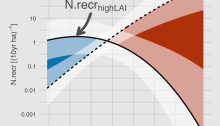
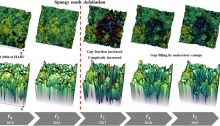
This blog post was written by Tommaso Jucker, Emily Lines and Jason Fridley to recap the second Grime Reviews series in Journal of Ecology, titled ‘What can remote sensing do for plant ecology?’. The series consists of nine review articles exploring different ways in which ecologists can enrich their research by embracing recent advances in…

Interested in becoming a BES Associate Editor?

The seven British Ecological Society journals are currently looking for ecologists and practitioners to join their editorial boards! See here for more information and how to apply (deadline: 28th February 2023). Read on for details about the role and insights from some of our current Associate Editors: 🔎 THE ROLE Being an Associate Editor (AE) involves…

Using biogeographic history to predict change on Mount Jaya

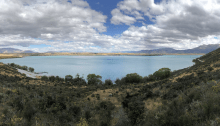
Liam Trethowan discusses his recent article: Plant species biogeographic origin shapes their current and future distribution on the world’s highest island mountain. Find out more about how they used herbarium specimens to investigate species presence under current and future temperatures. Tropical mountains are host to some of the highest densities of plant species on earth,…

Editor’s Choice (111:01): The ecological implications of interplant drought cuing

The editor’s choice for our January issue is “The ecological implications of interplant drought cuing” by Omer Falik et al. Here, Associate Editor Peter Bellingham discusses the importance of this research:  The importance of interplant communication is a rapidly growing area of research and is becoming more widely appreciated.  Interplant communication through networks of hyphae of…

Cover stories (110:12): European Hazel, Corylus avellana

The cover image for our December issue shows germination day one of European Hazel, Corylus avellana. The yellow radicle breaks through the nut wall and elongates into the substrate over the following fortnight. This image relates to the article, Biological Flora of Britain and Ireland: Corylus avellana, by Damien Hicks. Here, Damien tells us the story behind the image: The…

Editor’s Choice (110:12): eCO2 alleviates adverse effects of drought

The editor’s choice for our December issue is “Elevated CO2 alleviates adverse effects of drought on plant water relations and photosynthesis: A global meta-analysis” by Zhaoguo Wang, et al. Here, Associate Editor Alessio Collalti and colleague Paulina F. Puchi discuss the importance of this research:  The rapid increase of atmospheric CO2 concentration has caused an increment in…

Mangrove range expansion limited by ocean currents and coastal features

Jackie Raw discusses her recent article: Dispersal and coastal geomorphology limit potential for mangrove range expansion under climate change. Find out more about the implications of this work for modelling mangrove responses to climate change. Mangroves, often described as tropical swamp lands, are classic features of warm coastlines where sea-surface temperatures are above 20°C. These…

How much genetic variation exists in a plant population?

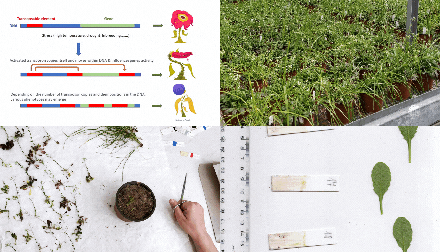
F. Xavier Picó discusses the recent article: ‘Spatio-temporal dynamics of genetic variation at the quantitative and molecular levels within a natural Arabidopsis thaliana population‘. Find out more about the importance of long term monitoring for investigating genetic diversity. In science, the simplest questions are commonly hard to answer. In the field of plant population biology,…