Miriam Gerhard: Variable environments in variable continents

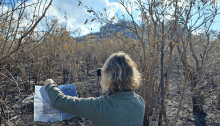
Throughout April, we are featuring the articles shortlisted for the 2022 Harper Prize. The Harper Prize is an annual award for the best early career research paper published in Journal of Ecology. Miriam Gerhard’s article ‘Environmental stoichiometry mediates phytoplankton diversity effects on communities’ resource use efficiency and biomass’ is one of those shortlisted for the award. ⭐️About me: between South…

Call for proposals! The influence of beneficial fungi on plant-enemy interactions & plant community structure

Ecologists have mused over the mechanisms that structure plant communities for centuries. One such mechanism is negative density dependence, which has been proposed as a an important promoter of tree species diversity across plant communities. However, most negative density-dependence studies to date have focused on the roles played by insects and fungal pathogens. Less attention…

Cover stories (111:03): The mysterious process of Mistletoe germination

The cover image for our March issue shows twin seedlings of mistletoe (Viscum album) established on a branch of apple (Malus domestica), the parasite’s most frequent British host. This image relates to the Biological Flora of Britain and Ireland: Viscum album, by Peter Thomas et al. Here, co-author Jonathan Briggs tells us the story behind the image: The germination…

2022 Harper Prize Shortlist: Early Career Research Award

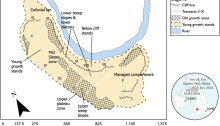
The Harper Prize is awarded annually by the British Ecological Society for the best paper in Journal of Ecology by an early career author. We are pleased to present the shortlisted papers for the 2022 award (published in Volume 110): ⭐️Heath Beckett: Pathways of savannization in a mesic African savanna–forest mosaic following an extreme fire⭐️Kerissa Fuccillo Battle: Citizen science across two centuries…

Call for proposals! How do species distribution models reflect & inform ecological processes?

The fourth series of Grime Reviews will address conceptual issues in species distribution modeling. SDMs are a critical tool for understanding the impacts of environmental change on plant communities, and recent statistical and computational advancements facilitate modeling of potential range shifts of many interacting species across large spatial extents. Moreover, researchers are transcending the limitations…

📚Journal Club round-up

For anyone who missed it, here’s a summary of our latest Journal Club discussion, held earlier this week on Twitter! The featured paper was ‘The shape of trees: Reimagining forest ecology in three dimensions with remote sensing‘ by Emily Lines and Tommaso Jucker et al., which is part of the Grime Reviews series ‘What can…

Editor’s Choice (111:03): The role of mucilage in protecting seeds from predation

The editor’s choice for our March issue is “Sandy seeds: Armour or invisibility cloak? Mucilage-bound sand physically protects seeds from rodents and invertebrates“ by Eric LoPresti et al. Here, Associate Editor Michał Bogdziewicz discusses the importance of this research:  Seeds are the fundamental units of plant reproduction, critical to the persistence and distribution of plant populations.…

Cover stories (111:02): Yellow trout lily – a journey from ground to museum to research journal

The cover image for our February issue shows a digitized herbarium specimen of flowering yellow trout lily plants (Erythronium americanum). This image relates to the article, Warmer temperatures are linked to widespread phenological mismatch among native and non-native forest plants, by Tara Miller et al., which is part of a special feature on Leveraging natural history collections to understand…

Recovery after disturbance is slow across space and time; can these patterns tell us how to actively restore ecosystems better?

Emma Ladouceur & Jonathan M. Chase discuss their recent article: The recovery of plant community composition following passive restoration across spatial scales. Find out more about what it takes for ecosystems to recover from disturbances and whether passive restoration is enough. Human disturbances can negatively impact species, biodiversity and ecosystems. Given enough time, will ecosystems…