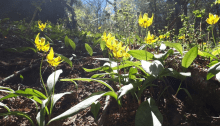
How do past dynamics of tree species inform us about their future?

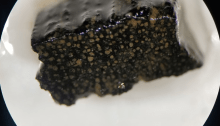
Todor Minchev, Université du Québec à Rimouski, discusses his article: Early departures and delayed arrivals: Holocene dynamics of temperate tree species in the boreal temperate ecotone. Forests are the backbone of most terrestrial ecosystems and form some of the largest biomes on the planet, excluding the oceans. Such is the case of the circumboreal forest…

Can Resilient Species Keep Up? Climate Change Threatens Even Tough Seaweeds

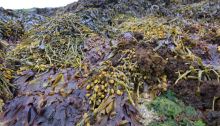
Fernando Lima, CIBIO/BIOPOLIS, University of Porto, Portugal, discusses his article: Simulated intertidal heat stress on the brown seaweed Ascophyllum nodosum demonstrates differential population sensitivity to future climate Climate change is often thought to threaten only vulnerable species, but what about the tough ones? New research on a resilient seaweed suggests that even the hardiest species…

Diversity enhances forest productivity through its effect on the number of trees within forests.

Xavier Morin, CEFE, CNRS, University of Montpellier, EPHE, IRD, Montpellier, France, discusses his article: More species, more trees: The role of tree packing in promoting forest productivity The effect of tree species diversity on forest productivity is now well-known. On average, plots with more species (in mixed forests) have a greater net productivity than plots with…

Understanding How Climate Change Affects Plant Growth Through Soil

Anna Florianová (@IBOTCZ; @popecolIBOT), Institute of Botany of the Czech Academy of Sciences, describes her article: Climate-driven shifts in plant-soil feedback of a perennial grass species As the climate changes, scientists are becoming increasingly interested in how these shifts impact plant growth. Climate change does not only have direct effects on plants, but may also affect…

Seagrass-oyster facilitation at risk under future ocean conditions

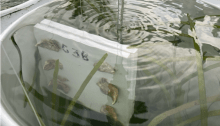
Fiona Ralph, from Bowdoin College, discusses her article: Shifting seagrass-oyster interactions alter species response to ocean warming and acidification The Why: Eelgrass and oysters are ecosystem building species that both have economic, ecological, and cultural importance in Maine. Eelgrass populates much of the soft-sediment coastal subtidal in the Northern Hemisphere, which is also where most of…

Nectar Harmonies: a long-term analysis of European forest herb layers

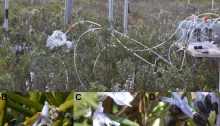
Wim De Schuyter, Pieter De Frenne, Emiel De Lombaerde, Leen Depauw, Pallieter De Smedt, Lander Baeten, Kris Verheyen explore declining potential nectar production in this post and also at: https://besjournals.onlinelibrary.wiley.com/doi/abs/10.1111/1365-2745.14274 Springtime is upon us and soon new generations of insects will emerge and buzz around in our landscapes. In search for food, and later on…

Mangrove range expansion limited by ocean currents and coastal features

Jackie Raw discusses her recent article: Dispersal and coastal geomorphology limit potential for mangrove range expansion under climate change. Find out more about the implications of this work for modelling mangrove responses to climate change. Mangroves, often described as tropical swamp lands, are classic features of warm coastlines where sea-surface temperatures are above 20°C. These…

How is litter decomposition affected by climate change in Mediterranean forests? Soil fauna has the key

Lead author Pablo Homet discusses recently published article: Soil fauna modulates the effect of experimental drought on litter decomposition in forests invaded by an exotic pathogen. Find out more about how litter mesofauna plays an important role in litter decomposition in a Mediterranean forest. Decomposition processes of dead organic matter are fundamental for life cycling.…