Can plant traits help us predict who gets eaten?

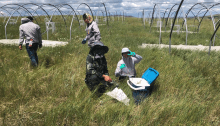
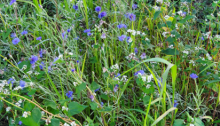
Nicolas D. Zurbuchen, University of Zurich, discusses his article: Intraspecific trait variation responds consistently to global change drivers and mediates herbivory across unrelated plant species Plants may look still, but they live in a busy world. Around them, insects and other invertebrates are feeding, fungi are infecting leaves, and the climate is changing. For plant…

Shifting plant investment strategies along climatic gradients drive ecosystem carbon cycling in alpine grasslands

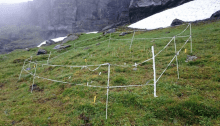
Inge Althuizen, Norwegian Research Center AS (NORCE), discusses her article: Climate-induced shifts in plant investment strategies regulate ecosystem carbon cycling across alpine grasslands Alpine ecosystems provide a diversity of ecosystem services, including carbon storage. These cold ecosystems and carbon stored in them are particularly sensitive to climate change. But what are the mechanisms underlying carbon…

Above- and below-ground components do not respond equally to changing precipitation

Qingzhou Zhao, Umeå University in Sweden, discusses their article: Increasing precipitation reshapes alpine plant–microbial nutrient partitioning and enhances ecosystem carbon and nitrogen retention A rainy question in the alpine ecosystem Rainfall is changing as the climate warms. In many alpine regions, including the Tibetan Plateau, ecosystems are becoming not only warmer, but also wetter. At…

It is not just how many species are lost, but which ones disappear first

Shun Nonaka, Yokohama National University in Japan, discusses his article: Non-random species loss weakens functional diversity and species asynchrony, destabilizing grassland communities Why does the order of species loss matter? When we think about biodiversity loss, we often ask a simple question: how many species are disappearing? This is important, but it is not the…

When trees compete: How dynamic traits help them live together

Guochun Shen and Jing Yang, East China Normal University in Shanghai, China, discuss their article: Shifts in above- and belowground trait dissimilarity under competition mediate the future impact of neighbors When we walk into a forest, it is easy to picture trees competing for light, water, and nutrients. Some seedlings race upwards and cast their…

Mass outweighs diversity: Dominant species mitigate grassland multifunctionality during drought in Inner Mongolia

Jiaqi Chen and Wentao Luo, Institute of Applied Ecology of the Chinese Academy of Sciences, discuss their article: Dominant species determine drought effects on grassland multifunctionality The increasing frequency of extreme drought events poses a severe threat to grassland ecosystem multifunctionality—a metric aggregating multiple ecosystem functions. However, the ecological mechanisms driving these impacts remain contentious.…

Can plant functional diversity dilute plant virus infection?

Beatriz Aguirre, Cornell University, discusses her article: Plant functional diversity does not dilute virus infection, but community virus prevalence positively correlates with net C3 grass production Greater plant diversity can protect plant communities from pathogens in wild and agricultural plant communities, and the effects of many aspects of diversity, such as genetic and species diversity,…

Thirteen years, three climates, one path to stability?

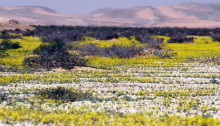
Johanne Gresse, University of Tübingen, discusses her article: Drought resistance drives population temporal stability of annuals in drylands Imagine a desert after rain. For a few brief weeks, the ground bursts into a colourful carpet of annual plants. At first glance, this display seems fleeting and fragile. But when observed over many years, a pattern…