Defense against multiple enemies changes differently across latitudes in an invasive plant and its native congener

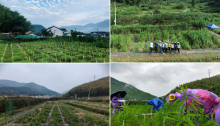
Xinmin Lu, Huazhong Agricultural University, Joshua Lynn, Manchester University, and Evan Siemann, Rice University, discuss their article: Latitudinal patterns in growth and defense against multiple enemies of an invasive species and its native congener Why are some plant species more successful invaders than others? A long-standing hypothesis is that invasive plants differ from native species…
A global invasion and divergence in plant-pathogen interactions

Ylva Lekberg, from MPG Ranch, discusses her article: Eco-evolutionary shifts in interactions between a globally invasive plant and belowground putative pathogens coincide with shifts in plant performance Some plant species become invasive in non-native ranges and outcompete native plants, reduce biodiversity, and alter ecosystem functions. Altogether, invasive species cost billions of dollars to manage. We…

Asymmetric adaptation drives rapid evolution as an invasive plant expands northward

Rui Wang, Institute of Plant Protection of the Chinese Academy of Agricultural Sciences, discusses their article: Asymmetric adaptation across a core–periphery climatic gradient drives rapid phenological evolution and range expansion in an invasive plant When we think about plant invasions, we often picture species spreading quickly, competing with native plants, and causing problems for ecosystems…

How does plant diversity recover after invasive species removal?

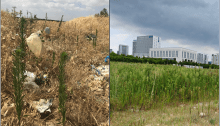
Shao-peng Li and Bingwei Lv, East China Normal University, discuss their article: Multidimensional diversity recovery following invasive species removal: Roles of colonization, extinction, and abundance shifts. Background Plant invasion is a global ecological challenge, and invasive species often outcompete native plants, leading to a loss of biodiversity and disruption of ecosystem functions. Removing these unwelcome…

The humble broom

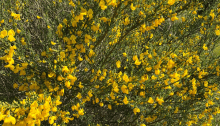
Peter Thomas, Keele University, UK and Marion Giertych, University of Zielona Góra and Institute of Dendrology PAS, Poland, discuss their article: Biological Flora of Britain and Ireland: Cytisus scoparius, in English and Polish Broom (Cytisus scoparius), a non-spiny relative of gorse (Ulex species), is a delightful shrub native across Europe in open areas. What makes…

Local native species with global naturalization success can be strong competitors for alien species

Guan-Wen Wei and Mark van Kleunen, from the Ecology Lab at the University of Konstanz in Germany, discuss their article: Responses of naturalized alien plants to soil heterogeneity and competition vary with the global naturalization success of the native competitors Biological invasions are happening With the development of transportation and globalization, species have been introduced…

Glucosinolates are probably not novel weapons that promote invasion by Alliaria petiolata

Robert I. Colautti (@ColauttiLab), Queen’s University in Canada, discusses his article: Direct and indirect fitness effects of plant metabolites and genetic constraints limit evolution of allelopathy in an invading plant A storied history As a relatively young discipline, invasion ecology has developed through a proliferation of hypotheses that often fail to hold against careful experimentation.…

Protecting forests reinforces biotic resistance to invasive species

Ninad Avinash Mungi presents inferences from his recent article: Role of species richness and human-impacts in resisting invasive species in tropical forests. Find out how tropical forest manifest resistance towards invasive plants, when protected from anthropogenic impacts. As the decade of ecological restoration unfolds, we invest in strategies to restore ecosystems, uncertain about how our…