2025 HARPER PRIZE SHORTLIST: For the next two weeks, we are featuring the articles shortlisted for the 2025 Harper Prize. The Harper Prize is an annual award for the best early career research paper published in Journal of Ecology. Jing Xiao’s ‘The proportion of low abundance species is a key predictor of plant β-diversity across the latitudinal gradient‘ is one of those shortlisted for the award.
About the paper:
What is your shortlisted paper about, and what are you seeking to answer with your research?
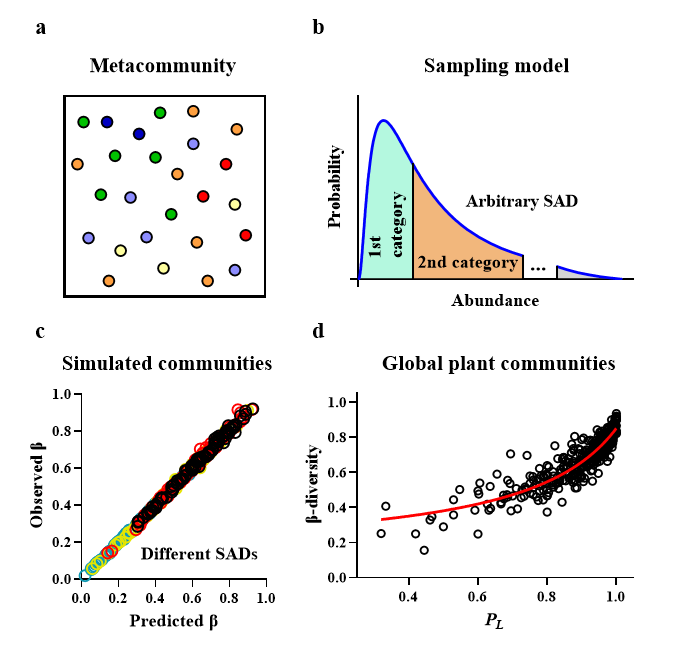
Our study presents a new sampling model of species diversity which addresses how β-diversity is jointly determined by sampling parameters and spatial distribution patterns of species. One marked feature of the model is that it can effectively predict β-diversity in communities of different species abundance distributions, allowing for large-scale applications. Applying the model further revealed that one single variable—the proportion of low abundance species—explains nearly 85% of the variation in plant β-diversity along the global latitudinal gradient.
Were you surprised by anything when working on it? Did you have any challenges to overcome?
Actually, the model was originally developed to predict α- and β-diversity in microbial communities (which it accomplished). Then one day, my supervisor Dr. Lei Cheng encouraged me to apply the model to the well-known latitudinal diversity gradient of woody plants. Although at first I was a little bit reluctant, surprisingly, the results turned out to be pretty good, with an average of over 90% accuracy in predicting β-diversity in plant communities. That’s how this paper originated. From this experience, I learned that change not only brings challenges, but can also offer valuable opportunities for exploring new possibilities.
What is the next step in this field going to be?
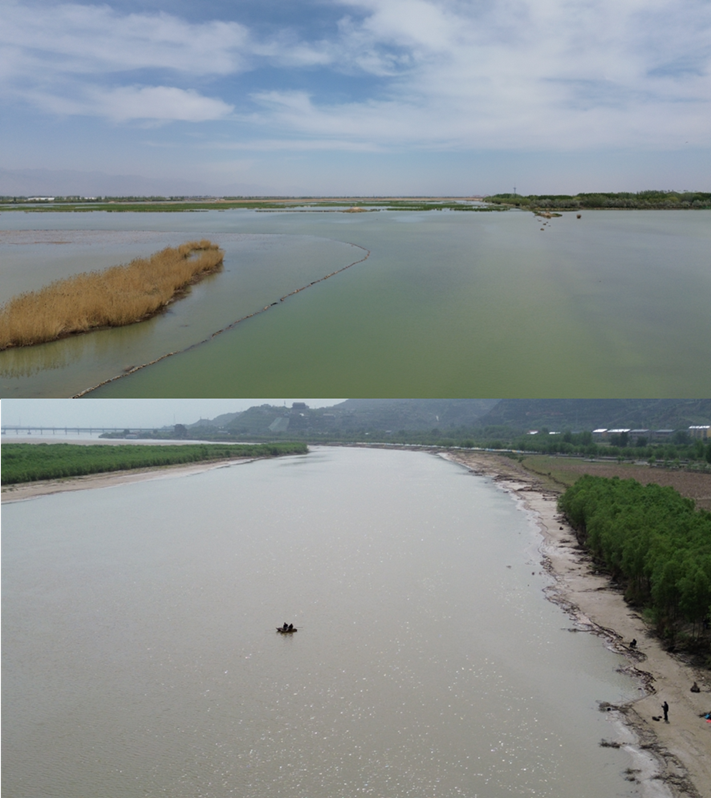
As the current paper presents a foundational model, we are now seeking further development of practical tools. We have used our model to derive the theoretical expression of β-deviation (96% accuracy), a popular index previously relying on computer simulations. On the basis of this work, we are now developing a new tool aimed at decomposing contributions of different species and different processes to large-scale patterns of β-diversity. Our next step is to apply the tool to microbial communities from wetland ecosystems, using numerous water and sediment samples already collected from different wetlands across China.
What are the broader impacts or implications of your research for policy or practice?
Our model advances the theoretical understanding of large-scale β-diversity patterns across environmental gradients while shedding light on how sampling factors shape diversity patterns. When designing future sampling schemes, ecologists can use our model to preliminarily estimate expected diversity outcomes, thereby informing optimization of their sampling design.
About the author:
How did you get involved in ecology?
Actually, I got my bachelor’s degree in biology (in 2015), not ecology. I got involved in ecology because one day I ran into my future supervisor, Lei, and we talked about global change, biodiversity and conservations, which left a deep impression on me. After a long talk, Lei asked me whether I was interested in pursuing a doctoral degree in ecology, and that was the beginning of the story.
What is your current position?
In late 2025, I completed my postdoctoral research, and my current position is ‘100-talent project’ researcher (doctoral supervisor) at Zhejiang University, China. I am continuing my work in theoretical ecology, feeling both excited and a little nervous about supervising my own postgraduate students soon. I really hope I can be a competent supervisor.
Have you continued the research your paper is about?
Certainly. As mentioned above, we are now working to further develop practical tools for analyzing community datasets. Our ultimate goal is to establish a generalized framework for β-diversity across diverse community types, including plants, animals, and microorganisms. While considerable challenges remain, we believe our work will make a meaningful difference.
What one piece of advice would you give to someone in your field?
In research, things don’t always go according to plan. My advice is to stay open to new knowledge and be brave enough to try new options.

 jecologyblog.com