Theresa Möller, University of Hamburg in Germany, discusses her article: Effects of habitat quality and fine-scale spatial structure on epiphytic lichen and bryophyte communities
Epiphytic lichens and bryophytes inhabit one of the most heterogeneous habitats in forest ecosystems: the bark of living trees. Different tree species provide distinct habitat conditions, leading to distinct epiphyte communities on individual trees. At the same time, spatial proximity may influence which species occur together by shaping neighbourhood effects among tree pairs. Understanding whether epiphyte community similarity is driven primarily by habitat quality or by spatial proximity remains a key challenge in epiphyte community ecology.
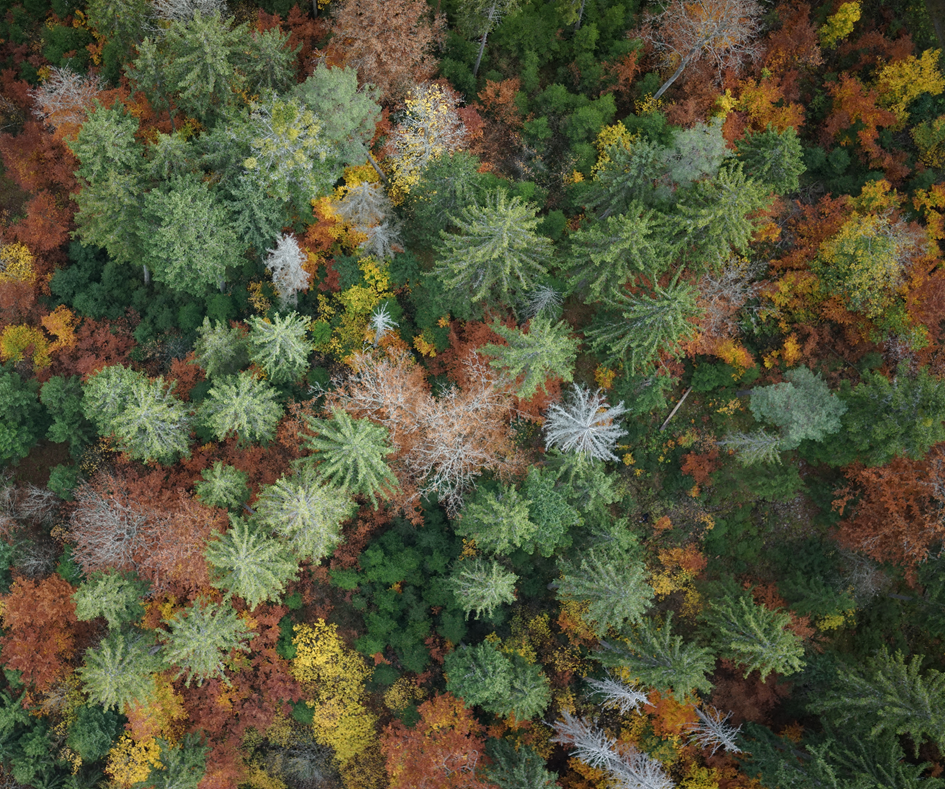
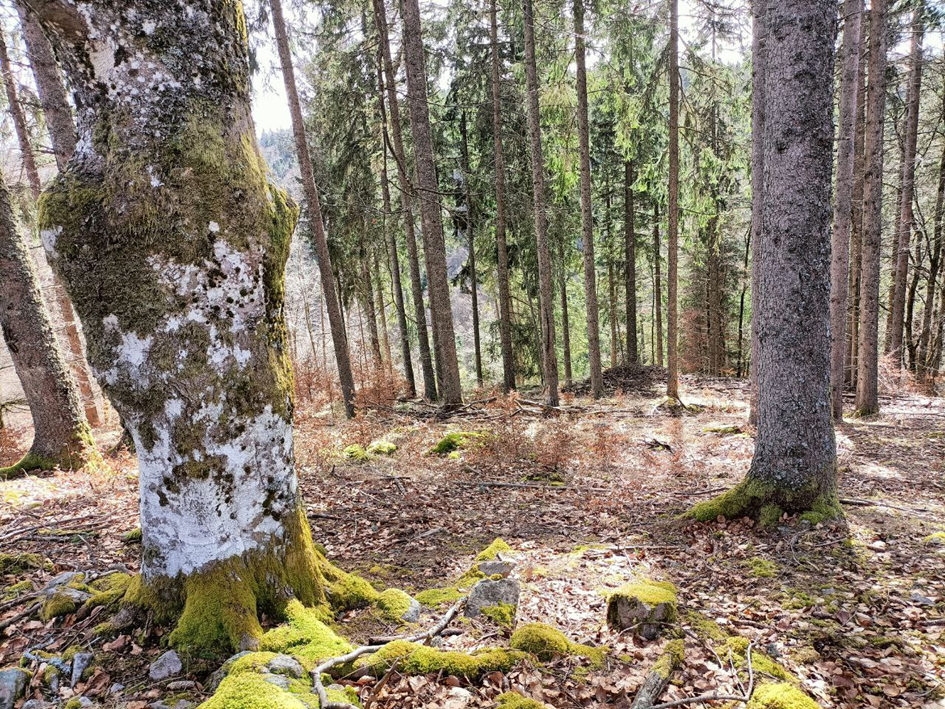
Our study was conducted in a temperate mountain forest of the Southern Black Forest in Germany at mid elevations (700–1000 m). This forest has a long history of forest management and a largely closed canopy.
We asked a simple but unresolved question: Is community similarity mainly shaped by spatial proximity or by habitat conditions? By comparing community similarity between pairs of neighbouring and distant trees of the same and different species, we separated the influence of spatial proximity from that of bark physico-chemical properties (such as pH value, nutrient contents, and bark water holding capacity), tree structure, and site conditions.
Key finding 1: The importance of habitat quality is taxon-dependent
Our results show that who your neighbour is matters – but only within the limits set by habitat quality. Neighbourhood effects differed between the two groups we studied. In lichens, neighbouring trees were more similar only when they belonged to the same tree species, showing that spatial proximity alone is insufficient when bark properties differ, consistent with relatively narrow habitat niches in many lichen species. Bryophytes showed broader neighbourhood effects across tree species, reflecting their wider tolerance of different substrates.
Key finding 2: In closed canopy systems, microclimate plays a secondary role
Within the closed-canopy forests of our mid-elevation study area, tree species identity and associated bark physico-chemical properties emerged as the dominant drivers of community composition, while microclimatic variation had comparatively weaker effects. For poikilohydric organisms such as lichens and bryophytes, which do not regulate their internal water content but instead track environmental moisture, this suggests that under buffered forest conditions, substrate-related habitat quality plays a stronger role than short-term microclimatic variation in structuring communities.
Key finding 3: Internal stem decay as a driver of bryophyte abundance
Beyond the established bark-related filters, we found that internal stem decay increased bryophyte cover on living trees. While decay processes are well known to structure epiphyte communities on deadwood, our results show that internal decay can also enhance habitat suitability on standing trees by increasing habitat heterogeneity and creating conditions that favour bryophyte growth.
Taken together, our results suggest that spatial proximity does not override habitat quality but operates within the constraints set by it. Bark chemistry and structure determine which species can establish and persist, while neighbourhood context can influence community similarity where substrate conditions are comparable. This supports a view of epiphyte community assembly in which habitat filtering provides the basis and spatial structure adds a secondary, taxon-specific layer.
Why does this matter for community ecology?
In conclusion, our findings emphasise that fine-scale community patterns can only be understood by considering habitat quality and spatial context together. Each tree functions as a habitat patch shaped by its bark properties, while surrounding trees influence how communities develop within these limits. Epiphytic lichens and bryophytes are particularly well suited for addressing such questions, because their close coupling to substrate properties makes them sensitive to fine-scale habitat variation; however, more generally, the conceptual insights gained from epiphytic lichens and bryophytes extend to other substrate-dependent organisms.

 jecologyblog.com