Valentin Graf, Senckenberg Biodiversity and Climate Research Centre in Frankfurt, discusses his article: Relative importance of range position, seed size, and genetic diversity for tree recruitment at alpine range edges
Climate change is rapidly altering ecosystems, pushing many species to adapt or move to cooler environments. In mountains, this often means shifting to higher elevations, but space becomes limited near mountain tops. Plants face an additional challenge because many rely on seeds to colonize new areas. Seed dispersal involves three stages: release from the parent plant, movement through the environment, and successful establishment as a seedling. Each stage is shaped by factors such as the characteristics of the seed and parent plant, dispersal processes, and local environmental conditions. Understanding how these factors interact is key to predicting how plants will respond to climate change.
In this study we investigate how variation within Swiss stone pine populations affects seedling establishment across different elevations.
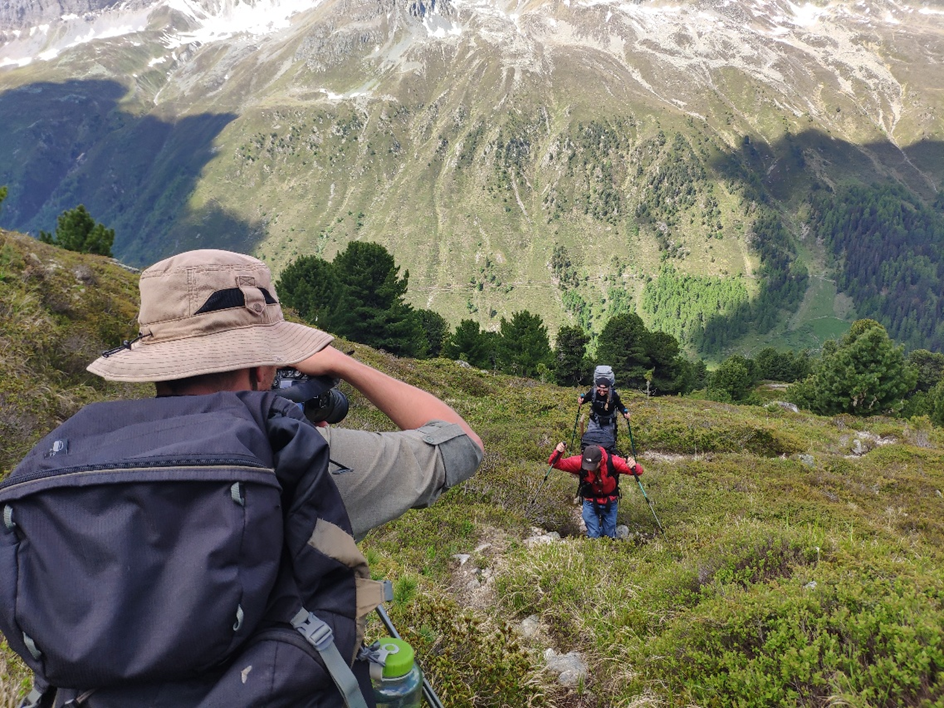
Moving seeds across the mountain
To determine the most important drivers of new tree growth at high altitudes, we conducted a large field experiment in the Swiss Alps near Davos. The study took place in two neighbouring valleys where Swiss stone pine naturally grows near the upper forest limit. In August 2022, we collected pinecones from 120 mature trees located at three different elevations representing the lower edge, centre, and upper limit of the species’ local range. From each tree, cones and needles were collected so that seeds and the characteristics of the parent trees could later be linked throughout the experiment. After collection, the cones were opened and the seeds were prepared for germination by storing them at low temperatures, simulating natural winter conditions.
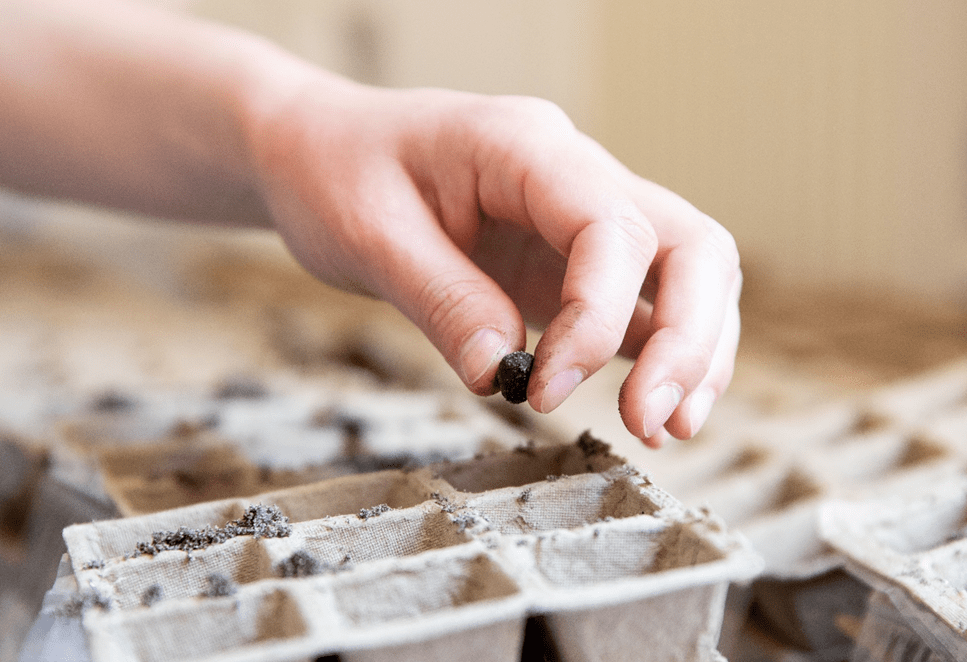
In early summer 2023, we sowed 3,600 seeds in small trays and placed them back into the mountain landscape along an elevational gradient ranging from well below to above the pine’s natural distribution. At each elevation, the trays were positioned in a variety of microhabitats such as open ground, near rocks, under shrubs, and beside tree trunks.
Over the following months, we monitored whether seeds germinated and established as seedlings. By revisiting the sites a year later, we could also determine which seedlings survived their first year in these challenging alpine environments.
The fate of 3,600 seeds
Seedling establishment of Swiss stone pine was strongly shaped by where the seeds came from and where they landed. Seeds from the centre of the elevational range generally did best, establishing across all locations and performing particularly well at higher elevations. In contrast, seeds from the upper and lower range edges established best near the range centre, suggesting that mid-elevation conditions provide the most favourable environment for young seedlings. Reproductive traits mattered too: larger seeds and trees bearing more cones had higher establishment, while a high proportion of infertile seeds reduced success. Surprisingly, genetic diversity of the mother trees had little effect, indicating that other factors linked to range position or maternal condition play a bigger role than overall heterozygosity.
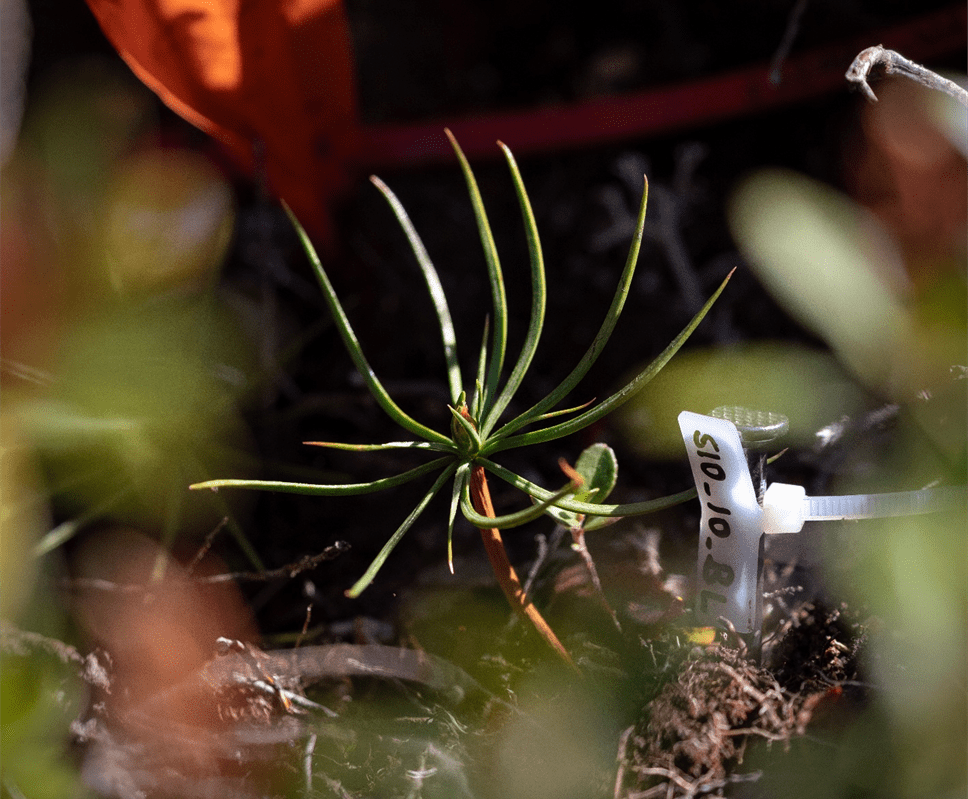
Local environmental conditions at seed deposition were mostly less important, although high soil temperatures hindered both establishment and survival. This suggests that warming conditions in the future may limit upward range shifts. Seedling survival after one year was low overall, but those that did survive showed potential for recruiting beyond the current tree line. Together, our findings highlight the importance of considering seed origin, plant reproductive traits, and climatic stress when predicting how long-lived alpine trees like Swiss stone pine may respond to climate change.


