Álvaro Gaytán and Lorena Gómez-Aparicio, Institute of Natural Resources and Agrobiology of Seville (IRNAS-CSIC), discuss their article: Evidence for linkages between the root elementome and oak decline in Mediterranean systems invaded by soil-borne pathogens
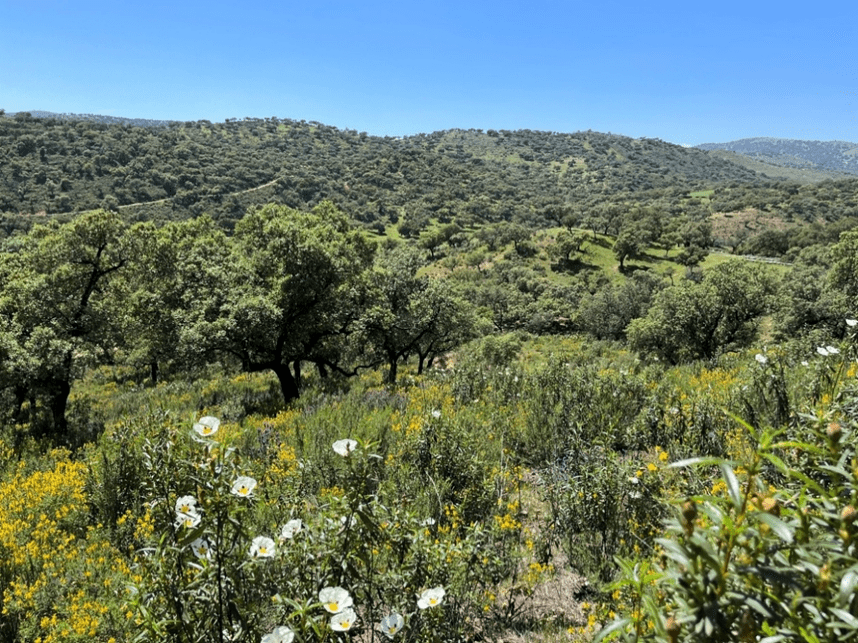
Mediterranean oak woodlands are among the most iconic ecosystems of southern Europe. Yet many of these forests are under increasing pressure from drought, land-use change, and emerging diseases. One of the most damaging threats is the soil-borne pathogen Phytophthora cinnamomi, a globally invasive organism that attacks tree roots and has been linked to widespread forest dieback. In Mediterranean systems dominated by holm oak (Quercus rotundifolia), this pathogen has caused extensive mortality, threatening ecosystems that have supported people, wildlife, and traditional land uses for centuries.
Despite decades of research, a major challenge remains that by the time trees show visible symptoms of decline, it is often too late. Crown defoliation, branch dieback and reduced growth typically appear only after the infection has progressed substantially. This raises an important question for forest ecologists and managers alike: can we detect early warning signals that indicate a tree is at risk before visible decline begins?
Rather than limiting our assessment to visible symptoms, we examined functional indicators of tree health that tend to shift earlier in the decline process. In particular, we focused on root chemistry. Our study set out to identify early symptoms of infection by examining whether the fine root elementome—the full elemental composition of fine roots—can reveal early functional disruptions associated with pathogen attack. This elementome integrates nutrient uptake, metabolic adjustments, and stress responses, making it a sensitive indicator of belowground physiological change. We investigated whether subtle shifts in root chemistry, together with soil properties and dieback symptoms, could provide clues about vulnerability to decline in holm oak forests affected by P. cinnamomi. To do so, we combined measurements (dieback symptoms, soil nutrients, and root elementome) from hundreds of trees across Mediterranean landscapes in southern Spain with detailed analyses of root elemental profiles, soil conditions and crown health.
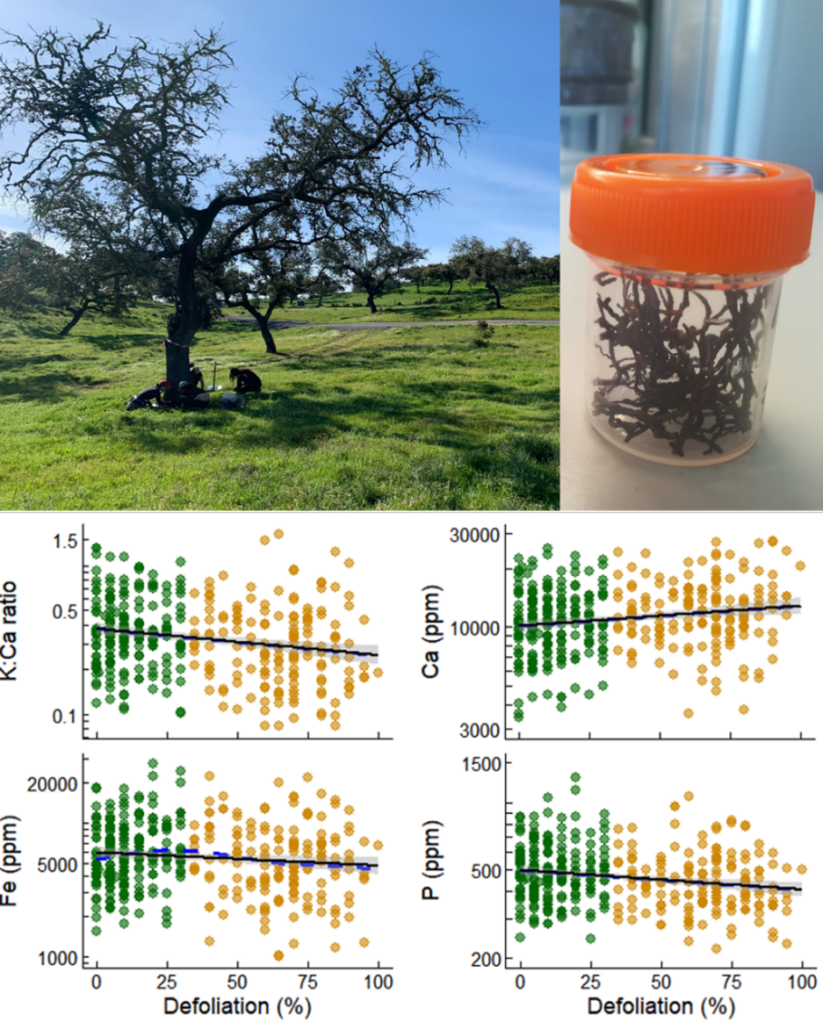
We found that specific chemical elements and their imbalances were strongly associated with both crown condition and pathogen abundance. Trees showing dieback symptoms consistently exhibited lower concentrations of key nutrients such as nitrogen, phosphorus, potassium, iron, and zinc. At the same time, they appeared to accumulate calcium, which is known to strengthen cell walls and can inhibit the activity and spread of P. cinnamomi, making it part of the tree’s stress‑response strategy. These changes produced characteristic imbalances in elemental ratios such as potassium-to-calcium that can signal the early onset of pathogen-driven dieback. Because root pathogens like P. cinnamomi attack the fine root system, they disrupt nutrient uptake and alter belowground processes long before any deterioration becomes visible in the canopy. Together, these shifts constitute reliable early warning signals of pathogen‑driven dieback.
From a broad perspective, trees under stress often reduce leaf production and shedding, which can cascade through the ecosystem by altering nutrient cycling and soil microbial communities. Detecting such functional changes could therefore provide an early indication that forest health is deteriorating. Together, our findings highlight that forest decline is not just a visible canopy phenomenon. It is a complex process that can begin belowground, involving interactions between pathogens, roots, soil chemistry, and nutrient cycling. Identifying reliable early warning signals remains a major goal for forest ecology and management. Our study represents a step toward that goal by showing that integrating soil ecology, pathogen dynamics, and tree condition can reveal hidden patterns of vulnerability. Mediterranean oak woodlands face an uncertain future under climate change and biological invasions, but improving our ability to detect early signs of decline may help protect these ecosystems before large-scale mortality occurs.


