Lindsay Trottier, McGill University in Canada, discusses her article: Extending the leaf economics spectrum: Freshwater plant communities exhibit realm-specific leaf adaptations
If I asked you to think of a plant, what image comes to mind? A rose? A pine tree? Maybe a grass? If you’re like the majority of people, odds are you didn’t imagine a plant growing underwater. It’s hard to imagine things we don’t see or encounter regularly. However, that doesn’t make such things less important or not worth studying.
In fact, aquatic plants frequently have a unique appearance that is not often seen in land plants. We wanted to showcase the mesmerizing form of one particular species of aquatic plant and provide readers with an example of this unique appearance in the cover photo for the October 2026 issue of Journal of Ecology. This photo (below), captured at the Wuhan Botanical Garden by Lars Iversen, shows whorled-leaf watermilfoil (Myriophyllum verticillatum), an aquatic plant that is primarily submerged under water but also produces large spikes that grow above the water’s surface. These spikes are where the flowers and fruits eventually grow.
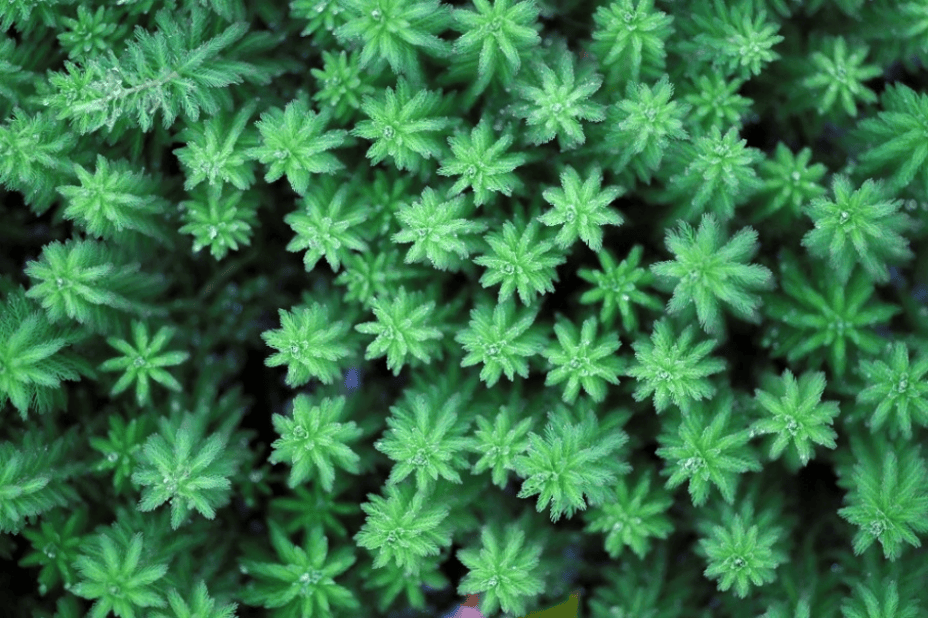
Despite their unique appearance, aquatic plants have a similar ecological role to land plants. They act as foundational species by carrying out important ecosystem functions, such as adding oxygen to water and taking up extra nutrients that otherwise cause algal blooms to form.
However, in contrast to land plants, we know relatively little about the plants that grow in and around lakes and rivers. Studies on land plants have identified certain environmental characteristics that enable them to grow larger and faster. For example, land plants often grow faster in warm, wet environments that have lots of available nutrients. Of course, there are some land plants that grow well in cold, dry, or nutrient-poor conditions, but they tend to have specific adaptations that allow them to do so. At the same time, we don’t know whether aquatic plants tend to grow fastest under the same conditions as most land plants.
When water warms up, gases like oxygen and carbon dioxide (which plants need to grow) could become less abundant. This means that aquatic plants might actually have a harder time growing in warmer waters. As mentioned above, lakes and rivers with high nutrients also have a tendency to harbour algal blooms. Algal blooms make the water appear cloudy (or turbid) and block light from reaching the plants growing below. This made us wonder if warmer, nutrient-rich environments are also optimal for aquatic plant growth.
In addition, some species of aquatic plants grow completely submerged in water, while others emerge from the water. This means that emergent aquatic plants have continual access to air and light, whereas submerged plants rely on the gases and light that reach them under water. This could lead to differences in the environmental preferences of emergent and submerged aquatic plants.
What we did
To test this, we compiled a large dataset of nearly 7000 aquatic plant communities located across Europe, from the southwest of Portugal to the northeast of Sweden. Because our dataset covers such a large area, it represents a broad range of environmental conditions, particularly temperature and nutrients, and makes it a great dataset to test our question. As mentioned above, we suspected that emergent and submerged aquatic plants might have different preferences, so we split our dataset into two groups (emergent and submerged) so that we could test for this difference.
What we found (and why it’s cool!)
Our analysis found that, like many land plants, emergent aquatic plants tend to grow faster in warmer, nutrient-rich environments. This makes sense, since even in hot conditions, emergent aquatic plants have sufficient access to water, which they can use to keep cool through evapotranspiration (kind of like humans sweating to stay cool in the heat!). Also, since emergent plants grow out of the water, their access to light isn’t blocked by the algae that grow abundantly in nutrient-rich waters.
Most surprisingly, we found that submerged aquatic plants grow faster in colder environments – the complete opposite of most land plants! This could be for a few reasons. First, as noted above, cooler water is able to hold onto more oxygen and carbon dioxide than warmer waters. Second, like land plants, algae also have a preference for warmer waters, which means they are more likely to shade out submerged aquatic plants in warm environments. For now, we cannot say for certain why submerged aquatic plants grow faster (and taller, according to another study) in cooler temperatures. But this is something we are interested in figuring out in the future!
We also found that submerged aquatic plants aren’t quite as reliant on high nutrient conditions as emergent aquatic and land plants. This makes sense: submerged aquatic plants prefer an environment that provides them with enough nutrients to sustain their growth, but not one that is so nutrient-rich that they have to compete with algae for access to light and gases.
Overall, our study reveals that aquatic plants are quite different from land plants. This means that what we know about the types of environments that land plants prefer may not be true for aquatic plants. Since aquatic plants do not respond to environmental conditions in the same way as land plants, it seems that aquatic plants have evolved strategies for coping with life under water that ultimately change the way they grow compared to land plants. To determine which strategies explain these growth differences, we need to continue exploring what is growing underwater and under what conditions.


