Marcelo Sternberg, Tel Aviv University, discusses his article: Rainfall memory and spring atmospheric demand predict herbaceous biomass production in Mediterranean ecosystems
When the same amount of rain does not produce the same amount of plants
In Mediterranean ecosystems, rainfall seems like the obvious place to look when trying to understand plant production. More rain should mean more biomass; less rain should mean less. But after working for many years in Mediterranean grasslands and shrublands, we repeatedly encountered a problem with this simple idea: years receiving similar amounts of rain can end up producing very different amounts of vegetation. But we still didn’t understand why. Perhaps the important question is not simply how much did it rain? But also when did it rain, how regularly did it rain, what happened the year before, and what were the atmospheric conditions when plants were trying to finish their growth? Our long-term experiment gave us a rare opportunity to explore these questions.
An experiment that grew into a 24-year record
The Matta Long-Term Ecological Research station is located in the Judean Hills of Israel, in a Mediterranean shrubland where most rain falls between late autumn and spring, and summers are predictably hot and dry.
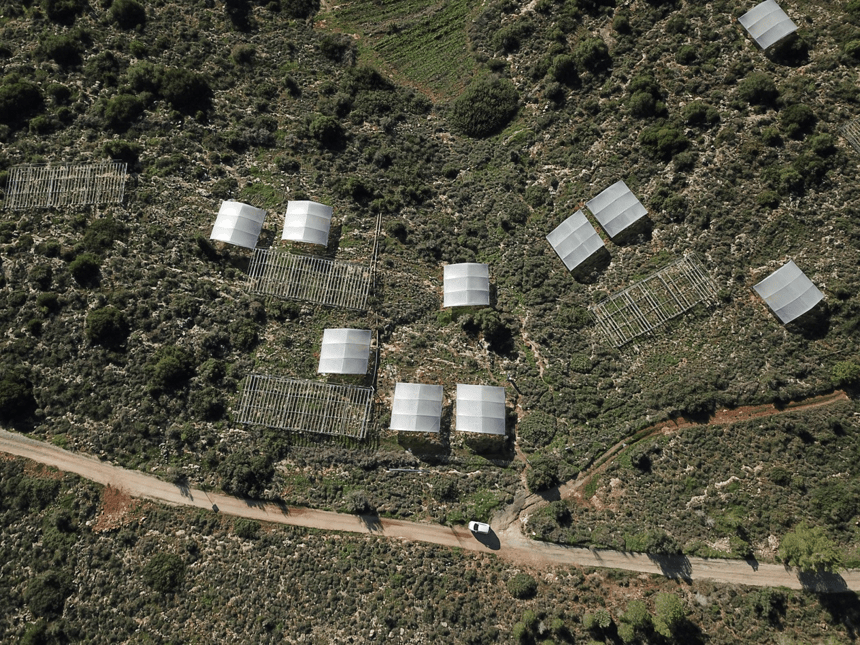
We established the rainfall-manipulation experiment in 2001. Since then, year after year, we have manipulated rainfall and harvested the herbaceous vegetation at peak biomass.
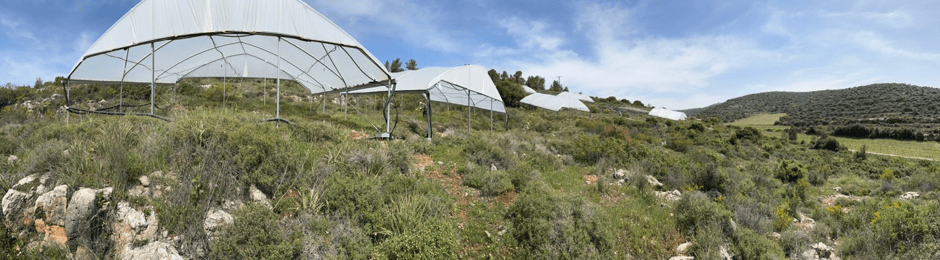
Over time, the experiment itself evolved. The original rainfall-reduction treatments were later complemented by much more severe drought treatments and by manipulations of how frequently rain was supplied. What began as a rainfall experiment eventually became an unusually long record, covering 24 growing seasons between 2002 and 2026.
This long history allowed us to ask something that short experiments struggle to address: which parts of the climate actually contain the most useful information for predicting how much vegetation will grow?
Rainfall has a memory
One of the clearest signals came from what we call rainfall memory. This does not mean that plants literally remember rain. Rather, it describes how much recent rainfall is still likely to matter for current growing conditions. Rain that fell yesterday counts more than rain that fell several weeks ago, and repeated recent rainfall creates a much more persistent water supply than isolated events.
We found that stronger rainfall memory during both winter and spring was associated with greater herbaceous biomass. Longer dry gaps between winter rainfall events, in contrast, were associated with lower production. So two seasons receiving the same total rainfall are not necessarily equivalent. A relatively continuous sequence of rainfall events can be much more useful to plants than the same amount of water separated by long dry periods.
The previous year matters too
There was another surprise. Rainfall conditions during the previous growing season were among the strongest predictors of biomass in the following year. This was particularly interesting to us because earlier work in Mediterranean annual grasslands had suggested that these communities were strongly buffered against previous-year rainfall effects.
Our new analysis suggests that the legacy may become visible when we look beyond rainfall totals. Favourable rainfall conditions in one growing season can leave an ecological imprint that carries into the next—potentially through seed production and the soil seed bank, changes in vegetation, nutrients, or other ecosystem processes. In other words, the vegetation starts each growing season with some history already behind it.
Then spring arrives—and the atmosphere takes over
Rainfall was only part of the story. As Mediterranean spring progresses, rainfall declines, temperatures rise, and plants enter an intense final period of growth. At this stage, vapour pressure deficit, or VPD, became particularly important.
VPD measures how far the air is from being saturated with moisture. The larger this gap, the more readily plants lose water through their leaves. To conserve water, plants may close the stomata on their leaves, but this also limits their uptake of carbon dioxide, reducing photosynthesis and potentially slowing growth.
In our study, high spring VPD and warmer spring conditions were associated with lower biomass, even when rainfall conditions were included in the analysis. This points to an important seasonal transition: during winter, the persistence and continuity of water supply are especially important; by spring, atmospheric demand increasingly determines how effectively the remaining water can be converted into plant growth.
Looking beyond annual rainfall
For us, the main message is simple: Mediterranean plants do not experience climate as an annual rainfall total. They experience a sequence. They experience whether rain arrives repeatedly or is interrupted by long dry spells. They carry consequences from the previous growing season. And when spring becomes warm and dry, they must cope with increasing demand for water from the atmosphere.
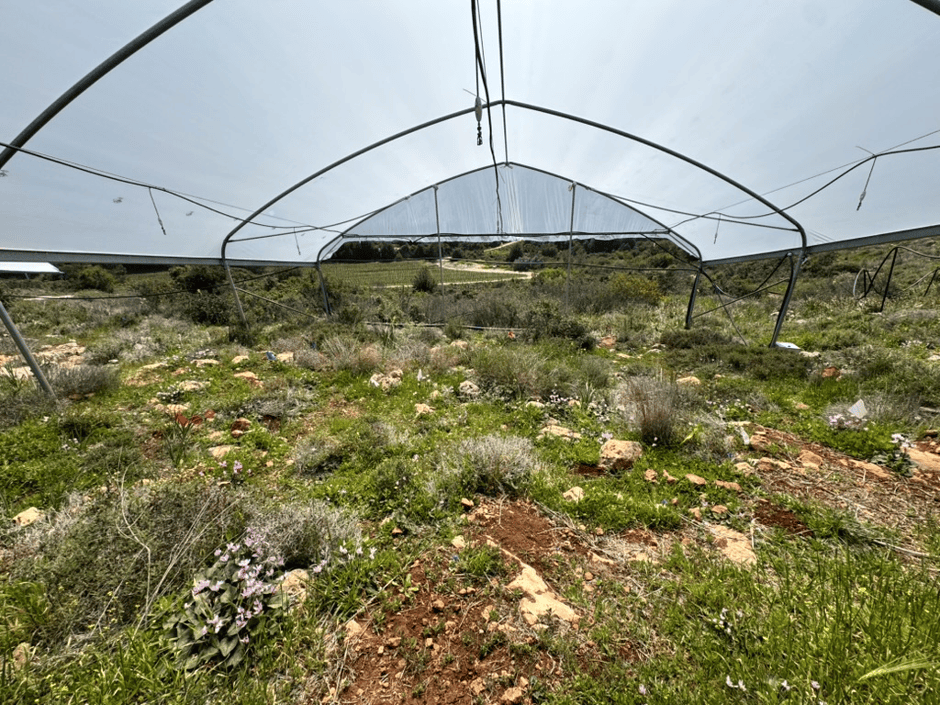
This matters because Mediterranean climates are expected to become not only warmer, and also drier in many areas, but also more irregular in their rainfall distribution. If we predict future vegetation simply from how much rain falls each year, we may miss an important part of the story.
After 24 growing seasons, our experiment tells us that when rain falls, how long its influence lasts, what happened before, and how dry the spring atmosphere becomes, may matter just as much as the final number in the rain gauge.


