Xuqing Li, Yolima Carrillo, and Scott N. Johnson, Hawkesbury Institute for the Environment and Western Sydney University, discuss their article: Silicon shifts plant stoichiometry: A meta-analysis
Every living organism is a delicate recipe of chemical elements. For plants, the balance between carbon, nitrogen, and phosphorus, known as elemental stoichiometry, dictates how fast they grow, how nutritious they are for herbivorous animals, and how quickly their fallen leaves break down and are incorporated back into the soil.
Ecologists have long focused on key nutrients such as nitrogen and phosphorus as the main drivers of plant growth and their role in ecosystems. However, one abundant element on Earth has often been overlooked: silicon.
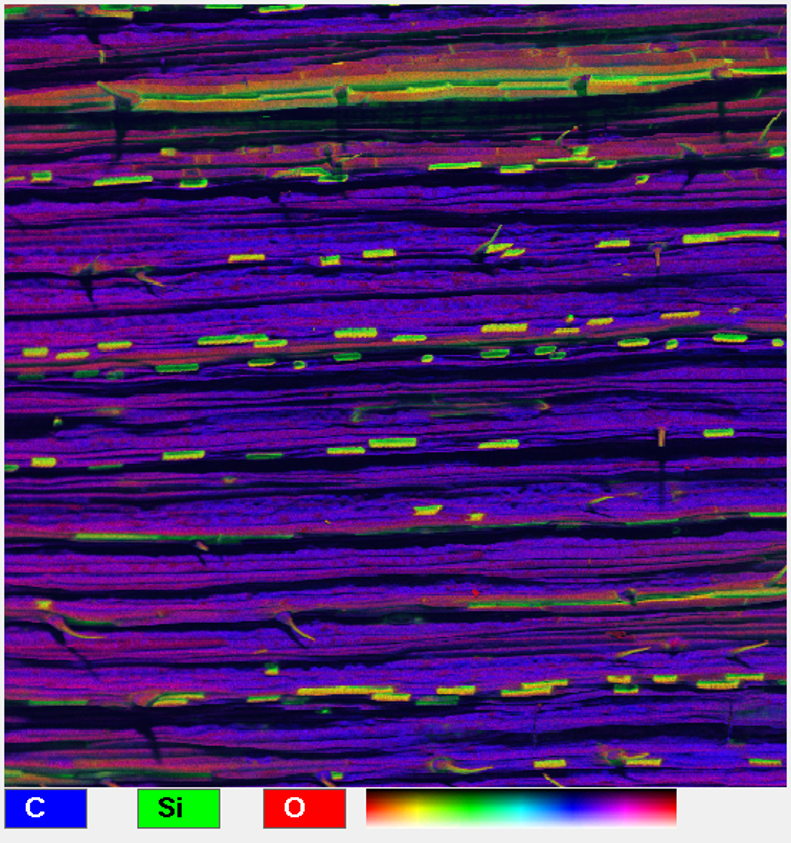
Grasses (Poaceae) are silicon super-accumulators, actively drawing it up from the soil to make up to 10% of their dry mass. In plant tissues, it is deposited as silica, which has been widely studied for its function in herbivore defence because silica can increase tissue toughness and reduce palatability and digestibility. Recent evidence shows that the incorporation of silicon in plant tissue can change the concentration of other elements, and therefore the stoichiometric ratio.
Sifting through 1,532 plant comparisons
To quantify silicon’s universal impact, we synthesised 1,532 paired observations from 168 studies across 70 plant species under non-stressed conditions. We compared plants grown with and without silicon supply across shoots and roots of both crop varieties and wild species.
Our analysis revealed a clear and consistent shift in plant chemistry:
- Carbon concentrations dropped by an average of 2.3%.
- Phosphorus concentrations increased by 8%.
- Carbon-to-phosphorus (C:P) ratios fell by 5%.
- Overall nutrient use efficiency improved by 14%.
- Nitrogen concentrations remained unchanged overall.
Grass families showed the strongest stoichiometric shifts, suggesting an evolutionary adaptation in high-silicon accumulators.
Why does adding Si cause these specific elemental shifts?
First, for carbon, building carbon-based structural polymers like lignin and cellulose is energy-intensive for plants. Silicon potentially offers a cheaper alternative. By depositing rigid silica in cell walls, plants partially substitute expensive carbon structures with low-cost silicon ‘bricks’. In grasses, carbon levels dropped quickly even with modest silicon supply, indicating an efficient physiological strategy to save energy. That said, Si accumulation may also cause decreases in carbon simply via a ‘dilution’ effect.
Second, for phosphorus, when plants grow in soil, silicate anions displace fixed phosphorus bound to iron and aluminium oxides in the soil solution. This geochemical trick frees up locked phosphorus, allowing plant roots to absorb more of this vital nutrient. Moreover, silicon boosted overall nutrient use efficiency by 14%, enabling plants to build more biomass per unit of absorbed nutrients.
Ecological ripple effects
These internal chemical adjustments carry broad ecological consequences. Under ongoing environmental changes and soil nutrient limitations, silicon supply may help crops and grasses in other ecosystems maintain productivity while using nutrients more efficiently.
Furthermore, these shifts persist long after the plant dies. Leaves with lower C:P ratios produce nutrient-rich litter that can alter soil microbial activity and accelerate decomposition cycles.
By incorporating silicon into our understanding of plant stoichiometry, ecologists can better predict how terrestrial ecosystems will respond to changing soil nutrients and management practices.


