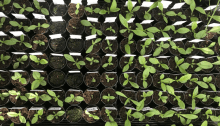
Can plant traits help us predict who gets eaten?

Nicolas D. Zurbuchen, University of Zurich, discusses his article: Intraspecific trait variation responds consistently to global change drivers and mediates herbivory across unrelated plant species Plants may look still, but they live in a busy world. Around them, insects and other invertebrates are feeding, fungi are infecting leaves, and the climate is changing. For plant…
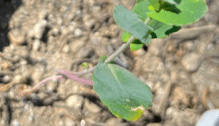
Life stage influences the performance of low and high elevation plants in a high elevation garden, but not as one might expect

Brandie Quarles-Chidyagwai, University of California, Davis, discusses her article: Adaptational lag at high elevations depends on life stage in a California wildflower With ongoing climate change, many plant species will have to track environmental changes through adaptation or poleward/upslope dispersal. High elevations in particular are experiencing warming temperatures, reduced snowpack, and shifting growing seasons. With…

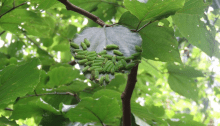
Seedling herbivory across elevational gradients: What drives both mean and variability in leaf damage?

Xiaoran Wang, East China Normal University, and Jian Zhang, Sun Yat-Sen University, discuss their article: Elevation and environmental factors shape variability rather than the mean of seedling herbivory across subtropical forests In mountain forests, not all seedlings experience insect herbivory in the same way. While some individuals suffer substantial leaf damage, others are barely affected.…