Xiaoran Wang, East China Normal University, and Jian Zhang, Sun Yat-Sen University, discuss their article: Elevation and environmental factors shape variability rather than the mean of seedling herbivory across subtropical forests
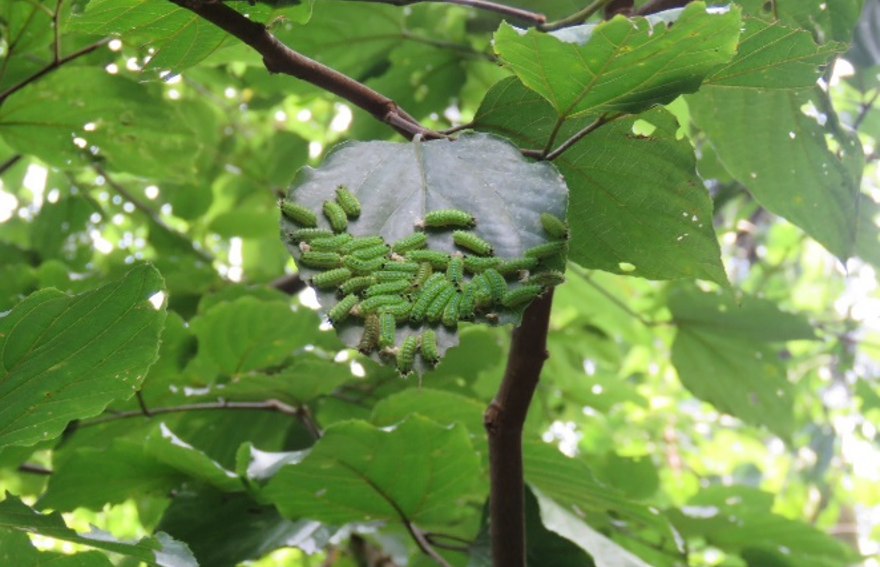
In mountain forests, not all seedlings experience insect herbivory in the same way. While some individuals suffer substantial leaf damage, others are barely affected. Yet most studies have focused on the average level of herbivory, leaving an important question underexplored: how uneven is herbivore damage among seedlings, and what drives this variability?
This distinction matters because insect herbivory plays a key role in shaping seedling survival, forest regeneration, and plant community dynamics, especially in species-rich subtropical and tropical forests. Beyond average damage, variability in herbivory may reveal how herbivore pressure is distributed within communities and how different species or individuals experience unequal risks.
Herbivory patterns are shaped by both biotic and abiotic factors. Plant size affects detectability and exposure to herbivores, with larger seedlings more likely to be detected and consumed by herbivores, whereas herbivory on smaller seedlings may be more variable due to less predictable herbivore attack. Plant diversity may further modify herbivore impacts by altering host availability and the degree of herbivore specialization. At the same time, environmental conditions such as temperature, light, and resource availability can influence plant growth-defense trade-offs, shaping not only the intensity but also the heterogeneity of herbivory across species and individuals.
Mountain ecosystems provide ideal natural laboratories for studying these processes because environmental conditions change predictably with elevation. However, we still know little about how herbivory variability changes along elevational gradients, or whether tree and shrub seedlings respond differently to these patterns. Here, we ask: How do mean and variability of leaf herbivory change along elevational gradients? What are the main biotic and abiotic drivers?
What we did
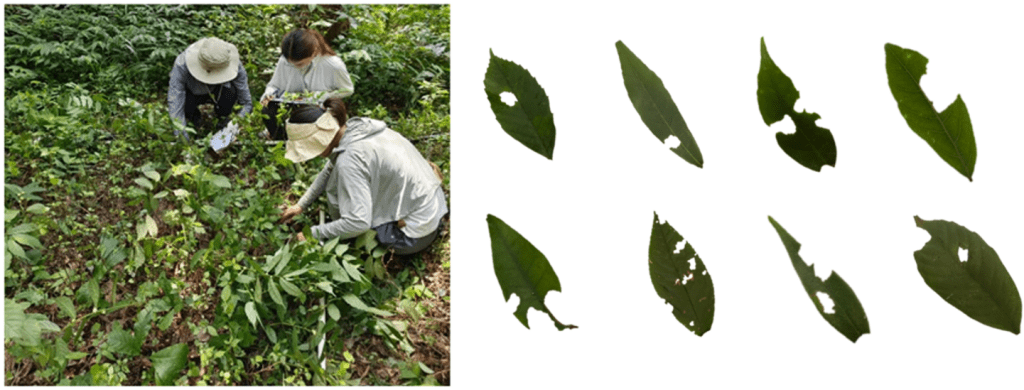
To understand what drives both the average level and variability of seedling leaf herbivory, we examined how plant size, plant diversity, and microclimatic conditions influence insect leaf damage in woody seedlings across five subtropical and tropical mountains. This is part of the ongoing project of the BEST network (Biodiversity along Elevational gradients: Shifts and Transitions). Using a standardized field survey, we assessed insect damage on 11,811 leaves from 2,577 seedlings representing 415 woody plant species along five elevational transects spanning 265-1,613 m above sea level. Herbivory was quantified as the proportion of leaf area consumed by insects, and species-level averages were calculated within each site. Both the mean herbivory and herbivory variability for tree and shrub seedlings were calculated. We then tested how six key predictors influenced herbivory patterns: plant size (seedling height and leaf area), plant diversity, and microclimatic conditions (canopy cover, soil temperature, and soil moisture), all of which may shape resource availability and herbivore pressure.
Key findings
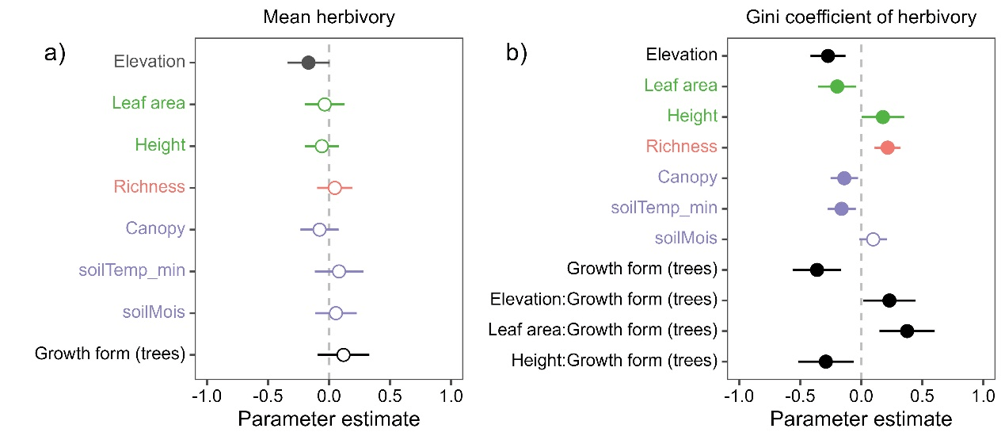
In these five mountains, herbivory variability among species declined with elevation in shrubs, but not in trees. In contrast, mean herbivory showed a weak decline with elevation in both growth forms. Plant size played an important role in shaping variability in herbivory but had little effect on mean herbivory. Specifically, leaf area was associated with lower variability in herbivory, whereas seedling height increased it, and these relationships differed between trees and shrubs. Plant diversity primarily influenced how herbivory was distributed among species, rather than changing overall levels of damage. Among abiotic factors, canopy cover and soil temperature emerged as the main drivers of variation in herbivory across species.
Lessons we learned
This study highlights the importance of considering not only mean herbivory but also how unevenly herbivore damage is distributed across plant individuals and species along elevational gradients. By examining both mean and variability of insect herbivory in seedlings, we show that plant growth form, leaf traits, and microclimate can shape elevational patterns in different ways. Herbivory variability emerges as an important signal of differences in herbivore pressure and resource conditions within plant communities. Plant diversity mainly affects how herbivory is distributed among species, rather than its overall intensity, suggesting potential implications for community stability and species coexistence. Overall, incorporating variability in herbivory provides a more complete understanding of plant-insect interactions and how they respond to environmental change.


