Duo Chen, University of Konstanz in Germany, discusses her article: Induced resistance of plants reduces their negative soil-legacy effects on natives but not on naturalized aliens
Plants leave a lasting imprint on the soil
Plants do much more than grow in soil. Throughout their lives, they alter the environment around their roots by taking up nutrients, releasing chemical compounds, and interacting with soil microorganisms. These changes can persist after the plant has gone, creating what ecologists call a soil legacy. The next plant growing on that soil may benefit from these changes, or more commonly, suffer because pathogens or other harmful organisms have accumulated.
Such plant-soil feedbacks are recognised as an important process influencing plant communities and may even contribute to the success of some alien plant species. However, one aspect has received little attention: can a plant’s own physiological condition influence the soil legacy that it creates?
Linking plant defence with plant-soil feedback
Plants respond to insect attack and disease by activating complex defence mechanisms. In experiments, these responses can be induced by applying the plant hormones jasmonic acid and salicylic acid, which trigger defence pathways similar to those activated during herbivore or pathogen attack.
We asked whether activating these defence pathways would also influence the soil that plants leave behind. If defence responses alter interactions between roots and soil organisms, they might ultimately affect the growth of the next generation of plants.
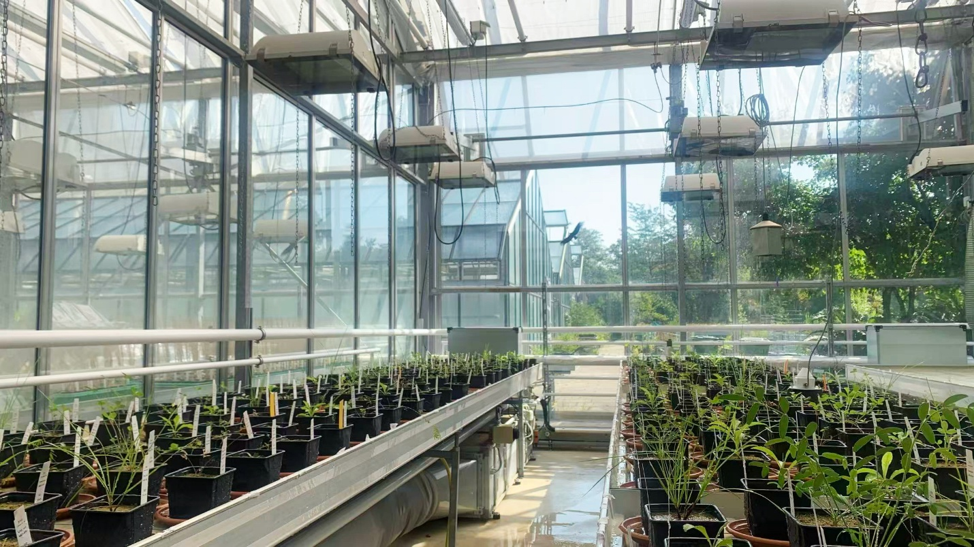
To test this, we conducted a two-phase greenhouse experiment. During the first phase, five pairs of native and naturalized alien plant species, together with several additional native species, conditioned the soil. Plants were sprayed with jasmonic acid, salicylic acid, or water. In the second phase, we grew a new generation of the native and naturalized plants on these conditioned soils and compared their performance.
Defence induction altered soil legacies
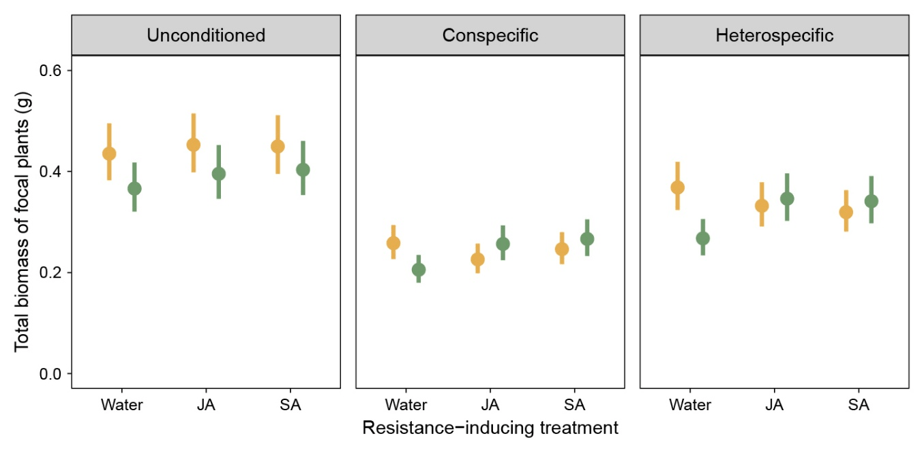
As expected, plants generally performed worse on conditioned soils than on unconditioned soils. The strongest negative effects occurred when plants were grown on soil previously occupied by the same species, consistent with the well-established pattern of negative plant-soil feedback.
Interestingly, defence induction changed how native and naturalized alien plants responded to these soil legacies. On soils conditioned by untreated plants, naturalized alien plants produced more biomass than native plants. This difference became much smaller when the plants had been treated with jasmonic acid or salicylic acid. In other words, induced defence reduced the advantage that naturalized alien species showed under normal soil conditioning.
To explore possible mechanisms, we also analysed soil fungal communities. Although these analyses revealed only relatively modest changes, the results are consistent with the idea that activating plant defence can influence belowground communities and thereby modify subsequent plant-soil feedbacks. Identifying the organisms and processes responsible for these effects will require further work.
Looking belowground to understand aboveground patterns
Plant defence and plant-soil feedback are often studied as separate topics. Defence responses are typically investigated in the context of aboveground herbivores and pathogens, whereas plant-soil feedback focuses on interactions between plants and the soil environment. Our findings suggest that these processes may be more closely linked than is usually assumed.
By altering the way plants interact with the soil during their lifetime, induced defence can change the conditions experienced by the plants that grow there next. This provides another perspective on how plant-soil feedbacks develop, and may also improve our understanding of the factors influencing alien plant invasions.

 jecologyblog.com