Meet the SIG: Forest Ecology

The BES Forest Ecology Special Interest Group‘s mission is to create an international community of forest ecologists. Secretary Alan Jones tells us more about the SIG and their plans for BES2018 below.  The BES Forest Ecology Special Interest Group (FEG) has hosted a range of engaging events over the past few years, highlighting developing issues in forest…
Long-term ecological experiments in plant-soil ecosystems – a joint ECT-PSE Annual Science Conference

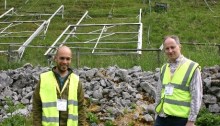
UPDATE: The abstract submission deadline has been extended to 5pm on Friday 15 March. Abstracts should be no longer than 300 words and submitted to this address: plantsoileco@britishecologicalsociety.org ECT/PSE-SIG 2019 ANNUAL SCIENCE MEETING – BUXTON, DERBYSHIRE 21/22 MAY 2019: https://www.ecologicalcontinuitytrust.org/events Plant, Soils, Ecosystems is one of the special interest groups of the British Ecological Society. PSE…

Volume 107 Issue 1

Volume 107, Issue 1 of Journal of Ecology is now online! This issue is a bumper issue! It is made up of 40 papers which includes 5 Open Access papers. The first paper, which is the editor’s choice paper for this issue, is about how disease plays a role in determining host range limits of plants. The…

Sexual conflict: a key to sustaining biodiversity

  Kyoto University press release What factors sustain the diversity of life on our planet? This is the main question surrounding the study of biodiversity, but in spite of significant gains in our understanding of the field, many of the key factors defining it remain obscure. In a new paper published in Journal of Ecology, research…

Fieldwork: UK, Austria, China & Mongolia

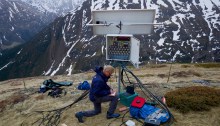
Journal of Ecology Senior Editor Richard Bardgett shares some images from his fieldwork this year. Wasdale Head in the Lake District, UK (Photo: R. Bardgett)  Grassland research sites at Wasdale Head in the English Lake District, where we are studying how grassland management alters the resistance and resilience of ecosystem properties to climate extremes. Vent,…

Fieldwork: Grasslands across Eurasia

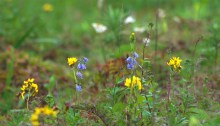
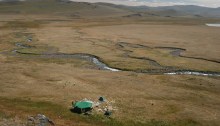
For the first post in our new fieldwork section on the blog, Salza Palpurina has shared some photos taken by her colleagues related to her recently published Journal of Ecology paper; The type of nutrient limitation affects the plant species richness–productivity relationship: Evidence from dry grasslands across Eurasia.  Altai Mountains, Ongudai district, Altai Republic, Russia…

Nitrogen recycling in coupled green and brown food webs

Robert Buchkowski has written a blog post about his Journal of Ecology paper on how interactions between green and brown food webs impact plants and nutrient cycling.  Herbivores indirectly impact plant growth by altering the speed at which nutrients are recycled through the soil and back into plant tissue. Changes in plant leaf chemical or physical…

Press Release: Ice cave reveals environmental forcing of long-term Pyrenean treeline dynamics

Pyrenean Institute of Ecology (IPE-CSIC) press release.  An international research group led by the Pyrenean Institute of Ecology (IPE-CSIC) in collaboration with the University of Zaragoza, Aberystwyth University (UK) and Bern Universität (Switzerland) have reconstructed long-term treeline dynamics from the Central Pyrenees for the first time. The results, published in Journal of Ecology, demonstrate that…

Editor’s Choice: Fungi in the nitrogen spotlight

The Editor’s Choice article for issue for Volume 106 Issue 6 is a study by Wooliver et al. about the role fungi plays in the variation of plant responses to nitrogen enrichment. Senior Editor Amy Austin has taken a closer look at the paper in the blog post below… Nitrogen deposition generated by human activities (industry,…

Volume 106, Issue 6

Volume 106, Issue 6 of Journal of Ecology is now online! This issue includes 25 papers, 2 of which are Open Access therefore free to view without a subscription. The first article is an essay review by Gbadamassi Dossa et al. on the subject of wood decomposition. The article reviews the role of bark cover and bark traits in…