Jan Vigués Jorba, from the Swiss Federal Institute for Forest, Snow and Landscape Research WSL, discusses his article: Same damage, different story: Vertical decoupling of herbivore abundance and beech herbivory across forest layers
Invertebrate herbivory is a key ecological process that shapes ecosystem functions, especially in forest habitats. Since forests have a complex three-dimensional structure, fully understanding herbivory requires assessing it across the whole vertical gradient. This means considering not only the easily accessible understorey, but also climbing up to the tree canopies and assessing herbivore damage there too. Canopies hold most of the leafy resources in forest stands, making the study of this layer critical to understanding the mechanisms driving herbivory in forests.
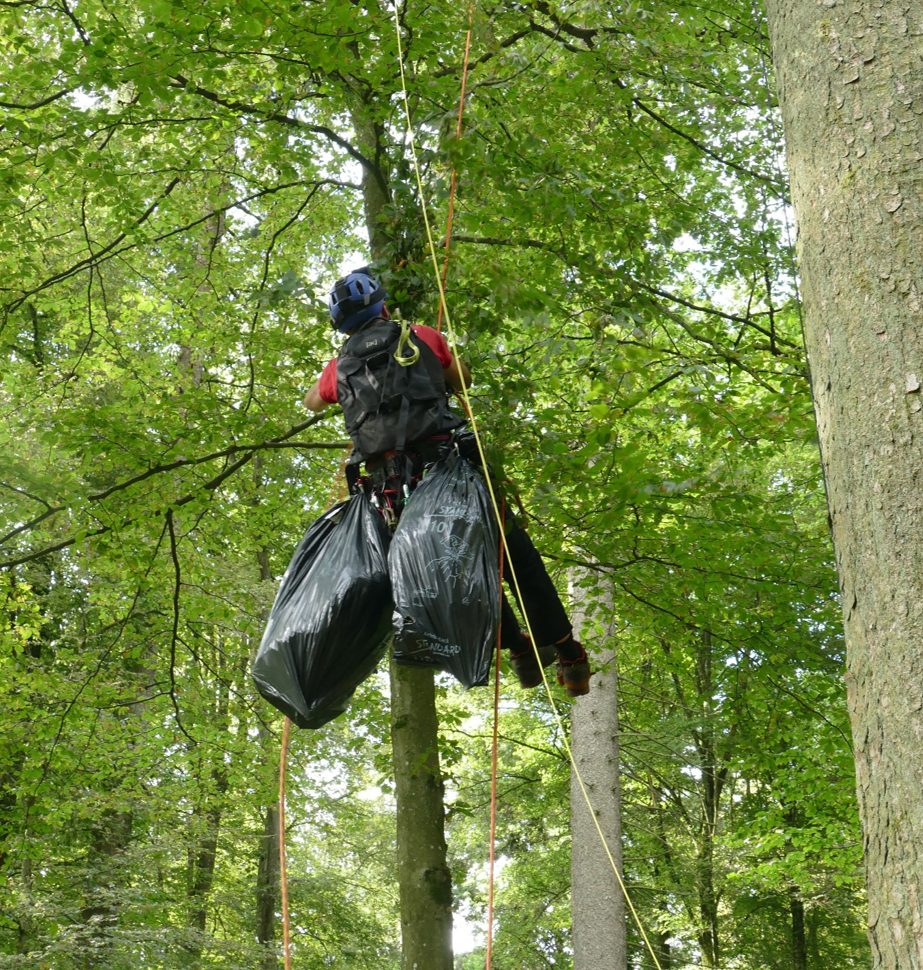
In this study, we selected 20 forest plots dominated by beech trees and assessed the chewing damage on beech leaves of the understorey and canopy layers. When selecting the forest plots, we made sure to representatively cover the structural and physiological gradient of our study area in the north of Switzerland by using high-resolution LiDAR data.
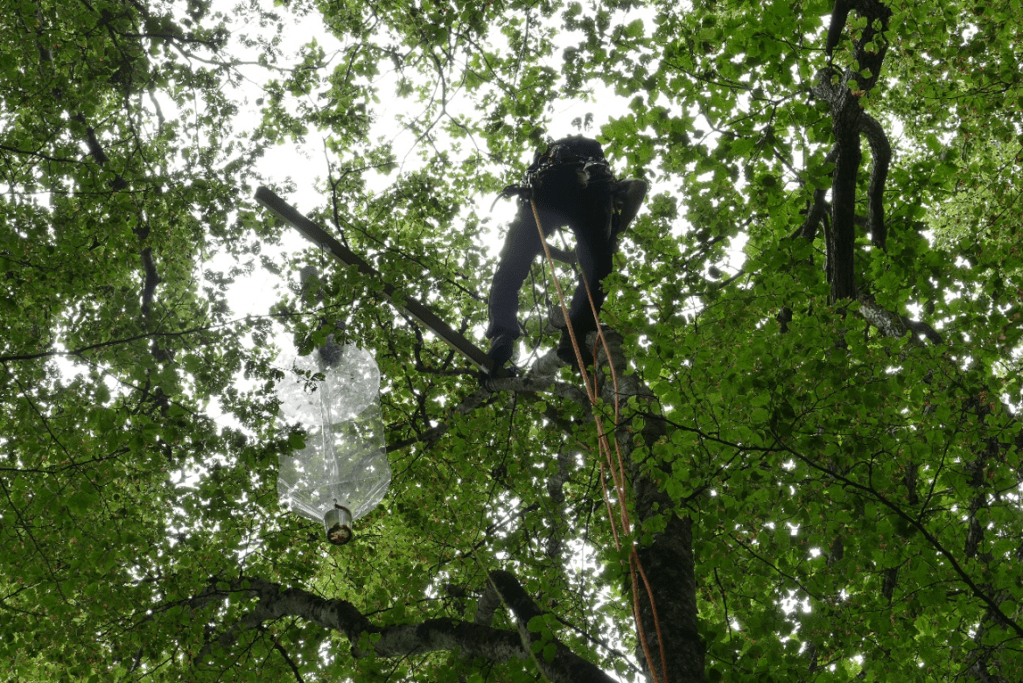
Once we had chosen our sites, we placed flight-interception traps in the two vertical layers, aided by a rope-pulley system installed in the canopy of the selected beech trees by tree climbers. In April we started collecting and sorting arthropod specimens, and in July, following insect phenology, we collected and quickly scanned the leaves from the trees in our plots. We then examined each leaf individually and estimated the percentage of area eaten by herbivores.
Although abundance of herbivores in the canopy was 67 % higher than that in the understorey, the damage found per leaf was the same across both layers. This suggests that the greater foliage in the canopy compensates for the increased abundance of herbivores, proportionally diluting the relative leaf damage. We also found other layer-specific drivers of herbivory and herbivore abundance, with the effects of woody plant diversity and vegetation structure depending on whether a layer acted as a resource-rich or research-limited environment.
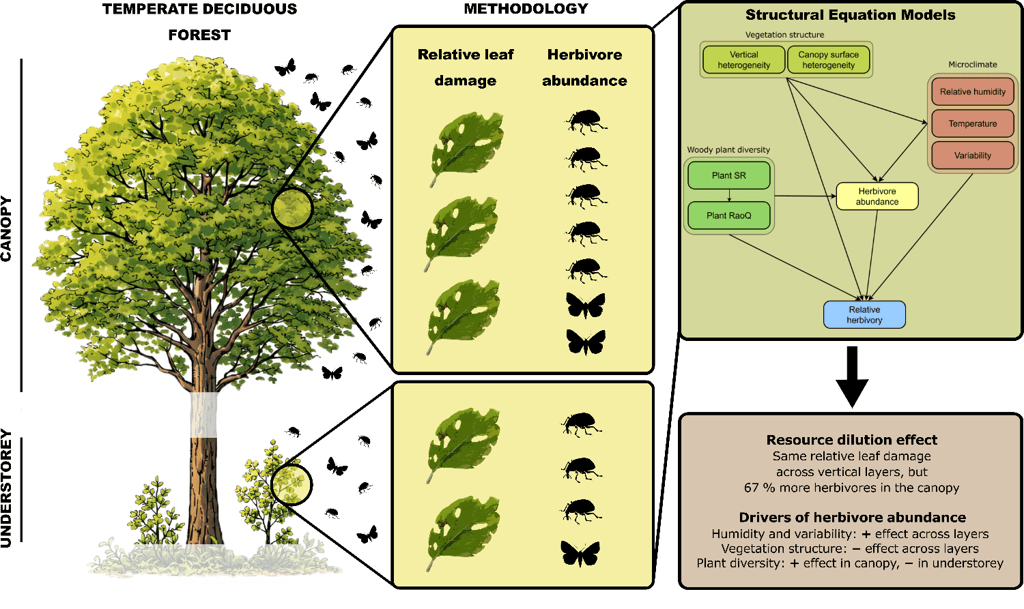
Considering that herbivore abundance and damage are often assumed to covary, discovering that this depends on resource availability and therefore may differ among vertical layers in forest ecosystems is a critical finding. Therefore, the study of all three dimensions of forest stands is essential for assessing the effects of different management regimes and for accurately predicting how forest communities and ecosystem processes respond to human and environmental drivers.


