Eva Janíková, University of South Bohemia in České Budějovice, discusses her article: Realistic species loss has little effect on local resource depletion and competitive pressure in a temperate wet meadow
A story that started with a simple idea
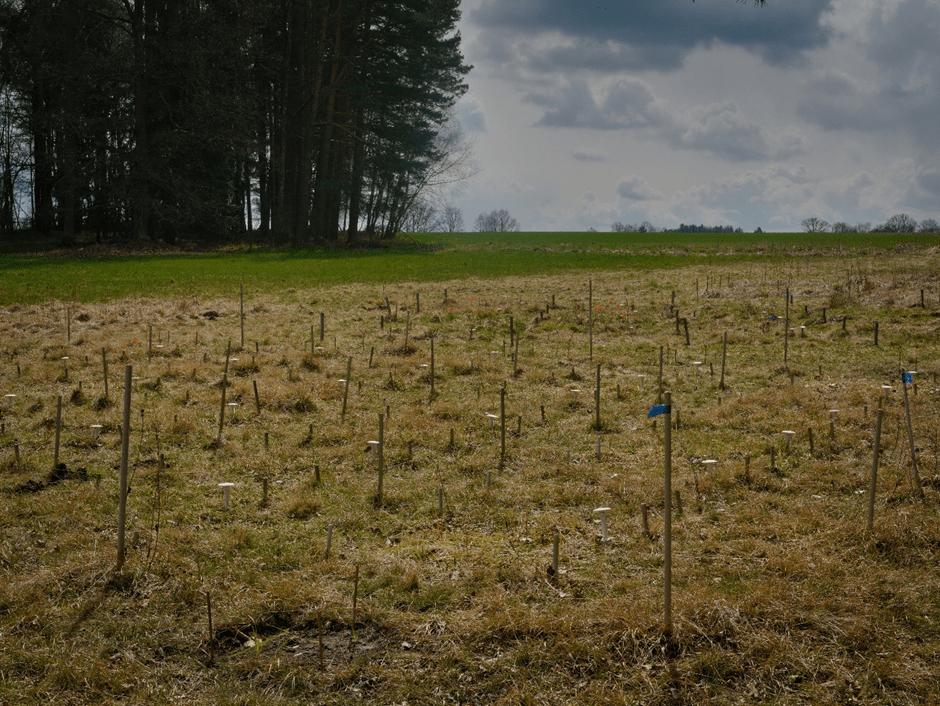
When we began this project, we had clear expectations. Following ideas going back to Charles Elton’s hypothesis stating that species-rich communities are more resistant to invasion by alien species, published in his book The Ecology of Invasions by Animals and Plants in 1958, we thought that losing plant species would weaken competition in a community. Fewer species should mean more available resources, making it easier for new plants to establish. But instead of testing this in artificial mixtures, the common practice by researchers, we wanted to get closer to reality. So, we used a removal experiment established by Aleš Lisner in a wet meadow in the Czech Republic, where our team had been removing rare and subordinate species for six years. We created a gradient from diverse communities (27 species on average) to monocultures dominated by a single species. It allowed us to simulate how biodiversity loss actually unfolds in nature.
Using phytometers to measure competition
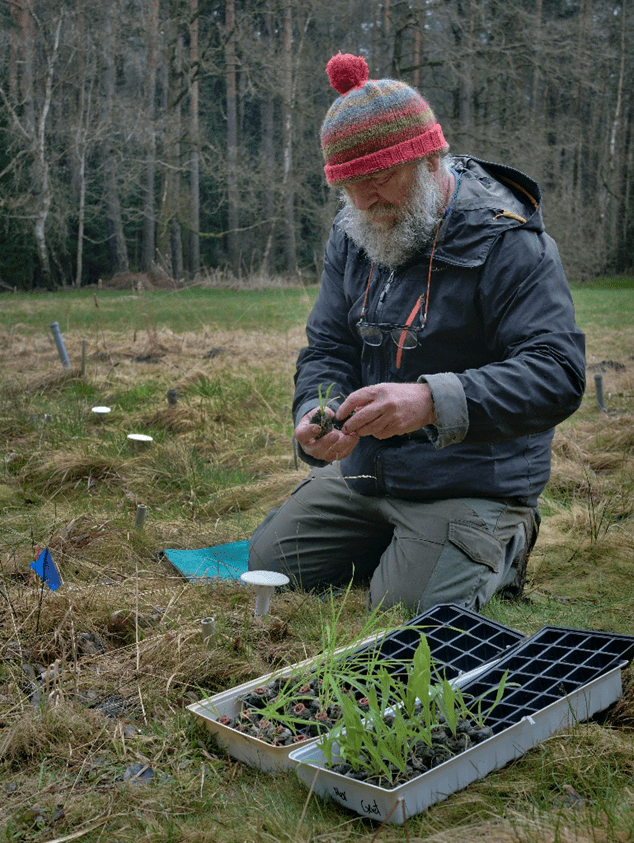
To understand how these communities are functioning, we turned to phytometers – standardized transplants used as “living sensors” of environmental conditions. We planted two common meadow species, Holcus lanatus and Plantago lanceolata, both inside the vegetation and in gaps where we removed all competition.
The idea was simple: if competition is strong, plants should grow less well in the vegetation than in the gaps. And they did. Across both species and seasons (spring and summer), plants growing within the community had lower growth rates and showed clear shifts in their traits – such as having smaller leaves and lower nitrogen content. These are classic signs of plants responding to limited resources. So far, everything matched what ecological theory would predict.
The unexpected result
We expected that competition would weaken as species richness declined. But instead, competitive pressure remained remarkably similar across all levels of diversity. Whether a plant was surrounded by one dominant species or by a rich mixture of many species, it faced nearly the same level of competition. Even communities reduced to just one dominant species were just as “tough” on new plants as the most diverse communities.
This challenges a common interpretation of Elton’s hypothesis. While diverse communities are often assumed to be more competitive, our findings suggest that, at least in this meadow, diversity alone is not the main driver of competitive strength.
Looking for mechanisms
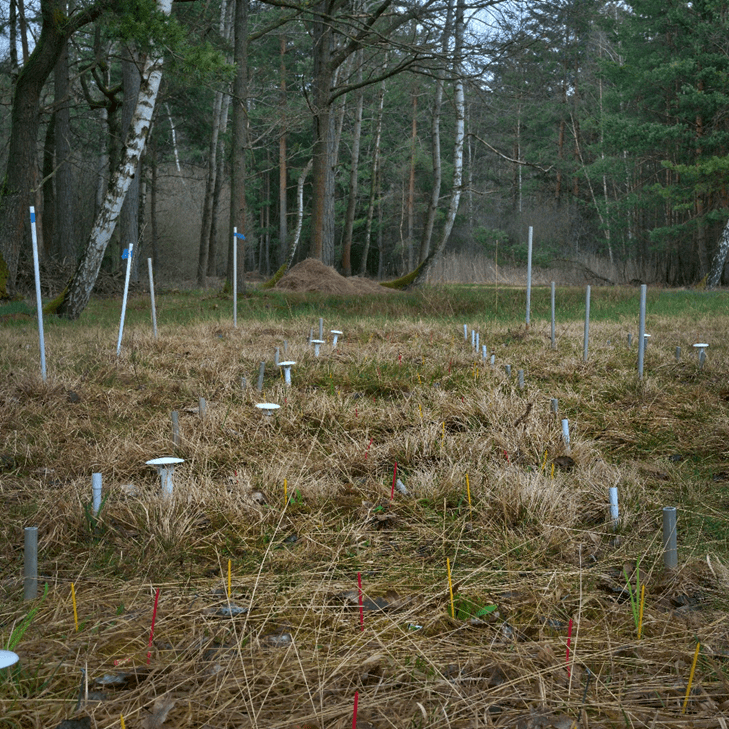
To understand why, we measured a suite of environmental factors: how much light the canopy captured, how much nitrogen and phosphorus were in the soil, how wet the soil was, and even how temperature varied at ground level. We expected these factors to explain differences in plant performance. But surprisingly, they didn’t.
Most resource levels barely changed across the diversity gradient. And when they did, they failed to explain how well our phytometers grew or how their traits shifted. This was one of the most striking aspects of the study. It suggests that the mechanisms linking biodiversity and competition are not as straightforward as we often assume.
So, what really matters?
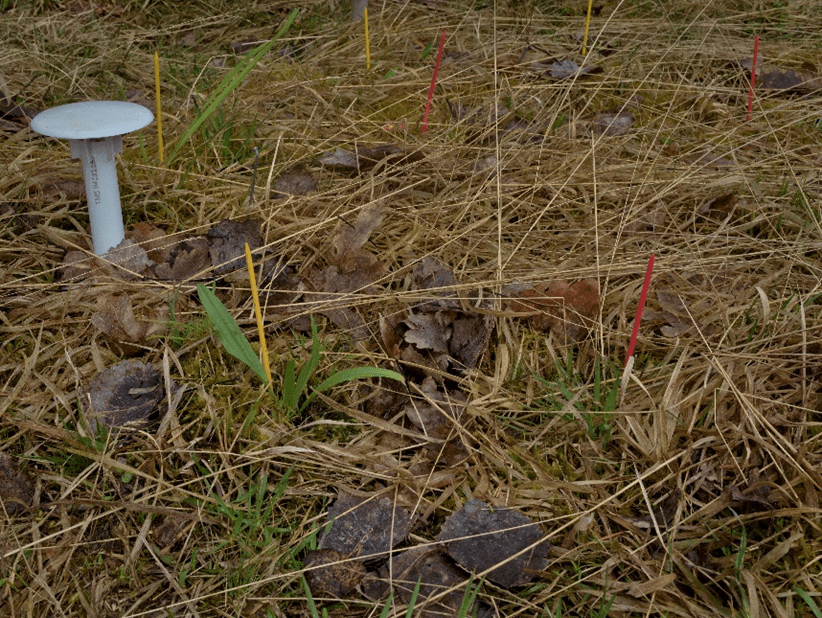
If not species richness, what maintains strong competition? Our results point towards the importance of dominant species and community structure. In our system, a single dominant grass can produce enough biomass to create a dense, competitive environment on its own. Even after many species were removed, this dominant species continued to suppress newcomers effectively.
We also saw hints that timing matters. Subtle effects of diversity began to emerge later in the growing season, suggesting that competition is shaped not just by who is present, but also by when plants grow and interact.
Why this matters for ecology
Much of what we know about biodiversity–ecosystem functioning comes from controlled experiments where species are added or removed at random. These studies have been incredibly valuable, but they don’t always reflect how communities change in the real world.
Our study shows that under more realistic conditions:
- losing rare species may have limited immediate effects on competition
- dominant species can maintain strong competitive environments
- resource measurements alone may not capture what plants actually experience
This doesn’t overturn existing theory, but it does urge caution. We may be overestimating how strongly biodiversity loss weakens natural communities. Nature rarely follows simple rules. And in this meadow, even after losing many species, the community held its competitive ground. For now, at least, it seems that losing diversity does not always mean greater vulnerability to invasions.


