Different “ghosts of herbivory past” for soil microbes

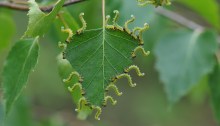
Read more about Karin Burghardt and colleagues’ recently published paper on litter decomposition in their blog post below… Often when dead leaves from a plant fall to the ground and begin decomposing, we assume that all leaves from a plant species are equivalent from the perspective of decomposers. This assumption is even formalized in many models of…

Pollination niches of Euro-Mediterranean orchids

Nina Joffard and colleagues recently had their paper on the pollination niches of orchids accepted in Journal of Ecology. The authors tell us more about their paper below… Plant-pollinator interactions can be seen as part of species’ ecological niches. One of the major challenges in the study of these interactions is to determine what factors underlie…

Volume 106 Issue 4

Issue 4 includes a special feature titled ‘Linking organismal functions, life history strategies and population performance’ which is edited by Roberto Salguero-Gómez (University of Oxford, UK), Cyrille Violle (CNRS, France), Olivier Gimenez (CNRS, France), and Dylan Childs (University of Sheffield, UK). The special feature provides a synthetic overview of the forces and mechanisms producing the…

Harper Prize Highly Commended Papers 2017: Plant-Soil Interactions (Part 2)

In this second Harper Prize video podcast, I present the findings of my highly commended paper entitled ‘Stoichiometric N:P flexibility and mycorrhizal symbiosis favour plant resistance against drought‘. This experiment was carried out at The University of Sydney (Australia) with Alberto Canarini and Feike Dijkstra through a postdoctoral fellowship from the Swiss National Science Foundation.…

Harper Prize Highly Commended Papers 2017: Plant-Soil Interactions (Part 1)

Each year, as well as selecting an overall winner for the Harper Prize (Jenny Zambrano, see previous blog post), the editors of Journal of Ecology also select two highly commended papers. This year the two highly commended papers are from Connor Fitzpatrick et al. titled ‘Phylogenetic relatedness, phenotypic similarity and plant–soil feedbacks‘ and myself, Pierre Mariotte et al.…

Winner of the Harper Prize 2017: Jenny Zambrano

The winner of the Harper Prize 2017 is Jenny Zambrano. Jenny’s paper, ‘Neighbourhood defence gene similarity effects on tree performance: a community transcriptomic approach’, takes a community functional phylogenomic approach to understand how defence genes drive tree community structure and dynamics. Jenny originates from Colombia and is currently a postdoctoral fellow at the National Socio-Environmental…

Eminent Ecologist 2018: David Wardle (part 3)

The Journal of Ecology editors are delighted to honour David Wardle in our continuing Eminent Ecologist series. David has put together a special Virtual Issue of some of his excellent contributions to the journal and has written a series of blog posts reflecting on his work. Read Part 1, Part 2 and Part 3 on the Journal of Ecology blog. NITROGEN…

Eminent Ecologist 2018: David Wardle (part 2)

The Journal of Ecology editors are delighted to honour David Wardle in our continuing Eminent Ecologist series. David has put together a special Virtual Issue of some of his excellent contributions to the journal and has written a series of blog posts reflecting on his work. Read Part 1, Part 2 and Part 3 on the Journal of Ecology blog. SWEDISH…

Eminent Ecologist 2018: David Wardle (part 1)

The Journal of Ecology editors are delighted to honour David Wardle in our continuing Eminent Ecologist series. David has put together a special Virtual Issue of some of his excellent contributions to the journal and has written a series of blog posts reflecting on his work. Read Part 1, Part 2 and Part 3 on the…